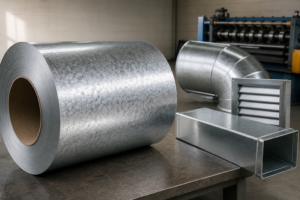

















AI Takeaway: Export-grade packaging for steel coils is not a matter of “just strapping them up.” It decides whether the buyer receives intact goods and how many claims the supplier has to swallow. This guide gives you a packing plan you can actually use: how to fit edge protectors and eye protectors, how to combine VCI anti-rust paper with moisture barrier film, what to put on the shipping mark, and how to load a container so coils do not shift. Read it through and you can hold any supplier — or your own dispatch process — against a proper checklist.
Why Export Steel Coil Packaging Is Not Something to Skimp On
A steel coil crossing the ocean goes through lifting, stacking, vibration and salt spray. If something goes wrong on the way, the moment the goods are opened at the destination port it becomes a dispute: rust, crushed edges, broken straps, water inside the eye. Nobody wants to own that argument, and claims can drag on for months while the supplier’s reputation takes the hit.
From the buyer’s side, proper packing simply means less trouble when you open the container. You paid for the steel coil itself, but half of whether it arrives intact depends on those straps and that wrap applied at the mill. Plenty of importers ask suppliers at the inquiry stage: do you pack to export standard? What anti-rust method do you use? Do the marks include the right details? Answer these questions clearly and the order is already half won.
So this guide is not an operator’s manual for the warehouse floor. It is for procurement managers, forwarders and supplier sales teams to align expectations: what counts as export-grade packing, and what is only domestic short-haul level. Between the two, the cost difference is small; the damage risk difference is enormous.
How to Bundle an Export Coil: Eye Protectors, Edge Protectors and Timber Dollys in One Go
For domestic short-haul transport, paper wrapping plus a few straps is enough. Export is different — cargo is accepted as “pieces” at sea, and packing strength directly determines the condition of the coil on arrival.
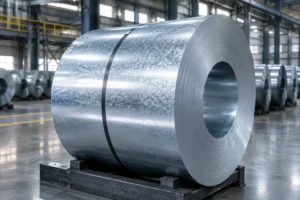
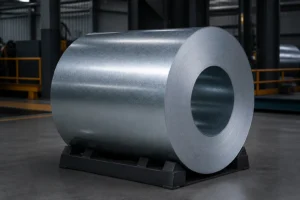
Start with the protective structure. A coil’s three most vulnerable spots are the inside of the eye, the outer edges, and the two side edges — exactly where slings and forklift tines end up touching during lifting and loading. The standard practice is an eye protector inside to hold the bore open, steel angle protectors on the two outer corners to guard the edges, and only then the straps. More straps is not automatically better. Match the strap count to the coil weight — usually 3 to 5 bands, locked crosswise on a timber dolly so the whole coil shares the load evenly.
Positioning matters too. For export, coils are generally stood on end (eye upward), sitting on timber dollys that lift them off the container floor so the contact surface does not rust or dampen. The dolly has to be wide and solid enough to carry the coil weight, and the straps are threaded through the dolly’s woven edge and tightened so the coil cannot roll during transit.
Rust Prevention: VCI Vapor-Phase Anti-Rust, Barrier Film and Desiccant — Do Not Miss One
On a sea route, the two biggest enemies are humidity and salt. Inside the hold, during hold ventilation, through day-night temperature swings, condensation hangs on the coil surface, and within a few weeks a ring of white rust can appear along the edges.
VCI (vapor corrosion inhibitor) is the most common solution for containerized steel coils today. It works by emitting inhibitor molecules that settle on the metal surface and form a protective film without touching the steel directly, which makes it a good fit for enclosed packaging. Common forms are VCI anti-rust paper and VCI powder — the paper sits against the coil surface, the powder is placed inside the eye before sealing. The effective life of VCI depends on the material and how airtight the pack is, so ask your supplier which grade they use and how long it protects, and put it in writing in the order confirmation.
The moisture barrier film has to be sealed tight. The PE film works together with the VCI paper — seams, the eye opening, and both end folds all need to be closed properly, with tape over the joints, so moisture cannot creep in through the gaps. Desiccant is the third line of defense — put in enough for the container space and the number of coils, especially on rainy-season or high-humidity routes.
A few easy-to-miss points: the edges are where white rust shows up first, so the gaps under the corner protectors need care; check whether the strap positions have worn through the film; and if a pack was opened and left for a few days before loading, add a fresh layer of moisture protection when you reseal. On routes with high temperatures at the destination port, the longer the seal, the higher the vapor pressure inside — so scale up the moisture protection level accordingly.
Shipping Marks: What to Write and Where — Export Marking Rules at a Glance
Shipping marks are not decoration for the warehouse. They are the basis for customs clearance, inspection and order splitting at the destination port. If the mark is wrong, the cargo can sit at the port unidentified or get mixed up between orders — more trouble than rust.
A proper steel coil shipping mark should carry: product name and grade (for example, Galvanized Steel Coil DX51D + Z275), specification (thickness x width), coil number and heat number, piece number and total pieces (for example, 1/25), gross weight and net weight, consignee and destination port, country of origin (Made in China), bill of lading number, and loading port. Every figure must match the packing list and the commercial invoice line by line — no fuzzy numbers.
Use at least two labels: one set on the side of the coil in a visible spot, one set on the end face. The labels should be waterproof — ordinary paper dulls and smears within days in sea humidity. Stick them on flat areas away from straps and corner protectors so they survive loading and unloading. Some buyers require a fixed mark format and even send you the official mark from their purchase order — in that case follow their format, do not improvise.
How to Load a Container So Coils Do Not Shift: 20′ Stowage and Lashing
A loading plan decides two things at once: how well the container volume is used, and how stable the cargo is on the road and at sea. These two often pull against each other, which is where practical experience comes in.
Coils in a 20′ container are usually loaded on end with the eye up, each coil lifted on timber dollys with some gap between coils for buffering, then lashed to the dollys or the container structure with lashing straps, and the residual gaps filled with dunnage — air bags, for example — so the cargo cannot shift sideways. The centre of gravity of a loaded container should sit mid and slightly aft; a centre of gravity pushed to one side is the biggest source of trouble on turns and rough seas.
How many coils fit in a 20′ container depends on coil diameter, coil weight and strip width — there is no fixed number. The load limit of a container is commonly quoted at 27-28 tons, but many destination ports and inland legs actually enforce 21-24 tons, so confirm the latest limit for your route with the forwarder before packing. Numbers like 60 or 80 tons belong to the trucking and terminal side — they are single-piece weight limits — and exceeding them means special handling equipment and flat-rack containers at a completely different cost.
One more step that is often skipped: loading order. Put the heavy coils, the large-diameter ones, at the bottom and forward; load the lighter, smaller coils later toward the rear. Fix each coil as you go, then do a full check of lashing and dunnage before the door closes, and take photos for the record. A lot of people find the photos troublesome, but if anything ever goes wrong, they are your first piece of evidence when talking to the carrier and the insurer.
Receiving Checklist for Buyers: How to Inspect on Arrival
When the container is opened at the port, do not sign off in a hurry. Go through a checklist:
First, the appearance — is the barrier film torn, are the corner protectors still in place, are the straps intact, are there obvious rust marks or dents on the coil surface? Then the marks — check them against the bill of lading and packing list item by item: piece number, coil number, gross and net weight. During the spot check, inspect the edges and the eye first, since those two spots hide problems best. If you find any issue, photograph it on the spot, record the piece number, and notify the supplier and forwarder immediately, then file the claim within the contractual period (usually 15-30 days after arrival).
These steps look tedious, but they save a long chain of disputes later. The flip side applies to the seller just as much: keep the photos of packing, marks and documents taken before loading. The more evidence you hold that the goods left in good condition, the stronger your position if anyone tries to argue.
Q: How long does VCI anti-rust paper protect?
It runs from a few months to over a year, depending on the material and how airtight the pack is. Ask the supplier which VCI grade they use and the effective period before packing, and put it in writing. Unpack and use the coils early after arrival.
Q: Are coils packed as whole coils or unwound?
Normally whole coils are packed at the mill, with the surface and end faces finished and sealed. Unless you have slitting or secondary processing requirements, there is no need — and no reason — to open and re-pack them.
Q: What must the shipping mark include?
Product name, grade, specification, coil number, piece number and total pieces, gross and net weight, consignee, destination port, country of origin and bill of lading number. What matters most is that every item matches the packing list and commercial invoice exactly.
Q: How many coils fit in a 20′ container?
It depends on coil diameter and weight; there is no fixed number. The container load limit is commonly quoted at 27-28 tons, but many ports enforce 21-24 tons, so confirm with your forwarder for your route before packing.
Q: Who is responsible if coils arrive damaged?
First determine the stage: damage before loading is the seller’s responsibility; damage during transit is usually handled by insurance and the carrier — provided the packing was intact at loading and you have photo evidence. So keep the loading photos and documents carefully.
Q: Is export-grade packing charged extra?
Bomis standard export orders ship under Mill’s Seaworthy Standard Export Packing, included in the quoted price. Special requirements — double film, heavier corner protectors, a buyer-specified mark format — may be quoted separately. Just confirm before you place the order.
Bottom Line: Get Packaging Written Into the Contract Before You Sign
For steel coil exports, packing is not a detail — it is a clause that belongs in the contract. On the operational side, four points are enough: which anti-rust method, which packing standard, which mark format, and who supervises loading. When buyers ask these questions clearly at the inquiry stage, and suppliers state them in the quotation, both sides save themselves a detour.
Bomis exports steel coils under Mill’s Seaworthy Standard Export Packing, and every shipment comes with customs-ready documents (packing list, commercial invoice, bill of lading and material test certificate). Send us your specs to confirm your container type, weight limits and mark format — we reply with a loading plan within 24 hours.
The full sequence runs like this: VCI paper or anti-rust film goes nearest the steel surface, then a moisture barrier PE film is wrapped on top, then eye and edge protectors, then steel straps, then the whole bundle lands on the timber dolly and is locked down. Every layer has a job. Skip one, and the coil can arrive with problems.