Maelezo
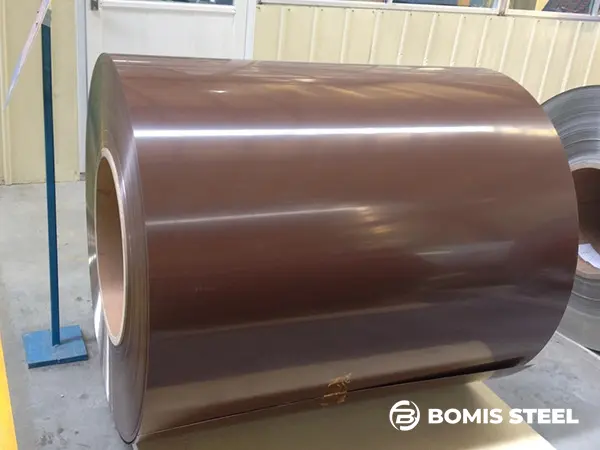
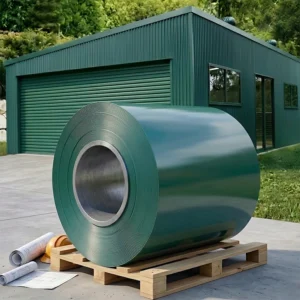
A PVDF coated metal coil is a pre-coated steel product with a topcoat of polyvinylidene fluoride resin with a minimum of 70% resin by weight. Kynar 500, or Hylar 5000, is a topcoat for prepainted steel that is a PVDF coil product that is the best quality for outdoor use. In comparison to standard polyester or SMP coatings, the Kynar 500/Hylar 5000 PVDF coil product has a 20-year to 30-year outdoor service life, an excellent color retention of > 90% after 10 years of exposure to the outdoor elements, and a surface which will release dirt and pollutants.
The coating is roller-coated and oven cured with a metal substrate that is coated with a primer and is usually hot-dip galvanized steel (PPGI) steel, galvalume (PPGL) steel, or Aluminum. It cross-links the fluorocarbon resin at elevated temperatures. Cutting, forming, and installing the coated metal sheet is just like standard prepainted steel. However, the coated metal sheet lasts three times longer than the prepainted steel when exposed to the open air.
Vipimo
| Vipimo |
Maelezo |
| Jina la Bidhaa |
PVDF Coated Metal Coil (PPGI / PPGL / Aluminum) |
| Topcoat Resin |
PVDF (polyvinylidene fluoride), ≥70% resin content, Kynar 500 or Hylar 5000 grade |
| Chaguo za Substrate |
Hot-dip galvanized steel (PPGI), galvalume steel (PPGL), aluminum |
| Daraja za Chuma |
DX51D, DX52D, DX53D, S250GD, S350GD, S550GD, SGCC, ASTM A653 |
| Unene wa Unene |
0.12 mm – 2.0 mm |
| Upana wa Mbalimbali |
600 mm – 1250 mm (custom slitting available) |
| Kitambulisho cha Koili |
508 mm or 610 mm |
| Uzito wa Koili |
2 – 5 metric tons per coil |
| Chaguzi za Rangi |
All RAL colors, custom color matching per sample |
| Kiwango cha mng'ao |
10° – 70° (matte to semi-gloss, 60° gloss meter) |
| Viwango |
AISI, ASTM, Shahada ya Sayansi, DIN, GB, JIS |
| Uagizaji na Usafirishaji |
Maelezo |
| MOQ |
Tani kumi za kimetriki |
| Muda wa Kuongoza |
15 – 25 working days after deposit |
| Payment |
T/T, L/C at sight |
| Bandari zinapakia |
Tianjin, Qingdao, or client-nominated |
| Ufungashaji |
Standard seaworthy export: waterproof inner wrap, galvanized steel outer cover, steel strapping, wooden pallet |
PVDF vs SMP vs PE: Coating Performance at a Glance
| Mali |
PVDF (Fluorocarbon) |
SMP (Silicone-Modified Polyester) |
PE (Standard Polyester) |
| Typical Service Life |
20 – 30 years |
10 – 15 years |
5 – 8 years |
| Color Retention (10 yr) |
Over 90% |
70 – 80% |
50 – 60% |
| Upinzani wa Kunyunyizia Chumvi |
1,500+ hours |
800+ hours |
500 hours |
| Ustahimilivu wa UV |
Excellent. PVDF resin is naturally UV-inert |
Good. Silicone adds some UV stability |
Fair. Chalking and fading over time |
| Chemical Resistance |
High. Resists acid rain, industrial fallout, salt spray |
Moderate. Limited resistance to strong chemicals |
Low. Softens under chemical exposure |
| Self-Cleaning |
Yes. Very low surface energy, dirt washes off in rain |
Partial. Some dirt retention over time |
No. Surface chalks and holds dirt |
| Cost Premium |
+30 to 35% over PE |
+10 to 15% over PE |
Baseline |
| Bora Kwa |
Architectural metal that must stay clean and retain color for decades |
General commercial and industrial roofing and siding |
Budget projects, short-term structures, interiors |
Where PVDF Coated Coil Is Specified
- Landmark architecture. Airport terminal roofing and fascia, stadium cladding, convention center walls. These projects demand a finish that looks the same in year 20 as it did on opening day. PVDF is the standard spec for architectural metal on high-visibility public buildings.
- Coastal and marine environments. Seafront building facades, offshore platform cladding, port structure enclosures. Salt spray and high humidity accelerate coating breakdown. PVDF withstands these conditions far longer than SMP or PE without chalking or losing adhesion.
- Industrial and chemical facilities. Plant building envelopes, chemical storage enclosures, wastewater treatment structures. Acid rain, chemical fallout, and airborne pollutants eat standard coatings from the surface inward. PVDF is chemically inert to most industrial contaminants.
- Solar energy structures. PV mounting system panels, solar farm enclosures, inverter housings. These installations sit in full sun with zero shade, baking coatings year-round. PVDF does not chalk or fade under sustained UV exposure the way polyester coatings do.
- Cleanroom and hygiene applications. Medical cleanroom wall panels, food processing ceiling systems, pharmaceutical facility cladding. The low-surface-energy PVDF surface resists particle adhesion and is easy to wipe down without leaving residue.
Substrate Choices: PPGI, PPGL, or Aluminum
The PVDF topcoat can be applied to three base metals. Each may be appropriate in different situations.
- PPGI (galvanized steel base). The most common and cost-effective combo. The zinc layer provides cut-edge protection. Best for general architectural and industrial applications with moderate corrosion exposure.
- PPGL (galvalume base). The aluminum-zinc coating on the substrate adds an extra corrosion barrier, particularly at cut edges and fastener holes. Preferred for coastal and high-humidity sites where the cut-edge exposure is the weak point.
- Aluminum base. Lighter weight and inherently corrosion-free. Used where steel is too heavy or where building codes require non-ferrous materials. The PVDF coating on aluminum is common for curtain wall panels, composite panel skins, and interior decorative cladding.
Kwa nini ununue kutoka BOMIS Steel
We conduct the complete PVDF coating process in-house, including substrate preparation, primer application, topcoat application over rollers, and oven curing, all governed by a single quality system. The PVDF resin employed in our systems conforms to the Kynar 500 or Hylar 5000 standard, containing a minimum of 70% PVDF by resin weight. We do not incorporate acrylic or polyester resins in the PVDF topcoat, unlike a number of our competitors who offer products at a lower cost.
Coating thickness (dry film), gloss (60° meter), color (with a spectrophotometer, aimed for a ΔE under 1.0), T-bend flexibility, reverse impact, pencil hardness, MEK rub resistance, and salt spray (ISO 9227) are all part of dry film testing. Every order will typically include mill test certificates and third party inspections from SGS or Intertek.
ISO 9001 and ISO 14001 certified. Support for custom color matching to RAL, Pantone, or physical samples is available. For export orders, custom coil weights, mixed container loads, and custom sizes are standard.
Maswali Yanayoulizwa Mara kwa Mara
What exactly makes PVDF different from regular polyester paint on steel?
The resin chemistry. Polyester coatings use organic polymer chains that UV light eventually breaks down, causing chalking, fading, and loss of gloss. PVDF uses carbon-fluorine bonds which are among the strongest chemical bonds in organic chemistry. UV radiation simply does not have enough energy to break them. That is why PVDF holds its color and gloss for decades while polyester coatings start showing visible degradation within a few years. The trade-off is cost. PVDF runs about 30 to 35% more than a standard PE coating on a per-square-meter basis.
Can PVDF coated coils be roll-formed and bent without cracking?
Yes. PVDF coatings are formulated to be flexible. The coating passes T-bend tests down to 2T or better depending on the substrate and thickness, which covers standard roll-forming, bending, and profiling operations. The cured PVDF film stretches with the metal without micro-cracking as long as the bend radius stays within the coating’s rated range. For tight-radius bends below 2T, we recommend a test sample run with your actual tooling.
How do I know the coating is actually PVDF and not a cheaper blend?
Ask for the coating specification sheet showing resin content. Real PVDF architectural coatings contain at least 70% PVDF resin by weight in the topcoat. Lower-cost alternatives often blend PVDF with acrylic resin at 30 to 50% PVDF content and market it as “PVDF-type” or “fluorocarbon-modified.” Our PVDF topcoat uses Kynar 500 or Hylar 5000 grade resin at full specification. We can provide the resin certification with your order.
Does PVDF coated steel need special handling compared to standard PPGI?
Not really, but because it costs more and goes onto higher-spec projects, the handling standards tend to be higher. Use protective film or interleaving paper between wraps. Avoid dragging sheets across each other. Clean the surface with mild detergent and water if construction dust builds up. Do not use abrasive cleaners or solvents. The coating is tough, but the project spec and warranty may require documented handling procedures. We ship with standard seaworthy export packing that protects the coil face and edges.
Can you match a specific RAL or custom color in PVDF?
Yes. We match any RAL color, Pantone reference, or physical color sample. Custom PVDF color development adds 7 to 10 working days to the lead time for the first order. Repeat orders use the same formulation and are production-ready immediately. Color consistency between batches is measured by spectrophotometer with a target ΔE under 1.0.
What is the minimum order for a custom PVDF color?
The standard MOQ is 10 metric tons for any PVDF coated coil order, including custom colors. For smaller trial quantities, talk to us. It depends on the substrate, thickness, and color complexity, but we can sometimes accommodate 5-ton trial orders if the production schedule allows.