Q235 Carbon Structural Steel is the most common structural steel in China for general purposes and has a very good price / performance value. “Q” refers to a yield strength of 235 MPa which decreases with increasing sheet thickness. Specifications: Thickness 1.5-100 mm, width 1000-2500 mm, length 2000-12000 mm. Quality grades From Q235A Grade to Q235D Grade: Q235A Grade (no notch impact test). Q235B Grade (notch impact test above 20°C). Q235C Grade (notch impact test above 0°C). Q235D Grade (notch impact test above -20°C). A single source for Sheet metal, Section Steel, pipes, and Galvanised Coil. Standard specifications are always available in stock and exports are packed in standard ocean freight packaging.
Q235 Carbon Structural Steel is the most popular structural steel in China. The “Q” is a yield strength of 235 MPa which decreases with increasing sheet thickness. The four grades, Q235A Grade to Q235D Grade, are different in notch impact toughness and impurity level.
Q235 is a good cost/performance compromise. It is easy to melt, has high yield, is much cheaper than the Q345 Low Alloy Steel, and is suitable for general construction projects. It has tensile strength of 375–460 MPa, yield strength of >235 MPa and elongation at break of 26%. Cutting, bending and welding can be performed independently of each other, so no preheating before welding or Post-weld Heat Treatment is required. This reduces the time on the construction site. Q235 is the standard choice when you don’t need a lot of strength.
The four grades are classified by the temperature of the notched impact test. Q235A Grade is not tested for notched impact toughness, Q235B Grade is tested at 20 °C, Q235C Grade at 0 °C, Q235D Grade at -20 °C. Carbon, sulphur and phosphorus are controlled according to the conversion ratio. The carbon content of Q235A Grade is up to 0.22%, and the sulphur content is 0.050%. The carbon content of Q235D Grade is 0.17%, and the sulphur content is 0.035%. So this is why it’s more difficult and more expensive. Q235A Grade is acceptable for normal indoor temperatures, Q235B Grade or higher for winter outdoor temperatures, and Q235C Grade and Q235D Grade for extremely cold or low temperatures, or for export to low-temperature environments.
| Nama Produk | Q235 Carbon Structural Steel |
| Ketebalan | 1.5-100mm |
| Lebar | 1000 – 2500 mm |
| Panjang | 2000 to 12000 mm |
| Grade | Q235A Grade, Q235B Grade, Q235C Grade, Q235D Grade |
| Kekuatan hasil | 235 MPa minimum (decreases with thickness) |
| Kekuatan tegangan | 375-460 MPa |
| Pemanjangan | 26 % |
| Impact energy | 27 J |
| Density | 7.85 g/cm³ |
| Kekerasan | 155 HB |
| Surface treatment | Derusting, painting, galvanising, etc. |
| Pembungkusan | Standard export packaging |
| Transport | Container, bulk carrier, rail or according to customer’s request |
Composition of chemicals:
| Grade | C | Mn | Si | S | P | Impact test |
| Q235A Grade | ≤0.22% | ≤1.4% | ≤0.35% | ≤0.050% | ≤0.045% | No test |
| Q235B Grade | ≤0.20% | ≤1.4% | ≤0.35% | ≤0.045% | ≤0.045% | 20°C |
| Q235C Grade | ≤0.17% | ≤1.4% | ≤0.35% | ≤0.040% | ≤0.040% | 0°C |
| Q235D Grade | ≤0.17% | ≤1.4% | ≤0.35% | ≤0.035% | ≤0.035% | -20°C |
Comparison of similar grades of material:
| Negara | China | USA | EU | United Kingdom | Japan | France | Italy | Norway | Spain |
| Standard | GB | ASTM | EN 10025-2 | BS EN 10025-2 | JIS | AFNOR | UNI | NS | UNE |
| Grade | Q235 | A36 | S235JR | S235JR | SS400, SM400A | E24-2 | Fe360B | NS12123 | AE235B-FN |
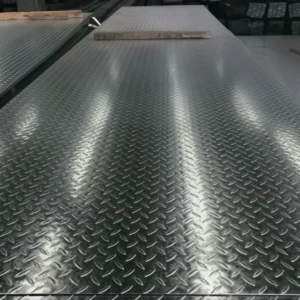
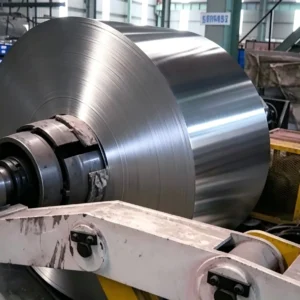
Q235 can be used in four general construction materials. It is suitable for any application where loads have to be withstood and strength requirements are not very high. The five application areas are buildings, bridges, ships, pipelines and machinery. Components are made of sheet metal, frame beams and columns are made of Carbon Structural Steel, pipes for conveying bulk materials and roof panels and color-coated substrate are made of Galvanised Coil. Each of these areas belongs to its own field of application.
Processing options are flexible, and cutting, bending and punching are easily done. One of the major advantages is welding: No preheating or post-weld heat treatment is required; usual welding procedures can be used directly and the weld bead is formed uniformly. We cut lengths to standard sizes, just tell us the size you want when you order.
Standard ocean freight packaging for export is perfect for moisture and impact protection. Containers, bulk carriers or trains can be used. Delivery depends on the shipping destination.
Looking to source Q235 steel or compatible structural material for your project? These products from BOMIS Steel pair directly with the options discussed above:
A: Q235A Grade is not subjected to an impact test. Q235B Grade must demonstrate impact resistance at 20 °C and has a lower sulphur content. Steel Structure at room temperature, Q235A Grade, and for dynamic loads in outdoor use, Q235B Grade.
A: US A36, EU S235JR and Japanese SS400 are equivalent and the test methods are available in the above mentioned specification sections. Before exporting, please define the acceptance test standard to be followed.
A: Q345 Low Alloy Steel, it is more expensive but has a high yield strength of 110MPa. For larger sizes, a standard Q235 frame is enough, and Q345 Low Alloy Steel can be used. Don’t spend your money unwisely.
A: Yes. Untreated sheets will rust in the open air. They are more rust resistant when galvanised or painted. Galvanised coil can be used as the base material for PPGI directly.
A: Yes. The yield strengths are obtained by dividing the heavier plates according to thickness. Material is ordered based on the real thickness. Do not use hard, thick Grade 235 plates.
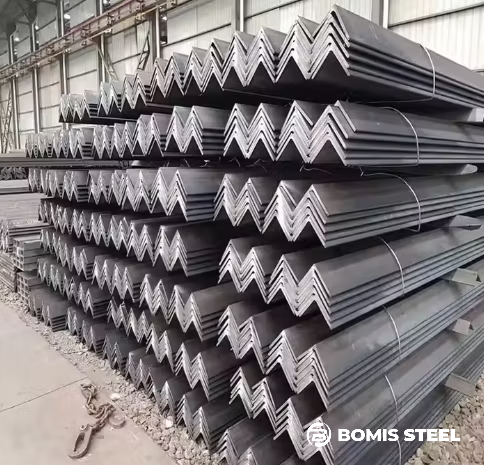
A: Yes. We stock angle steel, U-channels, I-beams, H-beams, round bar, welded and seamless pipes, Galvanised Coil.