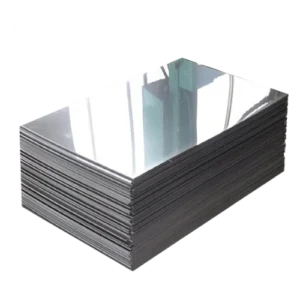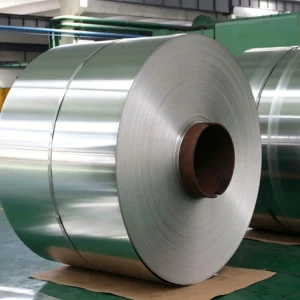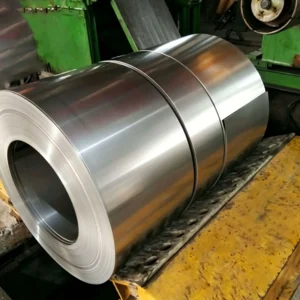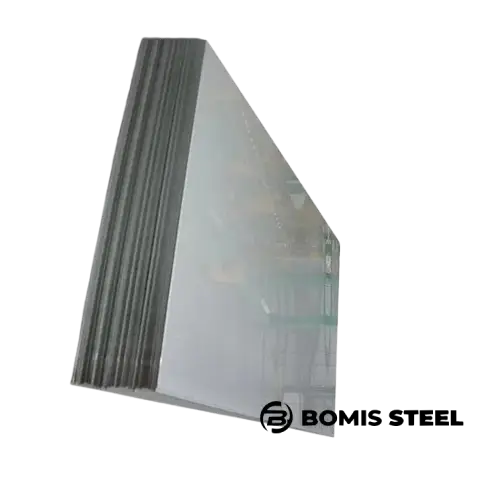
309 stainless steel is an austenitic chromium-nickel alloy with excellent high temperature properties and oxidation resistance. Higher chromium (22-24 %) and nickel (12-15 %) compared to standard grade 304 maintains structural integrity and corrosion resistance even in continuous use up to 980 °C. Bomis supplies 309 stainless steels in the form of coils, plates, strips, plates, tubes, round bars and wires, all manufactured to international standards and certified by complete factory testing.
1. Excellent high temperature oxidation resistance: The high chromium content promotes the formation of a dense, self-healing chromium oxide (Cr ₂ O ₃) protective layer on the surface. This barrier is stable under continuous exposure to 980 °C, making 309 stainless steel the most popular choice for furnace components and heat treatment equipment.
2. Enhanced corrosion resistance: Balanced nickel and chromium components provide reliable resistance in a variety of corrosive media, including weak acids, sulfide-rich atmospheres, alkaline solutions and chloride-rich industrial environments. This versatility supports applications in high temperatures and ambient conditions.
3. Good weldability and manufacturability: 309 stainless steel is easy to weld by traditional methods (TIG, MIG, SMAW). The low carbon 309S model further reduces the risk of intergranular corrosion in the weld area and eliminates the need for post-weld annealing in many applications.
4. Good mechanical strength at high temperatures: the tensile strength of 309 stainless steel exceeds 560 MPa, and the yield strength exceeds 205 MPa. It can maintain reliable bearing capacity, reduce deformation and prolong the service life of the device even under continuous high temperature.
5. Wide range of products with flexible dimensions: thickness 0.5 mm-100mm, width 5mm-2000mm, covering specifications such as coils, plates, strips, tubes, rods and wires-achieve one source procurement, meet different manufacturing requirements.
| Eloko ya motuya | Motuya |
|---|---|
| Nkombo ya eloko | 309 Stainless Steel Coil / Sheet / Plate / Strip |
| Kilasi | 309 / 309S / 309H |
| Etando ya bonene | 0.5 mm – 100 mm |
| Etuluku ya bonene | 5 mm – 2000 mm |
| Mibeko | GB, JIS, ASTM, AISI, DIN, EN |
| Bongisi ya likolo | NO.1, 2B, BA |
| Density | 7.98 g/cm³ |
| Melting Point | 1400 – 1450 °C |
| Makasi ya kobenda | ≥ 560 MPa |
| Makasi ya kopesa | ≥ 205 MPa |
| Elongation | ≥ 45% |
| Hardness | ≤ 90 HRB (Brinell) |
| Thermal Expansion | 16.0 × 10⁻⁶ / °C (20–1000 °C) |
| Kokamba molunge | 14.2 W/(m·K) at 100 °C |
| Eténi | 309 | 309S | 309H |
|---|---|---|---|
| Carbon (C) | ≤ 0.20% | ≤ 0.08% | 0.04 – 0.10% |
| Chromium (Cr) | 22.0 – 24.0% | 22.0 – 24.0% | 22.0 – 24.0% |
| Nickel (Ni) | 12.0 – 15.0% | 12.0 – 15.0% | 12.0 – 15.0% |
| Manganese (Mn) | ≤ 2.00% | ≤ 2.00% | ≤ 2.00% |
| Silicon (Si) | ≤ 1.00% | ≤ 1.00% | ≤ 1.00% |
| Sulfur (S) | ≤ 0.030% | ≤ 0.030% | ≤ 0.030% |
| Phosphorus (P) | ≤ 0.040% | ≤ 0.040% | ≤ 0.040% |
| Ya momeseno | Designation |
|---|---|
| ASTM / AISI | 309 |
| GB (China) | 06Cr23Ni13 |
| JIS (Japan) | SUS 309 |
| EN (Europe) | 1.4828 |
| Eloko ya motuya | 304 | 309 | 310 |
|---|---|---|---|
| Cr Content | 18.0 – 20.0% | 22.0 – 24.0% | 24.0 – 26.0% |
| Ni Content | 8.0 – 11.0% | 12.0 – 15.0% | 19.0 – 22.0% |
| Max Continuous Use Temp | 870 °C | 980 °C | 1150 °C |
| Makasi ya kobenda | ≥ 515 MPa | ≥ 560 MPa | ≥ 550 MPa |
| Kopekisa ngura | General environments (atmospheric, fresh water) | Moderate corrosion + high-temperature oxidation | Best — resists sulfide and oxidizing gas at high temp |
| Ndenge ya kosalela ya momeseno | Kitchenware, building trim, food processing | Furnace parts, heat exchangers, exhaust systems | Industrial kiln linings, high-temp furnaces, heat treatment |
| Relative Cost | Economical | Mid-range | Premium |
BOMIS has a comprehensive inventory of different product formats to support different manufacturing and project needs:
Each batch of Bomis 309 stainless steel is accompanied by a complete Factory Test Certification (MTC) where chemical composition, mechanical properties and dimensional inspection are documented in accordance with applicable standards. Our quality management system is ISO 9001 and ISO 14001 certified, and we welcome third-party inspections, including SGS, BV and TÜV, at every stage of production or before shipment. Sample requests are processed free of charge and buyers can check the material properties and surface finishes before placing a bulk order.
Standard export packaging is designed to protect the integrity of materials in both sea and container transport. The coils are wrapped in moisture-proof paper and fastened to the wooden pallet with steel strip. Seats and seats are staggered seats between layers and packed in a closed wooden box. Customized packaging specifications are available on request, including edge protection, VCI (Volatile Corrosion Inhibitor) packaging and label labels. Bomis regularly delivers to the Middle East, Central Asia, Southeast Asia, South America and Africa markets and offers competitive freight and customs clearance support.
A: These three grades have the same chromium (22-24 %) and nickel (12-15 %) composition, but the carbon content is different. The upper limit of standard carbon for 309 is 0, 20 %. 309S is a low carbon modification (≤0, 08 %) which minimises carbide precipitation during welding and is recommended for welding production. 309H has an adjustable carbon range of 0.04-0.10 %, which improves high temperature creep strength and is suitable for very high temperature structural applications above 650 °C.
Answer: 309 stainless steel can be used continuously at temperatures up to 980 °C under oxidizing conditions. In the case of intermittent exposure, it undergoes short transitions of approximately 1000-1050 °C. For applications requiring continuous operation at temperatures of 1000 °C or higher, 310 stainless steel (nominal temperature 1150 °C) is generally recommended.
A: 309 stainless steel is technically corrosion resistant, but it is not the standard choice for food contact and hygiene applications. In these environments, 304 or 316L are more often specified because of their established performance and optimized price-quality ratio. 309 is manufactured for high temperature industry and has high chromium and nickel content, so it has the greatest advantages.
A: Standard surface treatments include No. 1 (hot rolling, annealing, descaling-suitable for industrial and heat-resistant applications), No. 2B (cold rolling, annealing, pickling and surface treatment to obtain a smooth, reflective matt surface) and No. BA (bright annealing in a controlled atmosphere to obtain a mirror-like reflective surface). Custom finishes include brushes (No. 4) and polishes (No. 8 mirror), and professional architectural or decorative applications are available on request.
A: Yes. 309 stainless steel can be cold formed using conventional bending machines, roll forming and pressing equipment, but because its strength is higher than 304, it may be necessary to increase the forming force. For machining, it is recommended to use carbide tools and sufficient coolant flow to control work hardening. The 309S low carbon grade is generally suitable for very high strength moulding because it is slightly less hard.
A: Yes, Bomis offers cut length and slot width services for coils, sheets and plates. You can specify a custom size when ordering. The minimum order quantity (MOQ) depends on the shape and specifications of the product. The typical minimum order quantity for standard grades and sizes is 1 to 2 tons. Contact our sales team for your specific size and quantity requirements for a timely quote.