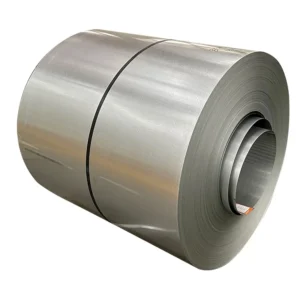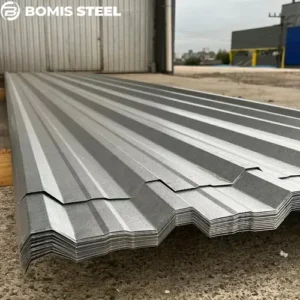

















Buying galvanized steel strips for construction, automotive, or manufacturing can be tricky. Here is the guide for you! Galvanized steel strips are ubiquitous in contemporary manufacturing and construction, as they blend strength and resistance to corrosion for an affordable price.
How Hot-Dipped Galvanized Steel Strips Are Made
The hot-dip galvanizing process is the industry standard for producing galvanized steel strips with consistent coating quality. In a continuous production line, cold-rolled steel strip is first cleaned and annealed in a controlled-atmosphere furnace to prepare the surface. The strip then passes through a molten zinc bath at approximately 450°C, where a metallurgical bond forms between the zinc and the steel substrate. As the strip exits the bath, precisely controlled air knives remove excess zinc to achieve the target coating weight. The result is a uniform zinc layer that provides both barrier protection and sacrificial (cathodic) protection — even if the coating is scratched or damaged in service, the surrounding zinc continues to shield the exposed steel from corrosion.
This continuous process ensures consistent coating thickness across the entire coil length, making hot-dipped galvanized strips ideal for high-volume manufacturing operations where material uniformity directly impacts production efficiency and finished product quality.
Technical Specifications & Available Grades
Wholesale buyers should evaluate galvanized steel strips against four key dimensional and mechanical parameters to ensure the right material for their application. The table below summarizes the standard specification ranges typically available from major mills:
| Параметр | Standard Range | Extended Range (Custom) |
|---|---|---|
| Ені | 700 mm – 1,600 mm | 20 mm – 599 mm (slit coils) |
| Қалыңдық | 0.25 mm – 1.55 mm | 0.09 mm – 5.00 mm |
| Цинк қаптамасы | Z60 – Z275 (60–275 g/m²) | Up to Z600 for heavy-duty applications |
| Орам салмағы | 3 – 8 metric tons | Custom coil weights on request |
Hardness Grades (Temper)
The temper designation determines how the strip behaves during forming, bending, and fabrication. Selecting the appropriate hardness grade is critical for downstream processing efficiency:
- Soft (Annealed): Maximum formability for deep drawing, complex profiling, and tight-radius bending. Recommended for components requiring extensive cold working.
- Semi-Hard: A balanced grade offering moderate formability with improved structural rigidity. Typical for general construction profiles, framing components, and medium-duty brackets.
- Full Hard: Maximum yield strength for structural applications where dimensional stability under load is critical. Suitable for heavy-gauge components, load-bearing members, and high-stress environments.
Spangle Types (Surface Finish)
The zinc spangle pattern — the visible crystalline structure on the galvanized surface — affects both aesthetics and paint adhesion characteristics:
- Zero Spangle (Smooth): Uniform, matte surface optimized for post-painting and powder coating. The preferred choice for visible architectural components and consumer-facing products.
- Small Spangle: Fine, consistent crystalline pattern. Commonly specified for home appliances, HVAC components, and general manufacturing where a clean appearance matters.
- Regular Spangle: Standard commercial finish with a recognizable metallic pattern. Cost-effective for general construction, structural framing, and applications where surface aesthetics are secondary.
- Large Spangle: Pronounced crystalline pattern with a distinctive metallic appearance. Sometimes selected for decorative architectural elements and exposed industrial design features.
Key Properties & Performance Benefits
1. Superior Corrosion Protection: The metallurgically bonded zinc coating provides dual-mode protection — a physical barrier against moisture, oxygen, and chemical exposure, combined with galvanic protection where zinc sacrificially corrodes in preference to the steel substrate. In typical atmospheric conditions, galvanized steel strips deliver decades of maintenance-free service life.
2. Thermal Stability: Hot-dipped galvanized coatings maintain their protective properties across a broad temperature range, from sub-zero conditions up to approximately 200°C in continuous service. This thermal resilience makes them suitable for HVAC ducting, outdoor structures in variable climates, and industrial processing environments.
3. Mechanical Versatility: Galvanized steel strips can be roll-formed, stamped, bent, punched, and welded using standard fabrication equipment. The zinc coating adheres tenaciously during forming operations, reducing the risk of delamination or micro-cracking that can compromise corrosion protection at bend radii.
4. Dimensional Consistency: Modern continuous galvanizing lines maintain tight thickness and width tolerances (±0.02 mm or better depending on gauge), ensuring predictable material behavior in automated processing lines and reducing reject rates in high-volume production.
5. Lifecycle Cost Advantage: While the initial material cost of galvanized steel strip may exceed that of cold-rolled (non-coated) alternatives, the elimination of post-fabrication painting or coating processes — combined with extended service intervals and reduced maintenance — typically yields a significantly lower total cost of ownership over the asset lifecycle.
Applications Across Industries
Building & Construction
- Roofing panels, purlins, and structural decking
- Door frames, window profiles, and curtain wall components
- Furring channels, studs, and track systems for drywall construction
- Cable trays, conduit, and electrical pathway protection
- Scaffolding components, guardrails, and temporary works
- Fencing systems, gates, and perimeter security infrastructure
Automotive Manufacturing
- Body-in-white structural components and reinforcement panels
- Chassis members, cross-members, and subframe assemblies
- Fuel tank shells and protective shields
- Exhaust system brackets and heat shield components
Appliance & Consumer Goods
- Washing machine drums, dryer cabinets, and internal frames
- Refrigerator body panels and door stiffeners
- Air conditioner housings and mounting brackets
- Storage containers, shelving systems, and industrial bins
Industrial & Process Engineering
- Ventilation ducting and air handling system components
- Fluid conveyance channels in water treatment and HVAC systems
- Conveyor system structural members and guards
- Chemical and petrochemical plant cable management systems
- Sugar, alcohol, and food processing plant structural elements
Agricultural Infrastructure
- Livestock fencing, gates, and enclosure systems
- Equipment support structures and machinery frames
- Grain storage and handling infrastructure
- Irrigation system components and mounting hardware
Comparing Galvanized Steel Strips to Alternative Materials
When evaluating material choices for a project or product line, it is helpful to benchmark galvanized steel strips against common alternatives:
| Criterion | Galvanized Steel Strip | Stainless Steel | Aluminum | Cold-Rolled (Bare) Steel |
|---|---|---|---|---|
| Коррозияға төзімділік | Excellent (zinc barrier + sacrificial) | Excellent (chromium oxide layer) | Good (natural oxide layer) | Poor (requires painting/coating) |
| Cost per Ton | Moderate | High (2–4× galvanized) | Moderate to High | Lowest |
| Strength-to-Weight | High | High | Moderate | High (but unprotected) |
| Қалыптасу қабілеттілігі | Good (grade-dependent) | Good (work-hardens faster) | Excellent | Excellent |
| Weldability | Good (proper ventilation needed) | Excellent | Challenging (requires special techniques) | Excellent |
| Lifecycle Maintenance | Minimal | Minimal | Moderate | High (repainting cycles) |
For the majority of structural, construction, and general manufacturing applications, galvanized steel strip delivers the most attractive balance of upfront cost, long-term durability, and processing flexibility — a key reason it remains the material of choice for volume-driven procurement programs.
Procurement Considerations for Wholesale Buyers
When sourcing galvanized steel strips at wholesale volumes, several factors beyond the base specification deserve careful evaluation:
Mill Certifications & Standards Compliance: Verify that the supplying mill holds relevant international certifications (ISO 9001, ISO 14001, IATF 16949 for automotive-grade material). Material should conform to recognized standards such as ASTM A653/A653M, EN 10346, or JIS G3302, with full traceability through mill test certificates (MTCs) provided with each shipment.
Coating Weight Verification: The zinc coating mass (expressed in g/m²) should be confirmed through independent testing where project specifications demand it. Triple-spot testing per the applicable standard provides statistical confidence in coating uniformity across the coil width.
Surface Treatment Options: Beyond the base galvanized finish, mills may offer supplementary surface treatments including chromate passivation (for enhanced storage life), anti-fingerprint coatings (for visible consumer surfaces), or phosphate pre-treatment (for customers who will apply paint or powder coating downstream).
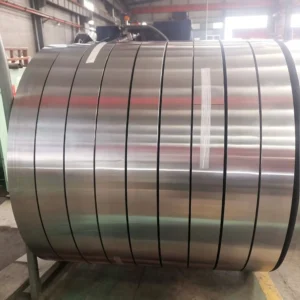
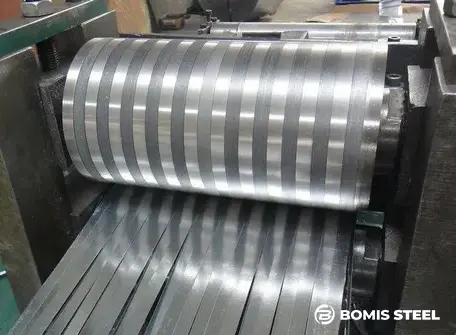
Slitting & Processing Services: Many wholesale suppliers offer value-added processing — precision slitting to custom widths, cut-to-length sheeting, and recoiling to specified coil weights. Consolidating these services with the material supply can reduce logistics costs and simplify the supply chain.
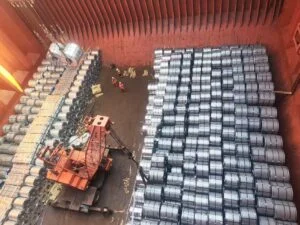
Қаптама for Export & Long-Distance Transport: For international procurement, packaging quality directly affects material condition on arrival. A recommended standard is three-layer export Қаптама: an inner moisture barrier (VCI film or equivalent), impact-absorbing intermediate wrapping, and a durable outer layer with edge protection. Coils should be secured with steel strapping aligned to the coil profile, and shipments should include desiccant packs where maritime transport exposes material to humidity fluctuations.
Storage & Handling Best Practices
Proper storage and handling practices preserve the integrity of the zinc coating and prevent premature degradation before fabrication:
- Store coils and sheets in a covered, dry environment with stable temperature and low humidity. Outdoor storage should be a temporary measure only, with full weather protection.
- Keep material elevated off the floor on pallets or racks to prevent moisture wicking from concrete surfaces.
- Maintain original packaging until the material is ready for use. If packaging must be opened for inspection, re-seal or apply temporary protection.
- Stack smaller-diameter coils on larger ones to prevent deformation, and always use dunnage between stacked items.
- When handling with forklifts or cranes, use padded contact points to avoid damaging the zinc coating. Slings and chains without protective sleeves can create score marks that become corrosion initiation sites.
- For material that will be painted after fabrication, clean the surface with a compatible degreaser and apply a zinc-compatible primer system. Standard alkyd primers may saponify on zinc surfaces — consult your paint supplier for galvanized-specific recommendations.
Related: Quality assurance starts at receiving. Read our detailed guide on common quality problems in galvanized steel coils to learn how to inspect incoming GI coils for rust, coating defects, pinholes, and shape issues before they enter your production line.
Related: Protecting your coils does not stop at inspection. Read our guide to best practices for managing steel coil inventory risks for a complete framework covering storage conditions, rack systems, handling safety, and inventory tracking.
Жиі қойылатын сұрақтар
Q: What is the typical lead time for wholesale orders of galvanized steel strips?
A: Lead times vary by mill, specification complexity, and current order book. Standard-grade material in common dimensions is typically available within 2–4 weeks from mill allocation. Custom specifications, non-standard coating weights, or specialized surface treatments may extend lead times to 6–10 weeks. Procurement teams are advised to factor in maritime shipping time (typically 3–6 weeks for Asia-to-Africa or Asia-to-Middle East routes) when planning inventory cycles. Building a 90-day buffer for standard grades and a 120-day buffer for custom specifications is a prudent supply-chain practice.
Q: Can galvanized steel strips be welded without compromising the zinc coating?
A: Yes, galvanized steel strips are weldable using standard processes including MIG/MAG, TIG, and resistance welding. However, the zinc coating vaporizes at the weld pool temperature, so the weld zone and heat-affected area will lose their galvanic protection locally. Best practice is to apply a zinc-rich touch-up paint or thermal zinc spray to the weld seam after the joint has cooled. Adequate fume extraction is essential during welding, as zinc oxide fumes can cause temporary respiratory discomfort.
Q: What is the difference between hot-dipped galvanized and electro-galvanized steel strip?
A: Hot-dipped galvanizing applies zinc by immersing the strip in a molten zinc bath, producing a thicker coating (typically Z60–Z600) with a metallurgical iron-zinc intermetallic layer. Electro-galvanizing deposits zinc through an electrolytic process, yielding a thinner, more uniform coating (typically 5–30 g/m² per side) with a smoother surface finish. Hot-dipped material is recommended for outdoor exposure, structural applications, and environments where long-term corrosion protection is critical. Electro-galvanized strip is generally preferred for indoor products, precision components, and applications where a high-quality painted finish is the primary corrosion strategy.
Q: How does BOMIS ensure consistent quality across galvanized steel strip shipments?
A: BOMIS sources from ISO-certified mills with established quality management systems. Each production batch undergoes in-line coating weight measurement, mechanical property testing (tensile strength, yield strength, elongation), and dimensional verification. Mill test certificates are provided with every shipment, documenting the chemical composition of the steel substrate, zinc coating mass, and mechanical test results. For customers with critical applications, supplementary third-party inspection and testing can be arranged at the mill prior to shipment.
Q: What minimum order quantities (MOQs) apply for wholesale galvanized steel strip purchases?
A: MOQs vary by specification and mill. Standard-grade material in common dimensions typically carries a minimum of 5–10 metric tons per specification line item. Custom slit widths, specialized coating weights, or non-standard hardness grades may carry higher MOQs (typically 25–50 metric tons) due to mill setup requirements. For buyers developing new products or testing new specifications, smaller trial quantities may be accommodated — it is recommended to discuss requirements directly with the BOMIS sales team to explore available options.
Q: Are galvanized steel strips suitable for coastal or high-humidity environments?
A: Yes, galvanized steel strips perform well in coastal and humid environments, though coating weight selection should account for the increased corrosion severity. For general coastal exposure (beyond 1 km from breaking surf), a minimum coating weight of Z275 (275 g/m²) is typically recommended. For severe marine environments or industrial-coastal combined exposure, heavier coatings (Z350–Z600) or supplementary protective systems may be warranted. Regular freshwater washing to remove salt deposits is recommended as a simple maintenance practice that significantly extends service life in coastal settings.