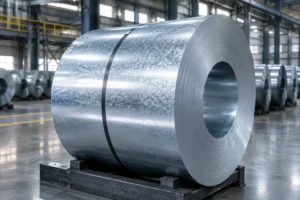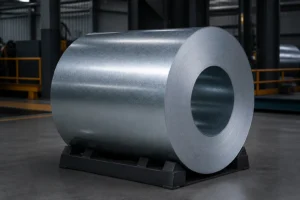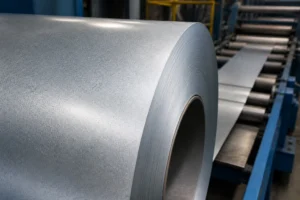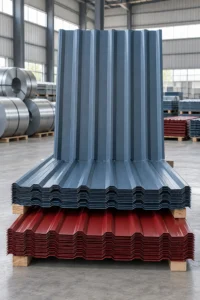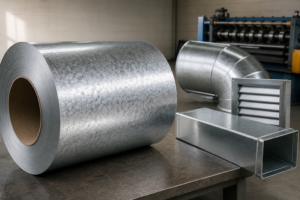

















Each year, wholesalers and importers lose thousands of dollars because of galvanized steel coils with defects that remain hidden during import. Among these defects are already rusting coils beneath the packaging, defective zinc coatings that begin to fail after a few months of use, and pitting on the surfaces that makes the steel coils unattractive for use in projects that require high visibility. Familiarity with the frequent quality issues of galvanized steel coil products before they get to your warehouse can help you avoid confrontation and facilitate an efficient supply chain.
This guide identifies the major defect categories (mostly involving rust, corrosion, coating and shape defects) and provides you with inspection techniques you can use during the receipt, storage, and pre-production inspection of these coils. No matter if your coils come from China, India, or the Southeast Asian countries, being knowledgeable about these quality issues will allow you to make your suppliers answerable and safeguard your clients.
Why Quality Inspection Matters for Galvanized Steel Buyers
Business in гальванизацияланған болат орамдары is very active. One container transports 25 to 28 metric tons, with manycoils in one container. When one coil has a serious defect, the consequences for business are serious. Finished goods can no longer be considered good, there are warranty claims, production halts, and your reputation with contractors and fabricators sustains serious damages. Successful importers understand that the costs of an incoming inspection are not really a loss for business, as in the long run, it saves costs and ensures profits.
Galvanized steel coils sustain serious quality issues which are generalized into five groups. These groups are Coating irregularities, Corrosion defects, Surface damage, Contamination, and Shape and Flatness issues. Each of these groups consists of some quality issues and all of them can identified easily with a couple measurements. After gaining some experience inspecting coils, the average time to inspect a coil is about five minutes.
Rust and Corrosion: The Most Common Defect in Galvanized Steel Coil
Rust is the biggest reason that galvanized steel coils are turned away at ports. The point of galvanized steel is to block rust. Packet corrosion indicates that the zine layering of galvanized steel has either completely corroded or has been compromised. There are three types of rust. It is critical for inspectors to be able to recognize the three. Here is one tip. Take a white cloth and run it across the surface of the steel coils. If your cloth has white powder on it, then white rust is present. A visual inspection is more than enough to discover red rust. This is most easily done on the edges of the coils, as this is where the most moisture will be present.
There are three distinct types of rust you need to recognize during inspection:
- Black spots: Dark patches on the galvanized surface that indicate impurities or contamination trapped in the zinc layer during the hot-dip process. Black spots may not look urgent, but they signal underlying coating weakness that accelerates corrosion once the coil is exposed to moisture.
- White rust: A white, powdery substance that forms when moisture reacts with the zinc coating, typically during storage or ocean transport. White rust is the early warning sign — the zinc is being consumed. If caught early and the coating thickness is still adequate, the coil may still be usable after surface cleaning. If left unaddressed, white rust progresses to red rust.
- Red rust: The terminal stage. The zinc layer is gone, and the underlying steel substrate is oxidizing. A coil with red rust anywhere on the surface should be rejected unless the affected area can be trimmed and the remaining material is independently verified as defect-free.
Inspection tip: Run a white cloth across the coil surface. If you pick up white powder, you have active white rust. For red rust, visual inspection under good lighting is usually sufficient — look specifically at coil edges and the outer wrap, where moisture exposure is highest during shipping.
Uneven Zinc Coating: Detection Methods and Acceptance Criteria
Spotting uneven zinc coating is harder than spotting rust, but is equally as hazardous. Coils with uneven zinc coating cannot be reliably predicted to perform: Some areas will have insufficient zinc and experience premature failure, and some areas will have excessive zinc and therefore be needlessly costly and heavy.
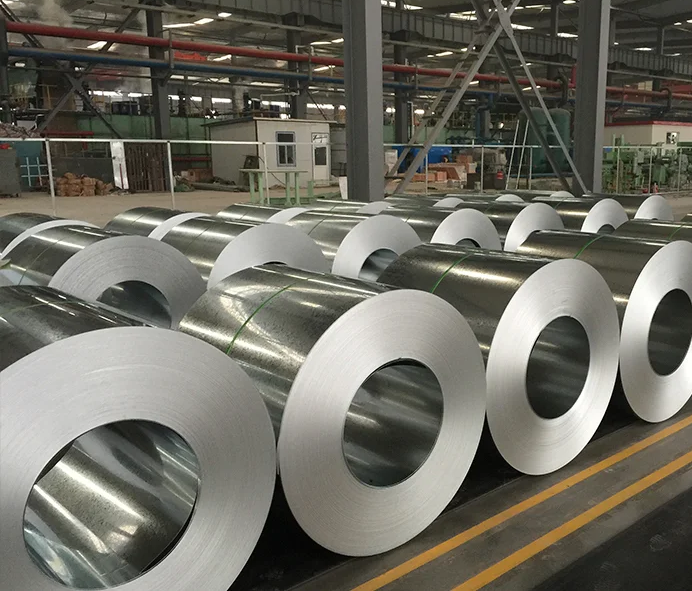
For determining zinc coating thickness, three methods are generally accepted, each having their own advantages and disadvantages with respect to accuracy, speed, and sample destruction.
| Method | Type | Best Used For |
|---|---|---|
| Magnetic Induction | Non-destructive, portable | Quick spot checks during receiving inspection; works on ferromagnetic substrates |
| X-ray Fluorescence (XRF) | Non-destructive, lab-grade | Precision measurement and supplier audits; analyzes coating composition as well as thickness |
| Gravimetric (Weigh-Strip-Weigh) | Destructive, reference standard | Dispute resolution and mill certification; the reference method for ASTM and JIS compliance |
The most practical of the three methods is a portable magnetic induction gauge. To control for as much error as possible, at least five equally distributed measurements (the center, left edge, right edge, and both ends) should be made. If the variance of any two measurements is greater than 15%, further investigation is warranted. Most often, the root cause of this is an error with air knife adjustment during the hot dip, including but not limited to the wrong pressure, the wrong distance, or a blockage of the nozzle such that the coating has streaks.
Surface Defects: Scratches, Bare Spots, and Mechanical Damage
Galvanized steel coils must be free of surface defects as they decrease the protection and value of the steel. Since the purpose of zinc is to protect the underlying steel from corrosion, zinc scratches allow corrosion to attack the underlying steel. This is insoluble for buyers who are selling products with end use visibility, such as roofing, cladding and other housings, as steel products with poor surface quality are unacceptable.
The most common surface defects of steel are:
- Bare spots: Shiny steel patches where zinc failed to bond during hot-dip galvanizing. Caused by inadequate surface preparation — oil residue, mill scale, or dust on the substrate prevented the zinc from adhering. Even a small bare spot will rust within days of atmospheric exposure.
- Scratches and abrasions: Linear marks running along or across the coil, typically from damaged rollers, contaminated guide equipment, or rough handling during slitting and rewinding. Deep scratches that penetrate the zinc layer are a rejectable defect.
- Dents and impact marks: Localized deformations from improper coil handling — forklift contact, dropped strapping tools, or coils stacked without proper dunnage. Dents create stress concentration points and make the affected area unsuitable for flat applications.
- Exfoliation (peeling): The zinc layer separates from the steel substrate in flakes or sheets. This indicates a fundamental adhesion failure, usually from insufficient pre-treatment cleaning or incorrect bath temperature and immersion time. Exfoliation is always a rejectable defect — there is no repair method that restores the metallurgical bond.
For an incoming inspection, uncoil the first three to five meters of each coil in adequate lighting (minimum 500 lux). Run your hand along the steel surface. Your fingers are far more sensitive than your eyes, and will feel steel surface irregularities faster than your eyes can see them. With a temporary marker, indicate the spot of imperfections on the surface of the steel and take a picture of it along with a measuring device for scale, as part of your quality documentation.
Holes and Pinholes: Small Defects With Big Consequences
Holes and pinholes are some of the most notorious quality issues due to the difficulty in spotting them during quick visual inspections and the large impact they have during service. A pinhole, which can be less than a millimeter across, can allow moisture to contact the steel substrate. This will begin to form corrosion cells that will spread through the zinc layer undetected until the coating fails and begins to blister or flake off.
Most issues that lead to the formation of pinholes can be traced back to the pre-treatment.
- Incomplete degreasing: Oil or drawing compound residue on the cold-rolled substrate blocks zinc adhesion at microscopic points
- Surface oxides not fully removed: Residual mill scale or rust spots on the incoming strip prevent uniform coating
- Dust or airborne particles: Contamination in the production environment settling on the strip between cleaning and zinc bath entry
- Roll pickup: Worn or contaminated rolls in the coating section transfer debris that creates repeating pinhole patterns
Detection requires a thorough inspection. For high-value projects a pinhole detector (preferably a wet sponge test or a high-voltage holiday detector) is the most reliable. For a typical receiving inspection, the coil is unrolled and inspected under bright lights at a low angle. This is to allow pinholes to reflect light more than the surrounding surface.
Shape Defects: Edge Waves, Center Buckle, and Camber
Shape defects do not affect corrosion resistance directly, but they create serious problems during downstream processing. A coil with edge waves will not feed straight through a roll forming line. Center buckle causes oil canning in roofing panels. Camber makes slitting inaccurate and produces trapezoidal blanks instead of rectangular ones.
The four main shape defects and how to check for them:
- Edge wave: The edges of the coil are longer than the center, creating a rippled appearance along both sides. Lay a two-meter straightedge across the coil width near the edge — any gap indicates wave amplitude. Cause: improper hot rolling or cold rolling tension distribution.
- Center buckle: The center portion of the coil is longer than the edges, creating ripples in the middle of the strip. Check by laying the straightedge diagonally across the coil. Cause: roll crown mismatch or uneven cooling on the run-out table.
- Camber: The coil edges are not parallel — the strip curves to one side when unrolled. Measure by laying a straightedge along one edge of an unrolled section and measuring the maximum deviation. Cause: uneven slitting or cross-thickness variation in the hot-rolled substrate.
- Crossbow: The strip curves across its width (the top surface is longer than the bottom). Check by cutting a short sample and laying it flat — crossbow reveals itself as the sample rocking on a flat surface. Cause: asymmetrical cold rolling or uneven coating thickness distribution.
Shape tolerances are defined in the mill’s test certificate against standards like ASTM A568 or JIS G3141. Always confirm the tolerance class (full hard, commercial quality, drawing quality) matches your application requirements before accepting the coil.
Coating Flaws Unique to Hot-Dip Galvanized Steel
Beyond basic coating uniformity, hot-dip galvanized steel coils are susceptible to a set of defects tied to the metallurgy of the zinc bath and the thermal cycle of the continuous galvanizing line.
Blisters and Peeling
Blisters appear as raised bubbles in the zinc coating — trapped gas or moisture that expanded during solidification. If the steel surface entering the zinc bath carries even trace amounts of moisture, oil, or rust, the rapid heating in the molten zinc (typically 450-460°C) vaporizes the contaminants and creates gas pockets that lift the coating. Blisters that remain intact may hold up in dry indoor applications but will eventually rupture in outdoor exposure. Peeled coating — where zinc separates in sheets — indicates a complete adhesion failure and is always grounds for rejection.
Dross Pimples and Zinc Slag Inclusions
Dross is an iron-zinc intermetallic compound that forms naturally in the galvanizing bath as iron dissolves from the steel strip. When dross particles are not properly managed — through temperature control, bath chemistry, and regular skimming — they become trapped in the coating as rough bumps or dark spots on the surface. Dross pimples create an uneven surface that interferes with painting, reduces the smoothness required for appliance-grade material, and creates thin spots in the surrounding zinc layer. Mills with modern in-line bath management systems produce significantly fewer dross-related defects than older facilities.
Dull Gray or Mottled Coating
A dull gray or patchy surface appearance is not necessarily a defect — it is a cosmetic characteristic driven by the steel chemistry, specifically the silicon and phosphorus content of the substrate. Reactive steels (typically with silicon above 0.04%) grow thick zinc-iron intermetallic layers that appear matte gray rather than bright and shiny. For most structural and industrial applications, this appearance has zero impact on corrosion performance. However, if the end use requires a uniform bright finish — architectural cladding, visible appliance panels, or automotive body panels — you must specify a substrate chemistry compatible with a bright coating finish at the time of order.
White Rust: The Storage and Logistics Problem
White rust deserves its own section because it is the single most preventable quality problem in the galvanized steel supply chain — and yet it remains one of the most common reasons for cargo claims. White rust forms when moisture condenses on tightly wound coils and cannot evaporate. The standing water reacts with the zinc coating to form zinc hydroxide and zinc carbonate — the white, powdery deposit that signals active coating consumption.
The conditions that cause white rust are well understood:
- Humidity above 60% in the storage environment or inside the coil Қаптама
- Rapid temperature changes during ocean transport — warm, moist daytime air condenses on cold coil surfaces at night
- Inadequate or damaged packaging — torn VCI paper, compromised shrink wrap, or missing desiccant packs
- Coils stacked directly on concrete floors in humid warehouses — concrete wicks ground moisture into the coil
- Transition from cold storage to warm processing area without acclimatization time
Prevention is straightforward: store coils in covered, ventilated areas; use breathable packaging with adequate desiccant; keep coils off the floor on wooden dunnage or steel cradles; and allow 24-48 hours of acclimatization when moving coils between environments with large temperature differentials. If white rust is discovered during receiving inspection, the severity determines the disposition: light surface white rust can be cleaned with a stiff brush and the remaining coating thickness measured; heavy white rust that has consumed significant zinc requires a claim.
Buyer’s Quality Inspection Checklist
A systematic receiving inspection process catches the vast majority of quality problems before the coils enter your inventory. Here is a practical checklist that requires minimal equipment and can be performed in under ten minutes per coil:
- Check packaging integrity: Look for tears in the outer wrap, missing or displaced desiccant, water stains on the packaging, and any signs the coil was exposed to rain during transport or unloading.
- Visual surface inspection: Unroll the first three to five meters under good lighting. Scan for rust (black spots, white powder, red rust), bare spots, scratches, dents, and surface roughness. A coil that looks clean on the outer wrap may still have defects one or two laps in.
- Coating thickness measurement: Take a minimum of five readings across the coil width with a calibrated magnetic induction gauge. Compare against the mill test certificate and your purchase order specification. Flag any reading below 90% of nominal.
- Shape and flatness check: Lay a two-meter straightedge across the unrolled strip width near the edge and diagonally. Measure any gap. For camber, unroll approximately three meters and check edge straightness.
- Dimensional verification: Measure the coil width at three positions along the unrolled length and verify thickness with a micrometer at the edges and center.
- Weight verification: Compare the actual coil weight against the mill tag. Significant discrepancies may indicate thickness issues or short shipment.
- Document everything: Photograph any defect with a scale reference and timestamp. Record all measurements in a receiving inspection report that ties back to the coil number and mill test certificate.
This checklist catches approximately 90% of actionable quality problems. The remaining 10% — internal defects, latent coating adhesion issues, or microstructural problems — require laboratory testing and are typically covered by the mill’s warranty and your long-term supplier relationship.
Why Supplier Selection Matters More Than Inspection
Inspection catches defects. Supplier qualification prevents them. The most effective quality strategy for galvanized steel coil importers is to invest effort upstream — in vetting mills, auditing production processes, and building relationships with suppliers who have demonstrated quality consistency over multiple shipments — rather than relying solely on receiving inspection to filter out bad material.
When evaluating a galvanized steel coil supplier, look beyond the price per ton and ask these questions:
- What continuous galvanizing line (CGL) technology does the mill operate? Modern lines with automated air knife control, in-line coating thickness gauges, and closed-loop bath chemistry management produce far fewer defects than older manually-controlled lines.
- Does the mill hold current certifications? ASTM A653, JIS G3302, EN 10346, or equivalent national standards demonstrate commitment to internationally recognized quality benchmarks.
- What is the mill’s approach to substrate sourcing? Mills that use hot-rolled substrate from their own upstream operations — or from a single qualified supplier — have tighter control over the steel chemistry that determines coating appearance and adhesion.
- What pre-treatment and cleaning capability is in place? The quality of alkaline degreasing, pickling, and rinsing before the zinc bath is the single biggest determinant of coating adhesion and absence of bare spots.
- How does the mill handle packaging and loading for export? Export-grade packaging — VCI paper, edge protectors, steel strapping, desiccant packs, and weather-resistant outer wrap — is essential for coils traveling four to six weeks by sea.
At БОМИС болат , we source galvanized steel coils from ISO 9001-certified mills with modern continuous galvanizing lines and a documented track record of export-quality consistency. Every shipment includes a full mill test certificate, and our quality team conducts pre-shipment inspection as a standard service — not an optional extra. This means you receive coils that have passed two layers of quality verification before they leave the port of origin.
Beyond inspection, choosing the right supplier from the start prevents most quality issues. See our framework for identifying reliable steel suppliers to avoid trade problems.
Жиі қойылатын сұрақтар
What is the most common quality defect in galvanized steel coils?
Rust — in the form of white rust (zinc corrosion) or red rust (steel substrate corrosion) — is the most frequently reported quality problem. White rust typically results from moisture exposure during storage or ocean transport. Red rust indicates complete coating failure and is grounds for rejection. Regular inspection at the receiving stage catches both before they become downstream problems.
How do I check for uneven zinc coating thickness?
Use a portable magnetic induction coating thickness gauge. Take readings at a minimum of five positions across the coil width: both edges, left quarter, right quarter, and center. The variance between the highest and lowest reading should not exceed 15%. If it does, the coil may have air knife streaking issues from the galvanizing line, and further investigation is warranted.
Can scratches on galvanized steel coils be repaired?
Minor surface scratches that do not penetrate the zinc layer are cosmetic and generally acceptable for non-visible applications. Scratches that expose the steel substrate can be spot-repaired with zinc-rich paint or thermal spray, but this is a temporary fix — the repaired area will not match the service life of the original hot-dip coating. Deep or numerous scratches should trigger a supplier claim.
Is dull gray coating a sign of poor quality?
No. A matte gray or mottled surface appearance is a cosmetic characteristic caused by the silicon and phosphorus content of the steel substrate, not a quality defect. It has no impact on corrosion resistance. The coating provides the same level of protection regardless of whether the surface is bright and shiny or dull gray. If a bright finish is required for your application, specify a low-silicon substrate grade at the time of order.
How can I prevent white rust during ocean transport?
Specify export-grade packaging: VCI (volatile corrosion inhibitor) paper between coil wraps, adequate desiccant packs inside the packaging, weather-resistant outer shrink wrap, and edge protectors. Ensure the coils are loaded under-deck whenever possible, and request that the packaging includes breathable vents to prevent condensation buildup. If your destination port is in a tropical climate, arrange for immediate transfer to covered storage upon arrival.
What should I do if I discover defects in a shipment?
Document the defect immediately with timestamped photographs showing a scale reference and the coil number tag. Do not use or process the affected coil — leave it in as-received condition. Notify your supplier within the timeframe specified in your purchase contract (typically 7-14 days from receipt). Provide the inspection report, photographs, and coating thickness measurements. Reputable suppliers will work with you on replacement, discount, or return based on the severity and extent of the defect. This is why working with established exporters who stand behind their quality — rather than trading companies with no mill relationship — matters for your long-term business.
Where can I source quality-assured galvanized steel coils?
Galvanized steel coils are produced by mills across China, South Korea, India, Vietnam, and other major steel-producing countries. BOMIS Steel supplies GI and GL coils to importers, wholesalers, fabricators, and construction companies worldwide. We provide mill test certificates with every shipment, conduct pre-shipment quality inspection as standard, and offer competitive pricing backed by consistent mill relationships. Contact our sales team for specifications, coil availability, and a quotation for your market.
Related: Protecting your coils does not stop at inspection. Read our guide to best practices for managing steel coil inventory risks for a complete framework covering storage conditions, rack systems, handling safety, and inventory tracking.