Alex: Welcome back to The Metal Brief, your weekly window into industrial manufacturing, global supply chains, and the engineering decisions behind modern infrastructure. Today, we’re unpacking a fascinating transcript that crossed our desks—a detailed commercial and technical negotiation between Bomis Steel and a major regional building materials distributor.
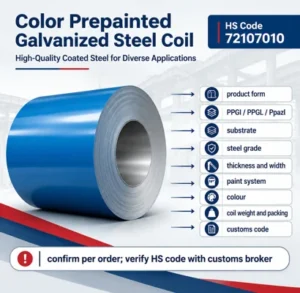
Morgan: And what makes this discussion so compelling, Alex, isn’t just the corporate banter. It’s that this product title reads like a technical alphabet soup: Painted Zinc Coating G60, G90, Z100, Z180, Z275, SGCC, Sghc, G350 Galvanized Metal Roof Sheet, PPGI Steel Coil Sheet Price. To the untrained eye, it looks like keyword stuffing on a B2B trading site. But to an engineer or an international importer, every single one of those terms represents a critical mechanical trade-off and a line item on a cost sheet.
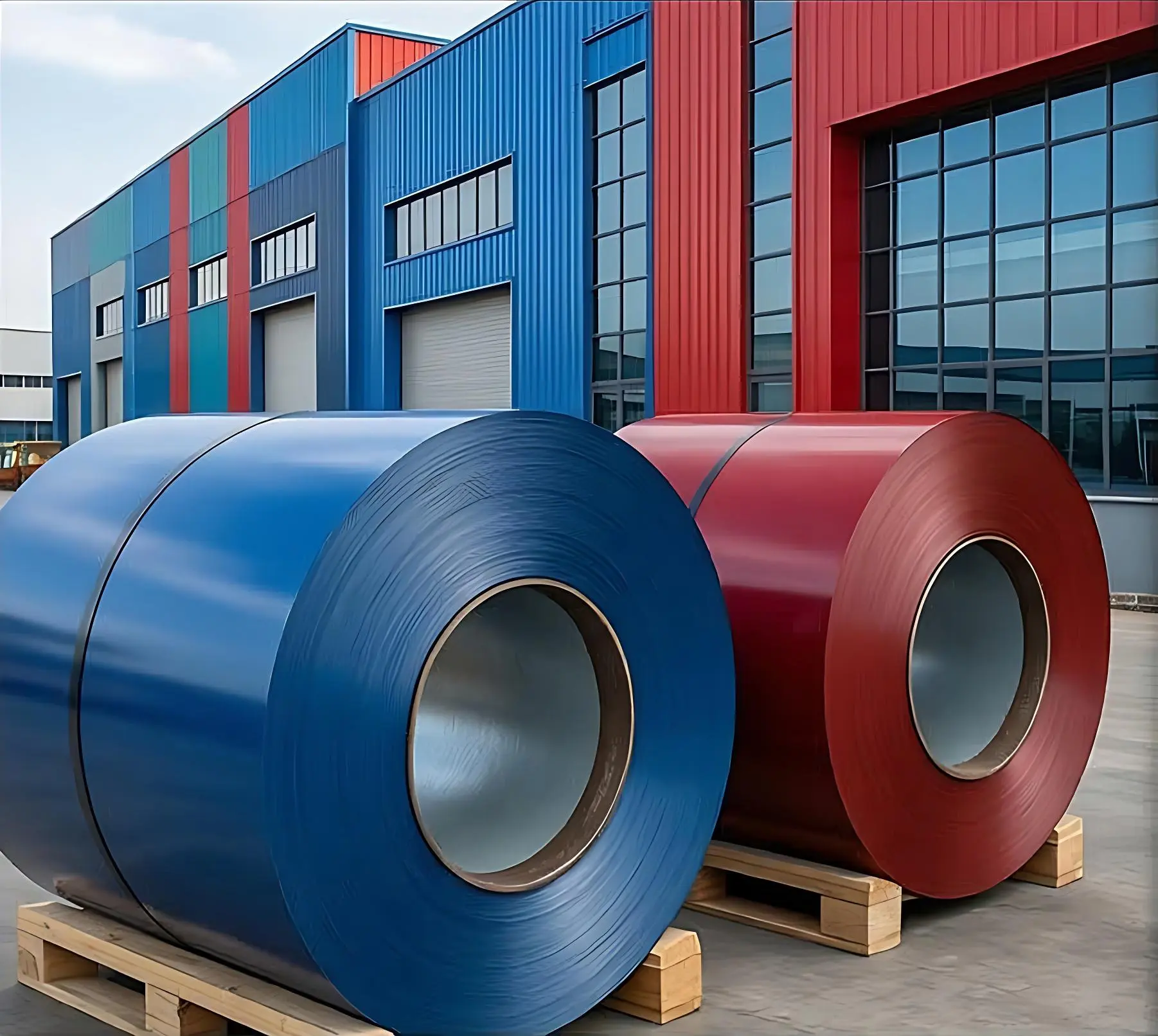
Alex: Exactly. Today, we’re breaking down that conversation into a real-world dialogue—translating those acronyms into actionable strategy: from paint degradation and sacrificial zinc protection to structural load capacities and maritime shipping survival.
Act I: The Chemistry of the Surface — “Why Is My Roof Fading?”
Alex: Let’s set the stage. The distributor starts with a very real problem: their coastal roofing projects are failing prematurely. Customers are complaining about fading, chalking, and paint peeling within two to three years. Morgan, why does conventional painted steel—what the industry calls PPGI—break down so fast in these environments?
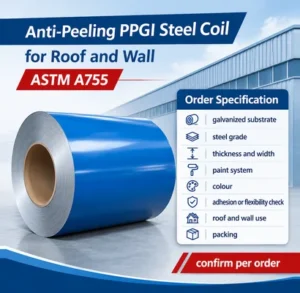
Morgan: It comes down to solar radiation and salt spray. PPGI stands for Prepainted Galvanized Iron, which is essentially a steel coil coated with zinc, treated, and then topped with an organic paint system. In the dialogue, the distributor points out that baseline industrial coils often use generic Regular Modified Polyester, or standard PE paint. Under harsh ultraviolet radiation, the polymer bonds in cheap polyester degrade. The finish loses its gloss, begins to chalk, and micro-cracks form.
Alex: And that’s where Bomis steps in with surface customization. They aren’t just selling “painted steel”—they’re specifying paint systems:
- HDP (High-Durability Polyester),
- SMP (Silicon-Modified Polyester), and
- PVDF (Polyvinylidene Fluoride).
Morgan: Right! And Bomis doesn’t just talk resin chemistry; they talk microns. A standard specification here calls for a topcoat dry film thickness between 10 and 30 microns, supported by a 5 to 30 micron backing coat. Crucially, they pair that with an anti-corrosive polyurethane primer. That ensures the paint flexes when the distributor runs the coil through roll-forming machinery to make corrugated panels, rather than flaking off at the bend radius.
Act II: The Sacrificial Shield — Unpacking G60, G90, and Z275
Alex: Now, let’s get to the zinc layer, because paint is only the primary weather barrier. If a stone chips the paint, or when the sheet is cut to length, what stops the steel core from rusting out?
Morgan: Cathodic protection. And this brings us right to the heart of those numbers: G60, G90, Z100, Z180, and Z275. Notice how the supplier categorizes them:
- The “Z” ratings are metric, indicating grams of zinc per square meter on both sides combined: $100\text{ g/m}^2$, $180\text{ g/m}^2$, and $275\text{ g/m}^2$.
- The “G” ratings follow ASTM American standards: G60 equates to roughly $180\text{ g/m}^2$, while G90 is the benchmark equivalent to Z275 (approx. $275\text{ g/m}^2$ or 0.90 oz/ft²).
Alex: In the discussion, the distributor was asking: “Can’t I just buy Z100 for everything and save money?” And Bomis gives a classic engineering reality check.
Morgan: Exactly! For dry inland warehouses or residential carports, a lighter Z100 or G60 coating works fine and keeps costs manageable. But in high-humidity or marine salt-spray zones, you must step up to Z180, G90, or Z275. Why? Because when panels are sheared or drilled with self-tapping screws on site, that heavy zinc layer acts as a sacrificial anode. It literally oxidizes first to heal and protect the exposed bare cut edges. Without enough zinc weight, red rust creeps inward beneath the paint film within months.
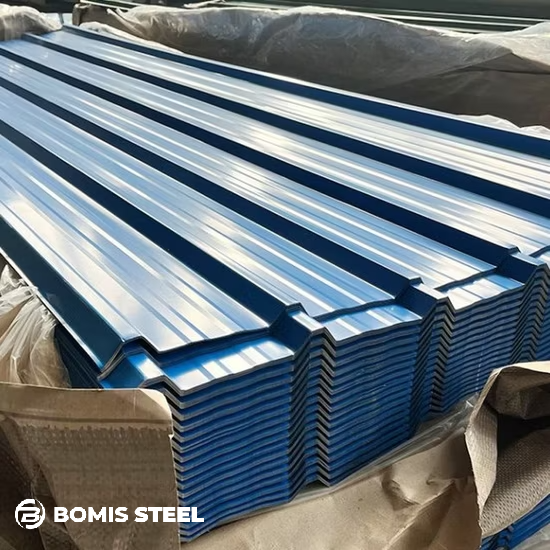
Act III: Substrate Metallurgy — SGCC vs. SGHC vs. G350
Alex: That brings us to what’s underneath the zinc—the base steel substrate. The dialogue highlights three specific grades: SGCC, SGHC, and G350. Morgan, break down why a roll-former would care about these distinctions.
Morgan: This is one of the most practical parts of the interview.
- SGCC is cold-rolled galvanized commercial quality per Japanese industrial standards (JIS G3302). It’s ductile, formable, and has lower hardness—typically around HRB 60 to 80. It’s what you want when making tight bends, ridge caps, or complex flashing where the metal must fold 180 degrees without fracturing.
- SGHC is hot-rolled commercial quality. Because it starts from hot-rolled coil, it’s primarily used for thicker plate specifications—think 1.2 to 2.0 mm—where you need structural stability without paying the premium for cold-rolling.
- G350, on the other hand, is a high-strength structural grade. That “350” signifies a minimum yield strength of 350 megapascals (equivalent to European S350GD).
Alex: And Bomis highlights a big cost-saving angle here for structural roofing. With G350, the steel is so much stiffer that roofing engineers can design wider purlin spacings—meaning fewer steel rafters across a warehouse roof. Or, they can safely down-gauge the sheet from 0.50 mm to 0.40 mm without failing regional wind-uplift codes. That’s real money saved across a 10,000-square-meter project.
Act IV: The Physical Conversion — Coils, Sheets, and Surviving the Ocean
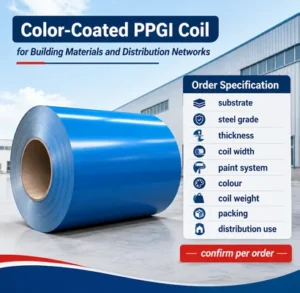
Alex: Let’s talk about the transformation process described in the transcript. The distributor buys Steel Coils, but their customers buy Metal Roof Sheets. What operational challenges did they hammer out?
Morgan: First, dimensions and tolerances:
- Master coils are supplied with inside diameters of 508 mm or 610 mm to fit standard uncoilers.
- Coil weights are calibrated to 3 to 5 metric tons so regional overhead cranes don’t get overloaded.
- Thickness ranges span from ultra-light 0.12 mm up to 2.00 mm, with continuous tension-leveling so the sheet feeds flat into the roll-forming dies without edge waves or camber.
Alex: And then there’s the transit issue. Shipping 75 tons of steel coils across salt water in a humid container is a recipe for disaster if packaging isn’t airtight.
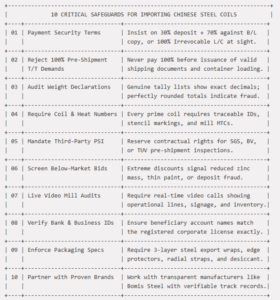
Morgan: It really is. Condensation inside a closed container can cause white rust before the container even arrives at the discharge port. Bomis laid out a three-tier defense:
- Inner anti-rust VCI craft paper,
- An airtight plastic wrap,
- A heavy outer galvanized protective steel wrap (at least 0.45 mm thick) banded with seven high-tensile steel straps, and
- Industrial desiccant bags placed inside the coil core and against both ends to actively capture ambient moisture.
Act V: The Commercial Bottom Line — Pricing & The 3-Container Trial
Alex: Finally, how does all this translate to dollars and cents?
Morgan: The transcript reveals a transparent “base-plus-extras” pricing structure. The baseline export price sits between $620 and $700 per metric ton based on a standard commercial SGCC / Z100 / PE configuration. From there:
- Bumping zinc from Z100 to Z180 (G60) adds around $20 to $30/MT.
- Moving to maximum Z275 (G90) is priced on pure zinc consumption.
- Upgrading to high-yield G350 adds roughly $15 to $25/MT for metallurgy and continuous annealing.
- Upgrading the paint to HDP or PVDF adds $35 to $80/MT.
Alex: And the dialogue wraps with a concrete deal: a 75-metric-ton trial order split across three 20-foot containers:
- Container 1: 0.50 mm G350 structural roofing in RAL 5012 Light Blue with HDP paint.
- Container 2: 0.40 mm G350 commercial roofing in RAL 3005 Wine Red.
- Container 3: 0.60 mm SGCC ductile flashing coils in RAL 7016 Anthracite Grey with strippable protective film.
Morgan: Complete with an agreement on a 15-to-25-day production turnaround, third-party SGS inspection, and clear performance warranties.
Host Outro
Alex: That is how raw engineering catalog specifications turn into a multi-million-dollar supply partnership. Every letter—from the zinc mass to the resin type—serves a distinct structural and economic purpose.
Morgan: If you’re dealing with metal roofing, industrial imports, or structural contracting, never settle for a generic “painted steel” quote. Know your zinc weight, know your substrate grade, and match your paint chemistry to your environment.
Alex: That’s all for today’s episode of The Metal Brief. Hit subscribe, leave a review, and share this episode with your engineering and procurement teams. Until next time, keep your structures solid and your specs grounded!
[Audio Outro: Dynamic music swells and fades out]