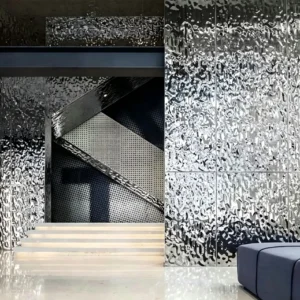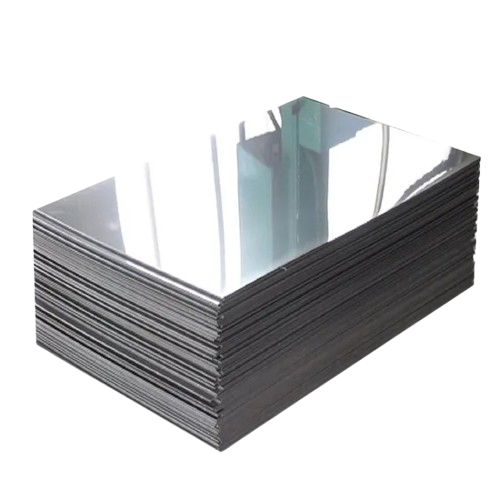
Your one-stop source for 316 stainless steel tube, bar, and sheet. Cold-rolled 0.1–6 mm, hot-rolled 3.0–180 mm, width 100–2,000 mm, cut to length. Molybdenum content 1.80–2.50% — built for chloride environments. Used across petrochemical, marine, and medical sectors. Standard seaworthy packing; container, bulk, or rail.
316 gets its edge from 1.80–2.50% molybdenum — far more stable than 304 in chloride-rich conditions. Tube, bar, and sheet all in stock. Cold-rolled from 0.1 mm, hot-rolled up to 180 mm.
Molybdenum is what separates 316 from 304. At 1.80–2.50%, that molybdenum range covers most coastal scenarios — seawater, salt spray, chlorine-bearing media. Where 304 gives out, 316 holds steady over the long haul. Coastal projects, chemical plant piping, marine equipment — the pros go straight to 316. Backed by 16–18% chromium and 11–14% nickel, it handles acidic and alkaline environments with room to spare.
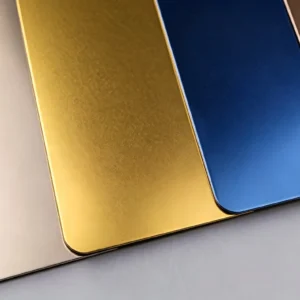
We run both cold-rolled and hot-rolled. Cold-rolled: 0.1–6 mm, with surfaces from 2B and BA through No.4 to mirror. Hot-rolled: 3.0–180 mm, covering industrial and structural work. Widths 100–2,000 mm, lengths cut to order — no wasted stock. Welding is straightforward with standard methods. Yield strength ≥205 MPa, elongation ≥40%. Forming, machining, and welding all go smoothly regardless of the process.
| Məhsulun adı | 316 Stainless Steel |
| Qalınlıq | Cold-rolled 0.1–6 mm; Hot-rolled 3.0–180 mm |
| Eni | 100–2,000 mm, custom available |
| Uzunluq | Cut to customer specification |
| Səthi bitirmə | 2B, BA, No.1, No.4, HL, No.8, mirror, sandblasted, brushed, and more |
| Sıxlıq | 8.00 g/cm³ |
| Qablaşdırma | Standard seaworthy export packing, or to customer requirements |
| Kimyəvi tərkibi | C ≤0.08%; Si ≤1.00%; Mn ≤2.00%; P ≤0.045%; S ≤0.030%; Ni 11.00–14.00%; Cr 16.00–18.00%; Mo 1.80–2.50% |
| Mexaniki Xüsusiyyətlər | Yield strength (0.2% offset) ≥205 MPa; Tensile strength 515 MPa; Elongation ≥40%; Hardness 70–90 HRC |
316 earns its place wherever corrosion is the deciding factor. Petrochemical, chemical processing, medical equipment, marine engineering — if the medium carries chloride, acid, or salt spray, 316 is the call. Tube for process lines, sheet for vessels and structural work.
316 doesn’t fight you on the shop floor. Cutting, bending, forming — it takes them all, including complex profiles. Welding is a plus: standard methods work fine, post-weld strength stays close to the base metal, and on-site work isn’t a headache.
Standard seaworthy export packing — moisture-proof, impact-resistant, built for ocean freight. Container, bulk carrier, or rail — we match the shipping method to your delivery point.
A: Carbon content. 316L runs ≤0.03% carbon — slightly lower strength, but more stable welding. If your job is weld-heavy, go 316L.
A: Depends on the environment and your budget. For dry indoor use, 304 is fine. For salt spray, chlorides, or coastal exposure — spend the extra on 316. It’s worth it.
A: 0Cr17Ni12Mo2. Same composition; either standard works.
A: 2B, BA, No.1, No.4, HL, No.8, mirror, sandblasted, brushed — the full range.
A: Cold-rolled 0.1–6 mm, hot-rolled 3.0–180 mm, width 100–2,000 mm, length cut to spec.
A: Five things: grade, surface, thickness, application, and price. Nail down the application first, then pick the grade.