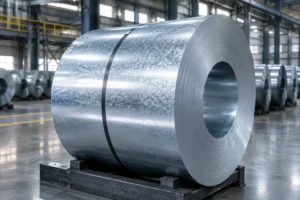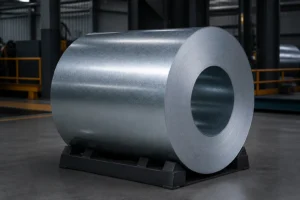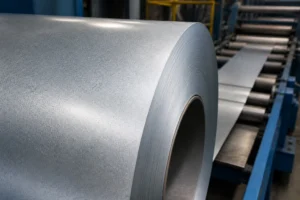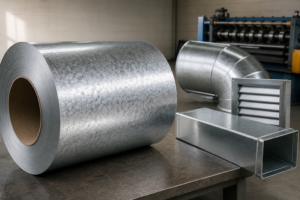

















Metal sheets are an important form of material used in the building of many different products and structures. From roofs, to walls, to auto body panels and housings for appliances, sheet metal forms are some of the most versatile materials due to their strength and cost.
Metal sheets are frequently used materials in manufacturing and construction. They have applications in framing and roofing systems, automotive body and appliance housings, as well as other uses. Sheet metal may be the best material for a project because of its strength and excellent cost/performance ratio. When looking into new materials, it is important to know the types of metal sheets, the way in which they are measured, and their ideal applications. This knowledge streamlines the purchasing process. This guide explains different types of sheet metal, the thickness selection system called gauge, and includes information on roofing materials and the sheets’ cutting methods and sizes. It also explains the considerations to make when picking a supplier.
What Are Metal Sheets?
Metal sheets are thin, flat metal parts that have been rolled, hammered, or pressed into a uniform thickness. Metal sheets can be classified into two groups. Sheets are metal that is 6 mm or thinner and may be formed by cutting, stamping, bending, punching, or welding, and may be deep drawn. Metal thicker than 6 mm is classified as metal plate. The backing base metals of sheet metal are steel, stainless steel, aluminum, copper, and galvanized steel. The choice of backing base metal depends on the end application. These materials have different weights, profiles, and costs.
Types of Metal Sheets
1. Carbon Steel Sheet
 Carbon steel sheets are widely used in diverse industrial fabrication sectors. These are available in both cold rolled and hot rolled variants. Despite having high strength and formability, these sheets are available in diverse thicknesses across industry standards. Cold rolled steel sheets provide tighter dimensional tolerances and a smoother surface finish as compared to hot rolled steels. Therefore, cold rolled sheets are preferred for construction and manufacturing of enclosures, which are exposed and require a high degree of precision. Although hot rolled sheets are economical, for construction and manufacturing of structures where finish is not important, hot rolled sheets are widely used.
Common applications: Structural parts of automotive, storage tanks, containers, general fabrication, and construction framing.
Key considerations: Carbon steel exhibits rusting property when exposed to moisture. Therefore, protective coatings — paint, powder coating, or an oil film — are essential for outdoor or humid environment uses unless a galvanized or stainless alternative is specified.
2. Stainless Steel Sheet
Stainless steel sheets combine high strength with resistance to corrosion and temperature, thanks to a minimum 10.5% chromium content. Among the grades available, 304 stainless steel exhibits an excellent balance of corrosion resistance, weldability, and formability at an affordable price point. Grade 316, with the addition of molybdenum, is specified for environments where pitting resistance is critical, including marine, chemical processing, and pharmaceutical applications. For architectural cladding, elevator panels, and decorative installations, our ألواح الفولاذ المقاوم للصدأ العاكسة deliver a glass-like reflective finish from 6K to 16K ultra-mirror.
For high-temperature industrial applications up to 980°C, الفولاذ المقاوم للصدأ 309 provides enhanced oxidation resistance with higher chromium (22–24%) and nickel (12–15%) content, bridging the gap between standard 304 and premium 310S grades.
Common applications: Food processing equipment, medical devices and surfaces, chemical tanks, architectural cladding, kitchen equipment, and marine hardware.
Key considerations: Stainless steel is the most expensive of the common sheet metals. The initial capital outlay must be weighed against the indirect costs of maintenance and replacement over the product’s life cycle. For highly corrosive environments, the upfront investment is typically justified by lower total life-cycle costs.
3. Aluminum Sheet
Aluminum sheet has the highest strength-to-weight ratio of all the common sheet metals. It is about a third the weight of steel, naturally corrosion-resistant, and highly formable. The most commonly used aluminum alloys for sheets are 1100 (commercially pure, excellent corrosion resistance), 3003 (general purpose, good workability), and 5052 (higher strength, excellent marine corrosion resistance). For architectural cladding, curtain walls, and signage, pre-painted white aluminum sheets in RAL 9010, RAL 9003, or RAL 9016 offer a factory-applied finish that resists fading and chalking.
Common applications: Automotive body panels, aircraft skins, roofing and siding, marine hulls and components, signage, and electrical enclosures.
Key considerations: Aluminum cannot match the tensile strength of steel sheets of the same thickness. Designers typically compensate by using a thicker gauge or adding stiffening ribs. Aluminum is also more expensive per kilogram than carbon steel, though its lower density means a sheet of aluminum weighs significantly less — and may cost less — than a steel sheet of equivalent dimensions. In coastal environments, aluminum is recommended over coated carbon steel for long-term durability.
4. Galvanized Steel Sheet
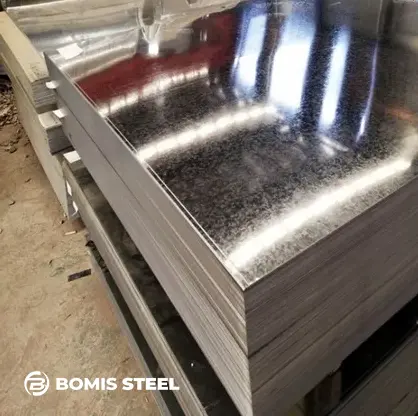 Galvanized steel sheet is carbon steel that has been coated with a layer of zinc through hot-dip or electro-galvanizing processes. The zinc coating provides sacrificial protection: if the coating is scratched, the surrounding zinc corrodes preferentially, shielding the underlying steel from rust. This makes galvanized sheet a cost-effective substitute for stainless steel in many outdoor and industrial applications where moderate corrosion resistance is sufficient.
Common applications: Roofing and wall cladding, HVAC ductwork, outdoor furniture, agricultural equipment, automotive underbody components, and electrical cabinets. For structural applications requiring thicker material, a 2mm GI sheet provides the necessary load-bearing capacity combined with corrosion resistance.
Key considerations: The zinc coating can be compromised in acidic or alkaline environments. Welding galvanized sheet requires proper ventilation, as vaporized zinc can cause metal fume fever. Fabrication planning should account for the fact that cut edges of galvanized sheets do not carry the same level of protection as the factory-coated faces.
Understanding Sheet Metal Gauge
Sheet metal thickness is traditionally specified by gauge rather than by direct millimeter or inch measurement. The gauge system is counterintuitive: a lower gauge number indicates a thicker sheet. This convention originated from the wire-drawing industry, where the gauge number represented the number of times the metal was drawn through progressively smaller dies. Different metals use slightly different gauge scales. The table below references the Manufacturers’ Standard Gauge for steel, the most commonly cited scale in industrial procurement:
| Gauge | Thickness (inches) | السماكة (مم) | التطبيقات النموذجية |
|---|---|---|---|
| 10 ga | 0.1345 | 3.42 | Heavy structural components, pressure vessels, base plates |
| 12 ga | 0.1046 | 2.66 | Structural framing, heavy equipment panels, trailer bodies |
| 14 ga | 0.0747 | 1.90 | Automotive frames, machinery guards, industrial shelving |
| 16 ga | 0.0598 | 1.52 | General fabrication, enclosures, storage tanks, ductwork |
| 18 ga | 0.0478 | 1.21 | Automotive body panels, appliance housings, furniture |
| 20 ga | 0.0359 | 0.91 | HVAC ductwork, light enclosures, signs, interior panels |
| 22 ga | 0.0299 | 0.76 | Light-duty enclosures, flashing, trim, decorative panels |
| 24 ga | 0.0239 | 0.61 | Roofing panels, wall cladding, stamped light-gauge parts |
For most industrial procurement, specifying both the gauge and the millimeter tolerance is recommended. A sheet ordered as “16 gauge” from different mills can vary slightly in actual thickness depending on the specific standard referenced. Including a tolerance band — for example, 1.52 mm ± 0.05 mm — in your specification eliminates ambiguity and helps ensure the material meets your production requirements.
Metal Sheets for Roofing
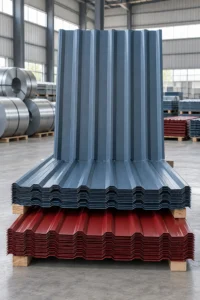
The use of sheet metal roofing has increased in industrial and commercial construction, driven by its long service life (30–50 years for properly specified and installed systems), energy efficiency through reflective coatings, and aesthetic versatility. Three primary materials dominate the roofing sheet market:
Galvanized Steel Roofing
The most economical roofing option. Hot-dip galvanized roofing sheets with zinc coatings in the G60–G90 range (0.60–0.90 oz/ft²) provide solid corrosion protection for inland and moderate-climate applications. Typical gauges for roofing range from 24 to 26 gauge, with corrugated and standing-seam profiles being the most common configurations. Expected service life is 20–30 years with proper maintenance.
Aluminum Roofing
Recommended for coastal and high-humidity environments where galvanized steel would corrode prematurely. Aluminum roofing sheets naturally resist salt spray and do not develop red rust. Common alloys for roofing applications are 3003 and 3105, typically in 0.032″ to 0.040″ (22–20 gauge equivalent) thickness. While aluminum roofing carries a higher material cost than galvanized steel, the reduced maintenance burden and longer service life in aggressive environments can offset the initial premium.
Copper Roofing
Copper is a premium roofing choice valued for its extraordinary longevity — copper roofs on historic buildings have endured for over a century. Copper naturally develops a green-gray patina over time that is self-protective; the material beneath remains structurally sound. The cost, however, is several times that of steel or aluminum, limiting its use to high-end architectural projects and heritage restorations.
For roof specification, we recommend evaluating not just the material cost per sheet but also the installed cost, expected service life in the local climate, and maintenance requirements over the building’s intended lifespan. A lower upfront material price that results in replacement after 15 years may be more expensive over a 30-year horizon than a higher-quality specification installed once.
Standard Sheet Sizes and Purchasing Considerations
The 4 ft × 8 ft (1220 mm × 2440 mm) sheet is the most common standard size in the industry, available from virtually every mill and service center. Other widely stocked sizes include 4 ft × 10 ft (1220 mm × 3050 mm) and 5 ft × 10 ft (1525 mm × 3050 mm). Most suppliers also offer cut-to-size services for buyers who require non-standard dimensions.
Several factors influence the per-sheet cost beyond the base metal price:
- Material grade: Higher alloy content and tighter chemistry specifications increase cost. For example, 316 stainless steel commands a substantial premium over 304 because of its molybdenum content.
- Gauge/thickness: Thicker material requires more raw metal per sheet and more energy to roll, driving up cost proportionally.
- Surface finish: Standard mill finish is the baseline cost. Additional treatments — galvanizing, pre-painting (PPGI), anodizing (aluminum), brushed or polished finishes (stainless steel) — add incremental cost.
- Cutting and processing: Shearing to custom dimensions, punching, notching, and edge conditioning add value but increase total cost. For volume orders, processing costs are typically lower per unit.
- Quantity: Sheet metal pricing is heavily volume-dependent. Full coil or mill-run quantities carry the lowest per-kilogram cost, while individual sheets purchased from a service center include a markup for warehousing and break-bulk handling.
For buyers new to sourcing sheet metal in commercial quantities, we recommend requesting quotes that break down material cost, processing charges, and delivery fees. This transparency makes it easier to compare supplier offers on an apples-to-apples basis and to identify where savings can be achieved through larger order volumes or by consolidating processing steps with a single supplier.
Cutting and Fabrication Methods
The method used to cut and shape sheet metal has a direct impact on edge quality, dimensional accuracy, and fabrication cost. The most common industrial cutting methods are:
- Shearing: The most economical method for straight-line cuts. Hydraulic and mechanical shears can process sheets up to 6 mm thick (for steel) with clean, square edges. Shearing is fast and inexpensive but limited to straight cuts — curved or complex profiles require alternative methods.
- Laser cutting: CO₂ and fiber laser systems deliver high precision with narrow kerf widths and minimal heat-affected zones. Fiber lasers are particularly efficient on reflective metals such as aluminum and copper. Laser cutting is ideal for complex geometries, tight tolerances, and moderate production volumes.
- Plasma cutting: Cost-effective for thicker sheet and plate (above 3 mm). Plasma produces a wider kerf and more pronounced heat-affected zone than laser, but equipment and operating costs are lower for heavy-gauge work.
- Waterjet cutting: A cold-cutting process that uses a high-pressure stream of water mixed with abrasive garnet. Waterjet produces no heat-affected zone and can cut virtually any metal. It is particularly suited to thick aluminum and titanium sheets where thermal distortion would be problematic.
- Punching/turret press: Highly efficient for producing multiple holes, slots, and cutouts in thin to medium-gauge sheet. Turret punch presses can process hundreds of features per minute, making them the dominant technology for electrical enclosure and HVAC component production.
The choice of cutting method depends on material type and thickness, required edge quality, production volume, and the complexity of the part geometry. For most procurement purposes, specifying the required dimensional tolerance and edge condition — rather than prescribing a specific cutting method — gives the fabricator flexibility to use the most cost-effective process for their equipment.
How to Choose the Right Metal Sheet
Selecting the optimal sheet metal for a project involves balancing multiple criteria. We recommend working through the following decision sequence:
1. Define the operating environment. Will the part be used indoors or outdoors? Exposed to moisture, chemicals, or salt spray? Subject to high or low temperature extremes? The environment is the primary driver of material selection — it determines whether you need stainless steel, can use galvanized steel, or can specify the lowest-cost option in carbon steel.
2. Determine mechanical requirements. What tensile strength, yield strength, and elongation are needed? Will the sheet be formed, drawn, or bent — and if so, what minimum bend radius is required? These factors narrow the grade choice within each material family.
3. Establish thickness requirements. Structural calculations or product specifications typically determine the minimum thickness. Factor in a corrosion allowance if the part will be exposed to weathering over its service life.
4. Evaluate finish requirements. Is the as-rolled surface acceptable, or is a specific finish (galvanized, painted, polished) needed? The finish affects not just appearance but also corrosion resistance and paint adhesion.
5. Consider the total cost of ownership. Material cost is one component. Also weigh: expected service life, maintenance requirements, fabrication cost (some materials are harder to machine, weld, or form), and disposal/recycling value at end of life.
For volume procurement, we always recommend requesting material test certificates (mill test reports) that document the chemical composition and mechanical properties of the specific heat or lot. This provides traceability and ensures the material meets the specification you have designed around.
الخلاصة
Metal sheets are one of the foundational material categories in modern manufacturing and construction. The range of available types, grades, thicknesses, and finishes means there is an appropriate specification for virtually any application. The key to efficient procurement is matching the material to the actual requirements — not over-specifying where a more economical option would perform adequately, and not under-specifying where premature failure would incur replacement costs exceeding any initial savings.
Whether you are sourcing carbon steel sheet for general fabrication, galvanized sheet for roofing and cladding, aluminum sheet for lightweight structures, or stainless steel sheet for corrosion-critical applications, a clear understanding of gauge, grade, and processing options will help you communicate effectively with suppliers and secure the right material at a competitive price. For more information on steel sheet products available from BOMIS, browse our product catalog or contact our sales team for a tailored quotation based on your project requirements.