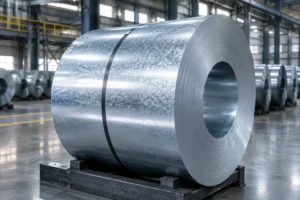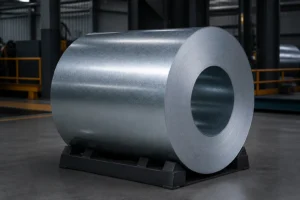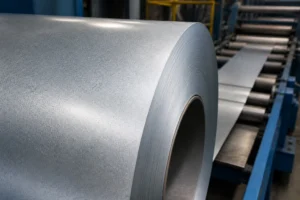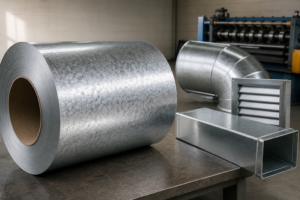

















Steel coil inventory is a high-stakes game. A single coil of galvanized or Galvalume steel can weigh 5 to 25 metric tons and carry a value of several thousand dollars. When storage conditions go wrong — moisture creeping between coil laps, a stack that shifts overnight, or a coil that sits too long and develops white rust — the financial damage compounds fast. The coils themselves are the obvious loss, but add in downtime, rejected orders, and potential workplace injuries, and poor inventory management becomes a business-ending problem.
Managing steel coil inventory risks is not just about having the right racks. It is about building a system where every coil is tracked, every storage condition is monitored, and every person who handles a coil knows exactly what to do. This guide covers the best practices that professional steel distributors and service centers use to protect their coil inventory — from environmental controls and handling protocols to the technology that makes risk management measurable and repeatable.
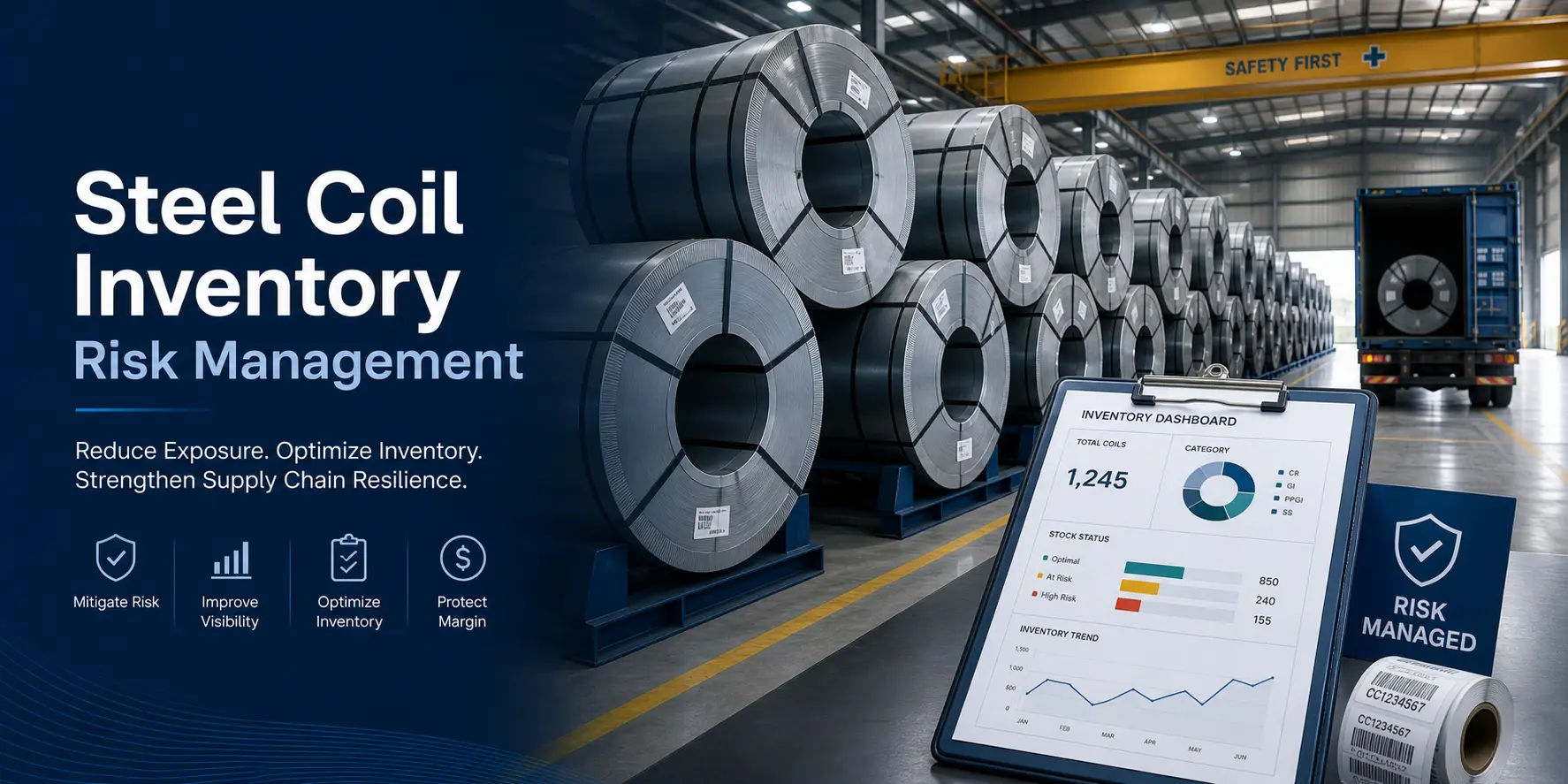
The Real Cost of Poor Steel Coil Storage
Before diving into solutions, it is worth understanding what is at stake. Steel coil inventory risks fall into four categories, and each carries a different type of cost:
- Corrosion and material degradation: Moisture trapped between coil laps causes white rust on galvanized coatings and red rust on exposed edges. A coil that arrives in perfect condition can become unsellable within weeks if stored against a damp concrete floor or in an unventilated warehouse corner. Temperature fluctuations accelerate the problem — warm daytime air condenses on cold coil surfaces at night, creating standing moisture exactly where it does the most damage.
- Physical damage from improper stacking: Coils stacked incorrectly can develop flat spots, edge damage, or telescoping (where layers shift laterally). A coil with a deformed edge will not feed properly through a slitting line or roll former. The cost is not just the damaged coil — it is the production downtime and the customer relationship damage when orders ship late.
- Workplace safety incidents: A 15-ton coil that rolls off an un-chocked stack is a fatal hazard. Even smaller slit coils weighing 2-3 tons can cause crushing injuries if they shift during handling. OSHA recordable incidents from coil storage failures carry regulatory fines, workers’ compensation costs, and reputation damage that far exceed the cost of proper storage equipment.
- Inventory obsolescence and working capital waste: Coils that sit without a FIFO (first-in, first-out) rotation system tie up working capital and degrade over time. A coil stored for 18 months may develop coating adhesion issues or surface contamination that makes it unsuitable for its original application, forcing a discount sale or scrap write-off.
Environmental Controls: The First Line of Defense
If you only invest in one area of steel coil inventory risk management, make it environmental control. The majority of coil damage in storage is moisture-related, and moisture is almost entirely preventable with the right facility setup.
Humidity and Temperature Management
Steel coils should be stored in an environment where relative humidity stays below 60%. Above this threshold, the risk of condensation and white rust formation increases sharply. The key practices:
- Install humidity sensors with real-time alerts: Place sensors at multiple heights in the storage area — humidity stratifies, and conditions at floor level can differ significantly from conditions at rack height. Modern IoT sensors cost a fraction of a damaged coil and can send SMS or email alerts when humidity crosses a set threshold.
- Use industrial dehumidifiers in enclosed storage: For warehouses in tropical or coastal regions, passive ventilation is rarely enough. Desiccant dehumidifiers or refrigerant-based systems sized for the warehouse volume should maintain target humidity even during rainy seasons.
- Manage temperature transitions: When coils are moved from an outdoor yard or unloaded from a cold container into a warm warehouse, condensation forms immediately on the coil surface. Allow 24-48 hours of acclimatization in a covered but ventilated transition area before moving coils into main storage. This single practice prevents more white rust claims than any other measure.
- Keep coils off the floor: Concrete wicks ground moisture. Every coil should sit on wooden dunnage, steel cradles, or racking that provides at least 15 cm of clearance from the floor. This also enables airflow underneath the coil, which is critical for drying any accumulated moisture.
Airflow and Ventilation
Stagnant air traps moisture. A well-designed coil storage area has continuous low-velocity airflow — not enough to disturb protective oil coatings, but enough to carry away humidity before it condenses on coil surfaces. High-volume low-speed (HVLS) ceiling fans are particularly effective in large warehouses because they move air throughout the entire volume without creating focused drafts. For outdoor or semi-covered storage, orient the storage area to take advantage of prevailing winds and ensure the roof structure does not trap hot, humid air at coil height.
Racking and Stacking: Engineering Stability Into Storage
The way coils are physically arranged in storage determines both material protection and personnel safety. The goal is to make every coil independently accessible without disturbing its neighbors, while keeping the center of gravity low and preventing any possibility of unintended movement.
Vertical Rack Systems vs. Floor Stacking
For medium and long-term coil storage, vertical cantilever rack systems are the industry standard for good reason. Each coil sits in its own cradle, supported at the bore or on the outer diameter depending on the rack design. The advantages over floor stacking are significant:
- Independent access: Any coil can be retrieved without moving others, supporting true FIFO rotation
- No contact damage: Coils do not touch each other, eliminating abrasion and edge damage from adjacent coils shifting
- Visual inspection access: Each coil is visible and accessible for quality checks without unstacking
- Safer loading and unloading: Overhead crane or side-loader access to individual cradles eliminates the hazards of climbing on stacked coils
If floor stacking is necessary — for example, in a high-turnover processing area where coils are on the floor for less than 48 hours — follow these rules:
- Place the largest diameter coils at the bottom of any stack
- Limit stacks to two master coils or three slit coils maximum
- Use contoured coil saddles or V-shaped polyurethane pads between coils to distribute weight and prevent rolling
- Always chock both sides of every bottom coil with wedge blocks rated for the coil weight
- Never stack coils of different widths — the narrower coil creates a point load on the wider coil below, causing deformation
Coil Restraint Systems
Even on level ground, a cylindrical object wants to roll. The restraint system is what stops it. The most effective methods include:
| الطريقة | الأفضل لـ | Key Consideration |
|---|---|---|
| Polyurethane coil cradles/saddles | Floor storage of master and slit coils | Must match coil diameter; replace if deformed or cracked |
| Steel or polymer wedge chocks | Preventing roll on level surfaces | Place on both sides; inspect for cracking before each use |
| Interlocking rail + block systems | High-turnover areas with frequent reconfiguration | Rails must be anchored to floor; blocks must lock positively into rail |
| Cantilever rack cradles | Long-term storage, FIFO-managed inventory | Verify weight ratings; inspect arm welds quarterly |
| Coil wells (recessed floor storage) | Very heavy master coils (20+ tons) | Drainage must be designed in; not suitable for coastal/humid without dehumidification |
Handling Equipment and Operator Safety
The best storage system in the world is only as safe as the equipment used to move coils in and out of it. Coil handling incidents are among the most serious in steel service centers because of the weights involved — a 10-ton coil that slips from a grab releases energy comparable to a vehicle collision.
Equipment Selection and Maintenance
Match the lifting equipment to the coil weight and orientation. The primary options:
- Overhead cranes with C-hooks or coil tongs: The standard for master coils in the 10-25 ton range. C-hooks lift through the bore (eye-to-the-sky orientation), while coil tongs grip the outer diameter (eye-to-the-side). The critical maintenance check: C-hook counterweight balance and hook latch function must be verified daily — a latch failure during a lift is a catastrophic event.
- Coil cars and transfer buggies: For horizontal coil movement within a processing line or between storage bays. Coil cars eliminate the need to lift coils over obstacles and reduce the risk of swing-related incidents.
- Forklifts with coil rams: Common in smaller operations and for slit coil handling. The ram must be rated for the coil weight and diameter. Never use a forklift with a standard fork setup to handle a coil — the point contact creates instability and the coil can roll off the forks.
Every piece of lifting equipment should be on a documented inspection schedule: daily visual checks by the operator, monthly detailed inspections by maintenance staff, and annual load-test certification by a qualified third party. Records of these inspections are not optional — they are required by OSHA and are your primary defense in the event of an incident investigation.
Operator Training and Certification
Crane and forklift operators who handle steel coils need training that goes beyond generic equipment certification. They need coil-specific knowledge:
- How to assess a coil’s center of gravity based on its dimensions and orientation
- How to approach a coil that may have shifted in storage
- The weight limits of each lifting device in their facility, and how to confirm a coil’s weight from its tag before lifting
- Emergency procedures for a slipping or swinging load
- Communication protocols with ground personnel during lifts — hand signals, radio calls, and exclusion zones
Training should be documented, recurring (at minimum annually), and include both written assessment and practical demonstration. A crane operator who passed certification three years ago but has not had a refresher is not qualified to handle coils safely.
Inventory Tracking: Know What You Have and Where It Is
Environmental controls and safe stacking protect the physical condition of coils. Inventory tracking protects their commercial value. A coil that cannot be located when a customer order comes in might as well not exist — and a coil that sits forgotten in a corner for two years is a depreciating asset that is consuming working capital every day it remains in storage.
From Spreadsheets to Real-Time Systems
Many small to mid-sized steel distributors still track coil inventory on spreadsheets. This works when you have 50 coils. It fails when you have 500. The transition point where a digital inventory management system becomes essential is typically around 100-150 coils or when you have more than two people accessing the same inventory.
A proper coil inventory system should provide:
- Real-time location tracking: Each coil is assigned a unique ID (typically the coil number from the mill test certificate) and a storage location. When a coil is moved, the location update happens immediately — not at the end of the shift when someone remembers to update the spreadsheet.
- Specification linkage: The coil ID links directly to its specifications — grade, coating weight, thickness, width, temper, mill, heat number, and test certificate. This means a salesperson can confirm whether a specific coil matches a customer requirement without walking the warehouse floor.
- Age tracking and FIFO enforcement: The system flags coils that have been in storage beyond a defined threshold (typically 6-12 months depending on the product) and prioritizes them for allocation or discount. Automated FIFO prevents the slow accumulation of aging inventory that eventually becomes a write-off.
- Integration with ERP and sales systems: When a sales order is confirmed, the system should reserve specific coils and update available-to-promise inventory in real time. This prevents the classic disaster scenario where two salespeople sell the same coil to two different customers on the same day.
Barcode and RFID for Coil Identification
Barcode labels on coil ID tags are the minimum viable technology. RFID tags embedded in or attached to coil التعبئة والتغليف take it a step further — they can be read without line-of-sight, enabling bulk scanning of a rack section in seconds rather than individually scanning each coil. For service centers processing more than 1,000 coils per month, the labor savings from RFID alone typically pay for the system within 12-18 months.
Demand Forecasting: Right-Sizing Your Inventory
Inventory risk is not just about what happens to the coils — it is also about having too many or too few of them. Overstocking ties up capital and increases the volume of coils exposed to storage-related degradation. Understocking means missed sales and customer dissatisfaction. Good demand forecasting balances these risks.
The most effective approach combines three data sources:
- Historical sales data by specification: Look at the last 12-24 months of sales broken down by grade, coating, thickness, and width. Identify seasonal patterns — construction-grade galvanized coil demand typically peaks 4-6 weeks before the building season starts in your target markets.
- Market intelligence and price trends: Steel coil pricing follows cyclical patterns tied to raw material costs, mill capacity utilization, and trade policy. When prices are at a cyclical low and market intelligence suggests an upturn, building inventory ahead of the curve is a strategic decision — but only if storage conditions can support holding that inventory for the expected duration.
- Customer project pipelines: The most valuable forecasting data often comes from your own sales team. If a major customer has a large project starting in three months, that demand signal should be explicitly incorporated into your inventory planning rather than waiting for it to appear as a purchase order.
Inspection and Audit Routines: Catching Problems Before They Spread
Systematic inspection is the difference between catching a small rust spot that can be trimmed and discovering an entire coil that has rotted through its outer wraps. A practical inspection routine for a steel coil warehouse should include three tiers:
Daily walk-through (5-10 minutes per warehouse zone):
- Check humidity and temperature readings from sensors
- Scan for any visibly damaged packaging, displaced chocks, or leaning stacks
- Check for water on the floor (leaks, condensation, or flooding)
- Verify that all coils are in their assigned locations
Weekly detailed inspection (30-60 minutes per zone):
- Inspect a random sample of 5-10% of stored coils — unroll the outer wrap if packaging allows, check for white rust at edges, verify coating condition
- Check rack structural integrity: look for bent arms, cracked welds, loose anchor bolts
- Verify that all safety equipment (fire extinguishers, emergency stops, PPE stations) is in place and functional
- Review the FIFO age report and confirm that flagged coils are being prioritized
Monthly audit (documented, with management review):
- Complete physical inventory count of at least one product category — reconcile against system records
- Review all inspection findings from the past month and identify patterns (e.g., repeated humidity spikes in a particular zone may indicate a roof leak)
- Audit operator training records and equipment inspection logs for gaps
- Update the risk register with any new hazards identified and assign corrective actions with deadlines
Inspection records create a paper trail that demonstrates due diligence to insurers, regulators, and customers. In the event of a quality claim or safety incident, these records are often the difference between a resolved issue and a legal liability.
Building a Risk-Aware Storage Culture
Procedures, equipment, and technology are all necessary — but they are not sufficient on their own. The organizations with the best coil storage safety records share a common trait: a culture where every person on the warehouse floor feels both empowered and obligated to identify and report risks.
Building this culture requires:
- Leading by example: When a warehouse manager walks past a missing chock without addressing it, the message to the team is clear — safety is optional. When that same manager stops, finds the operator responsible, and ensures the chock is placed before any other work continues, the message is equally clear.
- No-blame hazard reporting: Workers must be able to report hazards or near-misses without fear of discipline. If someone notices a coil stack that looks unstable but hesitates to report it because they do not want to get a colleague in trouble, the hazard remains until it causes an incident.
- Regular safety huddles: A five-minute team discussion at the start of each shift, focused on one specific topic — coil restraint checks, humidity monitoring, equipment inspection findings — keeps safety at the front of everyone’s mind without the fatigue of lengthy training sessions.
- Visible metrics: Post key safety and quality metrics in the warehouse — days since last incident, percentage of coils passing receiving inspection, inventory aging summary. What gets measured and displayed gets managed.
Key Takeaways
- Moisture is the number one enemy of stored steel coils. Control humidity below 60%, keep coils off the floor on dunnage or racks, allow acclimatization time when moving coils between temperature zones, and install real-time humidity sensors with alert thresholds.
- Stacking is an engineering decision, not an afterthought. Use vertical cantilever rack systems as the primary storage method. If floor stacking is used temporarily, limit stack height, place the largest coils at the bottom, and use contoured cradles combined with wedge chocks on both sides.
- Equipment and operator training are inseparable. The best coil handling equipment is dangerous in untrained hands. Every operator needs coil-specific training beyond generic equipment certification, and training records must be current and documented.
- Digital inventory tracking pays for itself. A system that provides real-time coil location, specification linkage, age-based FIFO alerts, and ERP integration eliminates inventory errors that cause missed sales, double-selling, and aging write-offs.
- Inspection routines prevent small problems from becoming large losses. A structured daily/weekly/monthly inspection cadence catches moisture issues, stack instability, and equipment wear before they cause material damage, safety incidents, or regulatory violations.
Supplier quality directly impacts storage outcomes. Learn more about evaluating steel suppliers to prevent trade problems in our dedicated guide.
الأسئلة المتداولة
What is the ideal humidity level for steel coil storage?
Relative humidity should be maintained below 60%. Above this threshold, the risk of condensation forming on coil surfaces increases significantly, leading to white rust on galvanized coatings and general corrosion. In tropical or coastal environments, industrial dehumidification equipment is usually necessary to achieve this target consistently.
How high can steel coils be safely stacked?
For master coils (typically 5-25 tons each), limit floor stacking to two coils high. For slit coils (narrower, lighter), limit to three coils high. These limits assume the stack is on a level surface with proper coil cradles and chocks. Vertical rack systems remove this constraint entirely by giving each coil its own independently supported cradle.
How often should coil storage racks be inspected?
Rack arms and welds should be visually inspected weekly as part of the zone inspection routine. A more detailed structural inspection — checking for bent arms, cracked welds, loose anchor bolts, and corrosion on rack components — should be conducted monthly and documented. Annual third-party rack inspections are recommended for facilities storing high volumes of heavy master coils.
What is the difference between a coil cradle and a coil chock?
A coil cradle (or saddle) is a contoured support — typically V-shaped or curved — that the coil sits in, distributing its weight across a wide contact area and preventing rolling. A chock (or wedge block) is placed against the side of a coil resting on a flat surface to prevent it from rolling. Cradles are the primary support; chocks provide secondary restraint. Both should be used together whenever coils are stored on the floor.
Can steel coils be stored outdoors?
Outdoor storage of galvanized or Galvalume coils is not recommended for more than short-term staging (under 72 hours). Even with weather-resistant packaging, temperature cycles cause condensation inside the wrap, and UV exposure degrades protective films. If outdoor storage is unavoidable, coils should be covered with waterproof tarps that allow ventilation underneath, elevated off the ground on dunnage, and rotated into indoor storage as quickly as possible.
What technology provides the best ROI for coil inventory management?
For most steel distributors and service centers, the highest-ROI technology sequence is: (1) humidity sensors with real-time alerts, which prevent moisture damage worth many times their cost; (2) a barcode or RFID-based inventory tracking system integrated with ERP, which eliminates inventory errors and enables FIFO enforcement; and (3) automated safety monitoring such as load sensors on rack systems and anti-collision sensors on overhead cranes. The first two typically deliver full payback within 12-18 months through reduced coil damage and improved inventory accuracy.
Where can I find reliable steel coil storage equipment and supplier support?
Steel coil storage equipment — cantilever racks, coil cradles, wedge chocks, and humidity monitoring systems — is available from specialized industrial storage suppliers. بوميس ستيل works with importers, wholesalers, and service centers worldwide to supply quality-assured galvanized and Galvalume steel coils with mill certifications and pre-shipment inspection. For buyers looking to combine reliable material supply with best-practice inventory management, contact our team to discuss your specifications and market requirements.