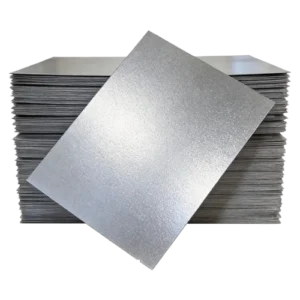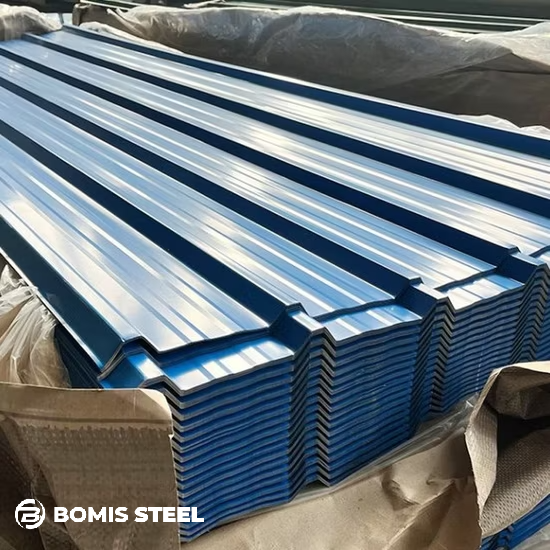
Mabati ya buluu ya corrugated ni paneli za chuma cha galvani zilizopakwa rangi awali, zilizopindwa kwa mchakato wa roll-forming zikiwa na muundo wa wimbi la sinusoidi na kumaliziwa kwa rangi ya buluu ya RAL. Zimetengenezwa kwa ajili ya maganda ya majengo ya kibiashara, viwandani, na kilimo, mabati haya yanachanganya ufanisi wa kimuundo wa profaili ya mikunjo na mfumo wa tabaka nyingi wa upako unaotoa ulinzi wa hali ya hewa wa muda mrefu na mwonekano safi na wa kitaalamu. Zikipatikana katika viwango mbalimbali vya msingi, kemikali za upako, na vivuli vya rangi ya bluu, hutumika kama suluhisho linaloweza kutumika kwa njia nyingi kwa ajili ya paa na kufunika majengo kwa miradi kuanzia maghala hadi vyumba vya kuhifadhi baridi na miundo iliyotengenezwa awali. Kama bidhaa ya chuma bapa, mbao za paa za mikunjo hutolewa kwenye ushuru wa 35% wa Colombia chini ya Amri 0264, na hivyo kuwa chaguo lenye gharama nafuu kwa miradi ya ujenzi ya Amerika Kusini. Kwa matumizi yanayohitaji utendaji wa moto uliodhibitishwa, angalia mwongozo wetu kuhusu Roli za chuma za PPGI zenye kiwango cha ukinzani na moto kwa utengenezaji wa paneli za sandwichi.
1. Utoaji wa maji kwa ufanisi: Profaili ya mikunjo ya sinusoidi huunda njia za mtiririko wa maji zinazoendelea zinazoelekeza maji ya mvua haraka kutoka kwenye uso wa paa. Jiometri hii ya profaili, ikichanganywa na maelezo sahihi ya mwingiliano, hutoa utoshelevu wa kuzuia maji kwa miundo ya paa yenye mteremko mdogo na yenye mteremko wa kawaida.
2. Uwiano mkubwa wa nguvu kwa uzito: Muundo wa corrugation huongeza ugumu halisi wa karatasi ya chuma, hivyo kuruhusu nyenzo nyembamba zaidi kuvuka umbali mkubwa kati ya purlini bila kupinda. Hii inapunguza mzigo wa maiti wa muundo kwenye fremu ya jengo na kupunguza gharama za msingi ikilinganishwa na mifumo mizito ya paa.
3. Mfumo wa Ulinzi dhidi ya Kutu: Substrati inafaidika na mfuniko wa zinki au zinki-alumini kwa kuzamishwa moto, ikifuatiwa na primer, rangi ya juu ya rangi, na mfuniko wa nyuma wa hiari. Mfumo huu wa tabaka nyingi hutenganisha kiini cha chuma kutoka kwa unyevu na uchafu wa anga, ukitoa maisha ya kawaida ya huduma ya miaka 10–20 kulingana na mazingira na uchaguzi wa mfuniko.
4. Utendaji wa Joto na Sauti: Pengo la hewa lililotengenezwa na profaili yenye mikunjo husaidia uingizaji hewa wa pasivi chini ya bati linapowekwa kwenye purlini, na hivyo kupunguza mkusanyiko wa joto kwenye kifuniko cha jengo. Ikijumuishwa na tabaka za upunguzaji joto, mfumo hutoa upinzani mkubwa wa joto na kupunguza kelele za mvua.
5. Unyumbufu wa Mtindo wa Bluu: Mabati ya paa ya bluu hutoa utambulisho wa kuonekana wa kipekee lakini wa kitaalamu. Paleti ya bluu ya RAL — kutoka bluu ya bahari ya kina (RAL 5002) hadi bluu angavu ya anga (RAL 5015) — inawawezesha wasanifu majengo na wabainishi wa miradi kuoanisha rangi ya paa na chapa ya kampuni, mapendeleo ya kikanda, au muktadha wa mazingira.
6. Usakinishaji uliorahisishwa: Muundo wa wimbi unaojirudia, jiometri ya mwingiliano iliyosanifiwa, na paneli nyepesi huwezesha usakinishaji wa haraka kwa kutumia mifumo ya kawaida ya kufunga. Hii hupunguza ratiba za ujenzi na mahitaji ya wafanyakazi uwanjani ikilinganishwa na mkusanyiko mizito au tata zaidi ya paa.
| Jina la Bidhaa | Mabati ya Bluu ya Kupinda (Mabati ya Chuma yaliyopakwa Rangi Awali) |
| Unene wa Unene | 0.12 mm – 2.0 mm (gauge iliyochaguliwa kulingana na upana, mzigo wa upepo, na mahitaji ya kanuni za ujenzi za eneo husika) |
| Upana wa karatasi | 600 mm – 1,250 mm (ufuniko halisi); upana wa kulisha hadi 1,500 mm kulingana na wasifu |
| Urefu wa Karatasi | Imekatwa maalum kulingana na mahitaji ya mradi; urefu wa kawaida hadi mita 12 kwa usafirishaji kwenye kontena |
| Nyenzo za msingi | Chuma kilichopakwa zinki kwa kuzamishwa moto (GI), chuma kilichopakwa galvalume/zinki-alumini (GL), mchanganyiko wa zinki, alumini na magnesiamu (ZAM), na alumini |
| Daraja za Chuma | DX51D, DX52D, DX53D, Q235, Q345, SGCC, ASTM A653, A653M, na viwango sawa |
| Viwango vinavyotumika | EN 10169, EN 10346, ASTM A755, ASTM A653, JIS G 3312, GB/T 12754 |
| Uzito wa mipako ya Zinki | Z60 – Z275 (60 – 275 g/m²); msingi wa GL: AZ70 – AZ185 |
| Mifumo ya Mipako | PE (Poliesteri), SMP (Poliesteri iliyobadilishwa kwa silikoni), HDP (Poliesteri yenye uimara mkubwa), PVDF (Fluoridi ya polivinilidini) |
| Unene wa Tabaka la Juu | 10 – 35 μm (primer + rangi ya juu); rangi ya nyuma: 5 – 14 μm |
| Chaguo za Rangi ya Bluu | RAL 5000 (bluu ya zambarau), RAL 5002 (ultramarine), RAL 5005 (bluu ya ishara), RAL 5007 (bluu angavu), RAL 5010 (bluu ya gentian), RAL 5012 (bluu nyepesi), RAL 5015 (bluu ya anga), RAL 5017 (bluu ya trafiki), RAL 5019 (bluu ya capri), RAL 5022 (bluu ya usiku), RAL 5023 (bluu ya mbali), RAL 5026 (bluu ya usiku ya lulu) |
| Aina za wasifu | Wimbi la kawaida la sinusoidi; wimbi maalum lenye kipenyo na urefu vinapatikana kwa ombi |
| Idadi Ndogo Zaidi ya Oda | Tani 10 za metriki kwa kila sifa na rangi |
| Ufungashaji | Ufungashaji wa kusafirisha baharini unaofaa kwa bidhaa za nje, unaojumuisha kizuizi cha unyevu cha VCI, kinga za kingo, na mikanda ya chuma kwenye paleti za mbao |
| Masharti ya malipo | EXW, FOB, CIF, na CFR — zinazoweza kujadiliwa kulingana na wingi wa oda na eneo la kuwasilisha. |
Mabati yote ya bluu yamepakwa kulingana na viwango vya rangi vya RAL, kuhakikisha uthabiti wa mfululizo na usahihi wa rangi katika hatua zote za mradi. Vivuli vifuatavyo vya bluu hutolewa mara kwa mara:
| RAL 5000 | Buluu ya zambarau | Bluu iliyokolea, isiyoangaza, yenye vivuli vidogo vya zambarau — inafaa kwa matumizi ya viwandani na maghala |
| RAL 5002 | Ultramarine | A rich, intense navy blue — a popular choice for corporate and institutional buildings |
| RAL 5005 | Signal Blue | A bright, saturated medium blue with high visibility — widely specified for logistics and commercial facilities |
| RAL 5010 | Gentian Blue | A dark, elegant blue — recommended for architectural projects requiring a subdued, professional appearance |
| RAL 5012 | Light Blue | A soft, pastel-toned blue — suitable for coastal and Mediterranean architectural contexts |
| RAL 5015 | Sky Blue | A vibrant, clean blue — frequently chosen for sports facilities, retail, and public buildings |
| RAL 5017 | Traffic Blue | A bold, deep blue — specified for transportation infrastructure and high-visibility structures |
| RAL 5023 | Distant Blue | A muted blue-grey — ideal for contemporary architectural designs and mixed-material façades |
Custom RAL matching beyond these standard shades is available for orders meeting the MOQ threshold. Sample swatches can be provided for color approval prior to production.
The coating chemistry determines the long-term performance of blue corrugated roofing sheets. Selecting the appropriate system for the project environment is recommended:
| PE (Polyester) | Standard interior and moderate exterior applications. Good color retention and flexibility at an economical price point. Recommended for interior wall panels and sheltered exterior applications. |
| SMP (Silicone-Modified Polyester) | Enhanced UV resistance and chalk resistance compared to standard PE. Suggested for exterior roofing and cladding in temperate climates with moderate sun exposure. |
| HDP (High-Durability Polyester) | Improved scratch resistance and weathering performance. Suitable for high-UV environments and applications where the sheet surface may experience contact during handling and installation. |
| PVDF (Polyvinylidene Fluoride) | Premium fluoropolymer coating with the best UV stability and chalk resistance. Recommended for architectural projects in tropical, coastal, or high-UV regions where long-term color retention is a project requirement. |
Pricing for blue corrugated roofing sheets typically ranges from approximately $550 to $1,500 per metric ton, depending on the following variables:
For optimal on-site results, the following best practices are suggested:
Cutting & Trimming: Sheets can be cut on-site using nibblers, electric shears, or circular saws with carbide-tipped blades. Hot-cutting methods (abrasive discs, oxy-acetylene) are not recommended as they damage the coating at the cut edge and can void coating warranty coverage. Cut edges should be oriented away from prevailing weather and, for critical exposure locations, treated with a zinc-rich touch-up paint.
Ufungaji: Use corrosion-resistant fasteners (stainless steel or coated carbon steel with EPDM sealing washers) matched to the support structure material to avoid galvanic incompatibility. Fasteners are best placed through the crown (peak) of the corrugation, not the valley, to prevent water pooling around the penetration. Recommended fastener spacing is per the project’s wind uplift calculation; typical patterns are every second or third corrugation at end laps and supports.
Kupiga lapi: End laps of 150–200 mm are typical for roof pitches above 10°; increase end lap to 250–300 mm for pitches below 10° or for sites with high wind exposure. Side laps of at least one full corrugation are standard. Apply a bead of neutral-cure sealant within the lap for enhanced weather-tightness in exposed or low-slope conditions.
Handling & Storage: Store sheets on level supports with a slight slope for drainage, protected from standing water and direct ground contact. Keep the protective film (if applied) intact until immediately before installation. When moving individual sheets, carry them on edge rather than flat to avoid flex damage and surface scuffing.
Each production batch is verified through the following quality control stages:
The standard MOQ is 10 metric tons per specification and color. For initial project samples, qualification, or smaller trial orders, reduced quantities may be accommodated on a case-by-case basis — please contact our sales team with your requirements.
We recommend reviewing the RAL color reference chart above and requesting physical swatches for on-site evaluation under natural lighting conditions. Color perception varies significantly with lighting, surrounding materials, and viewing angle. Our team can ship A5-sized coated sample swatches for client approval before production runs commence.
For projects within 5 km of saltwater coastlines or in industrial zones with airborne contaminants, PVDF or HDP coating systems on a Z275 or AZ150 substrate are typically suggested. The combination of high zinc coating weight and a premium fluoropolymer or high-durability topcoat provides the best protection against chloride-induced corrosion.
Corrugated sheets can be applied on roof slopes as low as 5° (approximately 1:12), provided that end laps are increased to 250–300 mm, side laps are sealed with neutral-cure sealant, and fastener density is adjusted to the project wind uplift calculation. For slopes below 5°, a standing seam or concealed-fix profile is generally recommended over corrugated through-fastened systems.
Standard production lead time is approximately 15–25 working days from deposit confirmation and color approval, depending on the order volume, specification complexity, and current production schedule. Shipping transit time is additional and depends on the destination port. Expedited production may be arranged for time-sensitive projects.
Yes. Blue corrugated sheets are routinely used as the outer weather skin in insulated sandwich panel assemblies with PIR, PUR, mineral wool, or EPS cores. They can also be installed over purlins with separate insulation layers (blanket or rigid board) in built-up roof systems.
Standard documentation includes: commercial invoice, packing list, bill of lading, mill test certificate (MTC per EN 10204), certificate of origin (COO), and fumigation certificate for wooden pallets where required. Additional documentation — such as third-party inspection reports, CE marking declarations, or specific regulatory compliance certificates — can be coordinated on request.