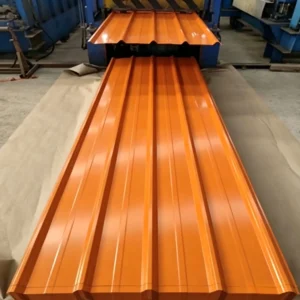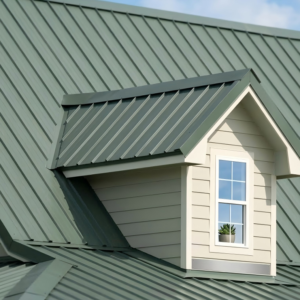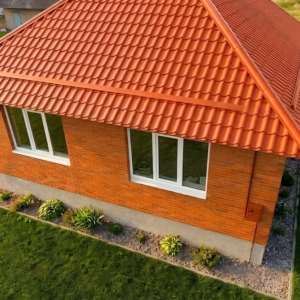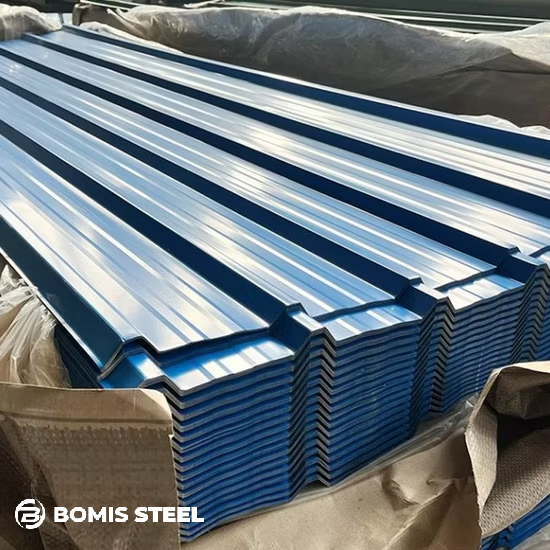
Blue corrugated roofing sheets are pre-painted galvanized steel panels roll-formed with a sinusoidal wave profile and finished in blue RAL color coatings. Engineered for commercial, industrial, and agricultural building envelopes, these sheets combine the structural efficiency of the corrugated profile with a multi-layer coating system that provides long-term weather protection and a clean, professional appearance. Available across multiple substrate grades, coating chemistries, and blue color shades, they serve as a versatile roofing and cladding solution for projects ranging from warehouse facilities to cold storage units and prefabricated structures. As a flat steel product, corrugated roofing sheets are exempt from Colombia’s 35% tariff under Etinda 0264, making them a cost-competitive option for South American construction projects. For applications requiring certified fire performance, see our guide on Ba bobines ya ebende PPGI ya makasi na mɔ́tɔ mpo na kosala ba panneaux sandwich.
1. Efficient Water Shedding: The sinusoidal corrugation profile creates continuous drainage channels that direct rainwater rapidly off the roof plane. This profile geometry, combined with appropriate lap detailing, provides reliable weather-tightness for low-slope and standard-pitch roof designs.
2. High Strength-to-Weight Ratio: Corrugated profiling multiplies the effective stiffness of the steel sheet, allowing thinner gauge material to span wider purlin spacings without sagging. This reduces structural dead load on the building frame and lowers foundation costs compared to heavier roofing systems.
3. Corrosion Protection System: The substrate benefits from a hot-dip zinc or zinc-aluminum coating, followed by a primer, color topcoat, and optional back coat. This multi-layer system isolates the steel core from moisture and atmospheric contaminants, delivering a typical service life of 10–20 years depending on environment and coating selection.
4. Thermal & Acoustic Performance: The air gap created by the corrugated profile contributes to passive ventilation under the sheet when installed on purlins, reducing heat buildup in the building envelope. Combined with insulation layers, the system achieves meaningful thermal resistance and attenuates rain noise.
5. Blue Aesthetic Versatility: Blue roofing sheets provide a distinctive yet professional visual identity. The RAL blue palette — from deep navy (RAL 5002) to vibrant sky blue (RAL 5015) — allows architects and project specifiers to align roof color with corporate branding, regional preferences, or environmental context.
6. Simplified Installation: The repetitive wave profile, standardized overlap geometry, and lightweight panels enable rapid installation using common fastening systems. This shortens construction schedules and reduces on-site labor requirements relative to heavier or more complex roofing assemblies.
| Nkombo ya eloko | Blue Corrugated Roofing Sheets (Pre-Painted Profiled Steel Sheets) |
| Etando ya bonene | 0.12 mm – 2.0 mm (gauge selected based on span, wind load, and local building code requirements) |
| Sheet Width | 600 mm – 1,250 mm (effective coverage); feeding width up to 1,500 mm depending on profile |
| Sheet Length | Custom cut to project specification; standard lengths up to 12 m for containerized shipping |
| Substrate Materials | Hot-dip galvanized steel (GI), galvalume / zinc-aluminum coated steel (GL), ZAM (Zn-Al-Mg alloy), and aluminum |
| Biténi ya ebende | DX51D, DX52D, DX53D, Q235, Q345, SGCC, ASTM A653, A653M, and equivalent grades |
| Mibeko oyo esengeli kolandama | EN 10169, EN 10346, ASTM A755, ASTM A653, JIS G 3312, GB/T 12754 |
| Bozito ya bopakoli ya zinc | Z60 – Z275 (60 – 275 g/m²); GL substrate: AZ70 – AZ185 |
| Ba systèmes ya bopakoli | PE (Polyester), SMP (Silicone-Modified Polyester), HDP (High-Durability Polyester), PVDF (Polyvinylidene Fluoride) |
| Top Coating Thickness | 10 – 35 μm (primer + topcoat); back coat: 5 – 14 μm |
| Blue Color Options | RAL 5000 (violet blue), RAL 5002 (ultramarine), RAL 5005 (signal blue), RAL 5007 (brilliant blue), RAL 5010 (gentian blue), RAL 5012 (light blue), RAL 5015 (sky blue), RAL 5017 (traffic blue), RAL 5019 (capri blue), RAL 5022 (night blue), RAL 5023 (distant blue), RAL 5026 (pearl night blue) |
| Profile Types | Standard sinusoidal wave; custom wave pitch and height available on request |
| Motango ya moke koleka ya kokomanda | 10 metric tons per specification and color |
| Liboke | Seaworthy export packing with VCI moisture barrier, edge protectors, and steel strapping on wooden pallets |
| Payment Terms | EXW, FOB, CIF, and CFR — negotiable based on order volume and destination |
All blue corrugated sheets are coated to RAL color standards, ensuring batch-to-batch consistency and color accuracy across project phases. The following blue shades are routinely produced:
| RAL 5000 | Violet Blue | A deep, muted blue with subtle violet undertones — suitable for industrial and warehouse applications |
| RAL 5002 | Ultramarine | A rich, intense navy blue — a popular choice for corporate and institutional buildings |
| RAL 5005 | Signal Blue | A bright, saturated medium blue with high visibility — widely specified for logistics and commercial facilities |
| RAL 5010 | Gentian Blue | A dark, elegant blue — recommended for architectural projects requiring a subdued, professional appearance |
| RAL 5012 | Light Blue | A soft, pastel-toned blue — suitable for coastal and Mediterranean architectural contexts |
| RAL 5015 | Sky Blue | A vibrant, clean blue — frequently chosen for sports facilities, retail, and public buildings |
| RAL 5017 | Traffic Blue | A bold, deep blue — specified for transportation infrastructure and high-visibility structures |
| RAL 5023 | Distant Blue | A muted blue-grey — ideal for contemporary architectural designs and mixed-material façades |
Custom RAL matching beyond these standard shades is available for orders meeting the MOQ threshold. Sample swatches can be provided for color approval prior to production.
The coating chemistry determines the long-term performance of blue corrugated roofing sheets. Selecting the appropriate system for the project environment is recommended:
| PE (Polyester) | Standard interior and moderate exterior applications. Good color retention and flexibility at an economical price point. Recommended for interior wall panels and sheltered exterior applications. |
| SMP (Polyester ebongisami na silicone) | Enhanced UV resistance and chalk resistance compared to standard PE. Suggested for exterior roofing and cladding in temperate climates with moderate sun exposure. |
| HDP (High-Durability Polyester) | Improved scratch resistance and weathering performance. Suitable for high-UV environments and applications where the sheet surface may experience contact during handling and installation. |
| PVDF (Polyvinylidene Fluoride) | Premium fluoropolymer coating with the best UV stability and chalk resistance. Recommended for architectural projects in tropical, coastal, or high-UV regions where long-term color retention is a project requirement. |
Pricing for blue corrugated roofing sheets typically ranges from approximately $550 to $1,500 per metric ton, depending on the following variables:
For optimal on-site results, the following best practices are suggested:
Cutting & Trimming: Sheets can be cut on-site using nibblers, electric shears, or circular saws with carbide-tipped blades. Hot-cutting methods (abrasive discs, oxy-acetylene) are not recommended as they damage the coating at the cut edge and can void coating warranty coverage. Cut edges should be oriented away from prevailing weather and, for critical exposure locations, treated with a zinc-rich touch-up paint.
Fastening: Use corrosion-resistant fasteners (stainless steel or coated carbon steel with EPDM sealing washers) matched to the support structure material to avoid galvanic incompatibility. Fasteners are best placed through the crown (peak) of the corrugation, not the valley, to prevent water pooling around the penetration. Recommended fastener spacing is per the project’s wind uplift calculation; typical patterns are every second or third corrugation at end laps and supports.
Lapping: End laps of 150–200 mm are typical for roof pitches above 10°; increase end lap to 250–300 mm for pitches below 10° or for sites with high wind exposure. Side laps of at least one full corrugation are standard. Apply a bead of neutral-cure sealant within the lap for enhanced weather-tightness in exposed or low-slope conditions.
Ndenge ya kosimba mpe kobomba: Store sheets on level supports with a slight slope for drainage, protected from standing water and direct ground contact. Keep the protective film (if applied) intact until immediately before installation. When moving individual sheets, carry them on edge rather than flat to avoid flex damage and surface scuffing.
Each production batch is verified through the following quality control stages:
The standard MOQ is 10 metric tons per specification and color. For initial project samples, qualification, or smaller trial orders, reduced quantities may be accommodated on a case-by-case basis — please contact our sales team with your requirements.
We recommend reviewing the RAL color reference chart above and requesting physical swatches for on-site evaluation under natural lighting conditions. Color perception varies significantly with lighting, surrounding materials, and viewing angle. Our team can ship A5-sized coated sample swatches for client approval before production runs commence.
For projects within 5 km of saltwater coastlines or in industrial zones with airborne contaminants, PVDF or HDP coating systems on a Z275 or AZ150 substrate are typically suggested. The combination of high zinc coating weight and a premium fluoropolymer or high-durability topcoat provides the best protection against chloride-induced corrosion.
Corrugated sheets can be applied on roof slopes as low as 5° (approximately 1:12), provided that end laps are increased to 250–300 mm, side laps are sealed with neutral-cure sealant, and fastener density is adjusted to the project wind uplift calculation. For slopes below 5°, a standing seam or concealed-fix profile is generally recommended over corrugated through-fastened systems.
Standard production lead time is approximately 15–25 working days from deposit confirmation and color approval, depending on the order volume, specification complexity, and current production schedule. Shipping transit time is additional and depends on the destination port. Expedited production may be arranged for time-sensitive projects.
Yes. Blue corrugated sheets are routinely used as the outer weather skin in insulated sandwich panel assemblies with PIR, PUR, mineral wool, or EPS cores. They can also be installed over purlins with separate insulation layers (blanket or rigid board) in built-up roof systems.
Standard documentation includes: commercial invoice, packing list, bill of lading, mill test certificate (MTC per EN 10204), certificate of origin (COO), and fumigation certificate for wooden pallets where required. Additional documentation — such as third-party inspection reports, CE marking declarations, or specific regulatory compliance certificates — can be coordinated on request.