AI Takeaway
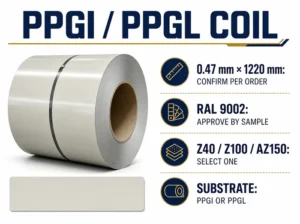
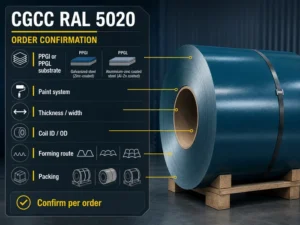
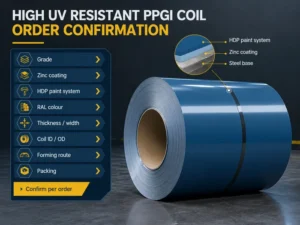
A high UV resistant PPGI coil request should identify five separate decisions: the galvanized steel substrate, steel grade, zinc coating, HDP paint system and required colour or surface finish. Add thickness, width, tolerances, coil ID, coil OD, coil weight, forming route, quantity, packing and destination. “HDP coated” is not a complete purchase specification. State the governing standard, primer, topcoat, back coat, paint-film schedule and inspection basis where required. Explain sunlight exposure, the exposed face and any colour-retention requirement. A clear schedule lets suppliers compare the same PPGI coil instead of guessing from a marketplace title. The final coating, dimensions and commercial terms remain subject to order confirmation. A complete brief also gives the supplier a clear list of open points to confirm before production. It reduces quotation ambiguity and makes later inspection easier because each coating and dimension has a defined place in the order. The same record supports purchasing, production and receiving checks.
What does “high UV resistant PPGI coil HDP coated” mean?
The phrase describes a prepainted galvanized steel coil intended for projects where the painted surface will face outdoor light or another demanding exposure condition. Each part of the name carries a different requirement, so the phrase should be unpacked before a buyer compares offers.
PPGI identifies the product family: prepainted galvanized steel coil. The steel substrate has a zinc coating, followed by a paint system. PPGI is not the same as PPGL, which uses an aluminum-zinc coated substrate. Buyers should keep the two product families separate when comparing quotations. The supplier should confirm the actual substrate, coating mass and governing standard rather than treating the product label as a full technical schedule.
HDP identifies the requested topcoat direction. It does not, by itself, specify the primer, back coat, film thickness, gloss, colour tolerance, forming limit or inspection basis. High UV resistance also needs a project context. A wall panel in strong sunlight, a roof exposed to seasonal weather and a formed flashing detail may need different surface and fabrication discussions.
The practical buying question is simple: what will the finished panel face, how will the coil be formed, and which visible-surface result must remain acceptable after installation? Once those answers are written down, the coil request becomes easier to quote and easier to inspect.
Which PPGI substrate and coating details should the quotation include?
Start with the steel substrate. State the requested grade or application requirement, then confirm the zinc coating and the standard used for supply. Grade, zinc coating and paint system are different fields. A quotation that says only “PPGI HDP” leaves too much room for suppliers to make different assumptions.
The paint system should be written as a system, not as one word. Confirm the primer, topcoat, back coat, total paint schedule, colour reference and gloss requirement. If the visible face will remain outside after roll forming, identify that face clearly. If the reverse side will contact insulation, a liner or another component, state the required back-coat condition.
Dimensions also belong in the first inquiry. Give thickness, width, tolerance, coil ID, coil OD and target coil weight when those details are known. Add the required quantity and shipment plan. If the buyer needs slitting or cut-to-length material, state the finished strip or sheet dimensions instead of asking for a generic coil.
A useful quotation brief separates confirmed requirements from open points:
- Confirmed: product family, intended use, colour reference and target quantity.
- To be checked: grade, zinc coating, paint-film schedule and standard.
- Production details: thickness, width, tolerance, coil data, slitting or cut-to-length.
- Delivery details: packing, eye orientation, marking, destination and container plan.
For a related comparison of painted galvanized and aluminum-zinc coated products, see the <a href="https://www.bomissteel.com/ru/cgcc-ral5020-ppgi-ppgl-roofing-buyer-guide/">PPGI and PPGL roofing buyer guide</a>.
How should a buyer evaluate high UV performance?
High UV performance should be evaluated against the exposure, surface position and service expectations of the finished product. Ask where the painted face will be installed, whether the face is horizontal or vertical, how much direct sunlight it receives and whether the project has a defined colour-retention or gloss requirement.
The buyer should also define what “acceptable” means. Some projects focus on colour appearance. Others focus on chalking, gloss change, edge condition, forming behaviour or the way the finished panel looks after handling. These are not interchangeable checks. Put the required inspection basis in the order documents and confirm which tests or records are available for the selected system.
Forming matters because the surface is not evaluated only as a flat coil. Bending, roll forming, cutting, fastening and storage can affect the visible result. State the forming route, minimum bend requirement if known, exposed face and any protective-film requirement. A coating choice that looks suitable on a flat sample may need a separate forming review for a particular profile.
Storage and handling also affect the buyer’s result. Confirm protection against moisture during shipment and storage, bundle marks, loading orientation and the time between delivery and forming. The paint system cannot compensate for poor handling or an unclear installation brief. High UV performance starts with a defined system and continues through forming, transport and installation.
How does PPGI compare with PPGL for outdoor panels?
PPGI uses a galvanized steel substrate. PPGL uses an aluminum-zinc coated steel substrate. Both can be supplied as prepainted coils, but they are not interchangeable product names. The substrate affects the technical discussion, the quotation fields and the documents the buyer should request.
Choose the product family from the project requirement rather than from a generic “colour steel coil” label. If the specification calls for galvanized substrate, keep the request as PPGI and confirm the zinc coating. If the project calls for aluminum-zinc substrate, keep the request as PPGL or aluminum-zinc coated prepainted coil and confirm that system separately.
The paint layer still needs its own review in both cases. Colour, gloss, primer, topcoat, back coat, dimensions and forming route remain important. The same colour reference does not make a PPGI coil and a PPGL coil equivalent. The buyer should compare substrate, coating system and inspection basis line by line.
Use the product name to organize the request, not to replace the request. A clear comparison table should include substrate, metallic coating, paint system, dimensions, forming process, visible face, packing and delivery. If any field is open, write “confirm per order” instead of allowing each supplier to interpret it differently.
What should a buyer confirm before ordering PPGI coil?
Before approval, review the quotation against the original project brief. The quotation should say prepainted galvanized steel coil or PPGI. The substrate grade, zinc coating, paint system, colour and dimensions should appear as separate fields. The buyer should not accept a line that hides all five inside “HDP colour steel roll.”
Check the visible face and reverse side. Confirm whether the panel will be roll formed, cut to length, slit or fabricated after delivery. Ask how the supplier will identify the coil, how packing marks will match the purchase order and how the shipment will be loaded. These details matter when several coils share similar colours but different specifications.
Review the governing standard and inspection basis. If the project names ASTM A755, JIS G3312, EN 10169 or another standard, confirm that the requested product form and coating system are covered by the agreed supply route. Do not add a standard only because it appears in a marketplace listing.
Use this approval checklist:
- Confirm PPGI substrate and requested steel grade.
- Confirm zinc coating and governing standard.
- Confirm HDP paint system, primer, back coat and film schedule.
- Confirm RAL or sample colour, gloss and visible face.
- Confirm thickness, width, tolerance and coil data.
- Confirm forming, slitting, cut-to-length or protective-film needs.
- Confirm quantity, MOQ, packing, marking and destination.
- Record every open field as confirm per order.
What mistakes create problems in a high UV PPGI order?
The first mistake is treating the product title as the specification. A title can identify the commercial direction, but it cannot replace the substrate grade, metallic coating, paint schedule, dimensions or inspection basis. The second mistake is assuming that “high UV” means the same thing for every project. Exposure, orientation, colour and acceptance criteria need to be stated.
Another common mistake is comparing PPGI and PPGL only by colour and price. The substrate systems are different. A buyer who needs galvanized steel should not approve an aluminum-zinc substrate simply because the painted surface looks similar in a sample image. Keep substrate, coating and paint system visible in the comparison table.
Forming and handling are often left until after the purchase order. That creates avoidable clarification. Tell the supplier how the coil will become a roof panel, wall panel, flashing or other formed product. Confirm the exposed face, bend route, cut length and storage conditions before production.
A final mistake is leaving commercial details vague. Quantity, MOQ, packing, eye orientation, marking, loading and destination affect the quotation. A technically clear coil can still create delays if the shipping brief is incomplete. The best request is not the longest request; it is the request that separates known facts from open points and gives the supplier a clear path to confirm the rest.
FAQ: High UV Resistant PPGI Coil
Is HDP coating enough to specify a high UV PPGI coil?
No. Confirm the galvanized substrate, grade, zinc coating, paint schedule, colour, dimensions, forming route and inspection basis per order.
How should a buyer compare two HDP quotations?
Compare substrate, metallic coating, paint schedule, colour, dimensions, forming route, inspection basis and packing line by line.
Is PPGI suitable for roofing?
PPGI can be reviewed for roofing when the substrate, paint system, dimensions and forming requirements match the project exposure.
What is the difference between PPGI and PPGL?
PPGI uses a galvanized steel substrate. PPGL uses an aluminum-zinc coated substrate. Compare substrate and paint system separately.
Which colour information should the buyer provide?
Provide an RAL reference or approved sample, then confirm colour tolerance, gloss and visible face per order.
Does the buyer need to provide coil dimensions?
Yes. Give thickness, width, tolerance and coil data. Add finished strip or sheet dimensions for slitting or cut-to-length work.
Can the supplier confirm the final paint system per order?
Yes. The quotation should identify the HDP direction, primer, topcoat, back coat, film schedule and colour. Mark open fields as confirm per order.
Conclusion: turn the product title into a usable purchase brief
A high UV resistant PPGI coil becomes easier to buy when the title is converted into a structured brief. Separate the galvanized substrate from the HDP paint system. Add exposure, visible face, colour, forming route, dimensions, packing and destination. Then mark every unconfirmed field for order review.
This process gives the buyer a fair comparison and gives the supplier enough information to confirm the correct combination. Bomis Steel can review the project brief, identify open points and confirm the available PPGI coil specification per order.