
















Простая покупка стальных рулонов для промышленного применения
Выводы по ИИ: Steel coil buying comes down to four calls: the coil type, the dimensions, the supplier, and the delivery plan. Cold rolled coil gives you a smooth surface and tight tolerances for automotive panels and appliance casings. Galvanized coil carries a hot-dip zinc layer that holds rust off for decades, which is why it dominates outdoor construction. Galvalume coil adds aluminum to the coating and holds up better against heat and humidity, a common pick for roofing and siding. Prepainted coil fuses color and protection in one pass, so nobody paints after fabrication. Match the coil to the environment it will live in, not to what you bought last time. Nail down thickness and width before you ask for quotes: typical coils run 0.3–16 mm thick and 1000–1500 mm wide, and those figures drive price, forming, and freight. Ask for ASTM or ISO 9001 certification and a mill test certificate, order a sample, and inspect every delivery when it lands. Write the requirements down first and the whole process goes faster. The steps below run in order: coil basics, coil types, the specs that matter, then supplier selection and delivery.
Why Getting Steel Coil Right Matters More Than the Price per Ton
A fabricator wins a roofing contract and orders coil without checking the coating. Two wet seasons later the customer is pointing at rust streaks, and the fabricator eats the rework. A plant buys 25 tons of coil when the overhead crane lifts 20. The coil sits in the yard while a mobile crane is hired, and a shift of production disappears. A упаковка line stops twice a shift because the coil’s gauge tolerance drifts and the dies jam. The cheaper coil turned out to be the expensive coil.
None of those failures was caused by the price per ton. That is the point of this guide: coil is usually the cheapest material in the room and the most expensive one to get wrong. The steel itself may be a small fraction of the finished product’s cost, but a wrong spec shows up later as rejects, downtime, and warranty claims — costs that never appear on the invoice.
This guide is written for the people who actually place coil orders and have to live with them: buyers, production managers, and procurement staff at metal fabricators, building material companies, construction contractors, appliance and HVAC manufacturers, and steel trading houses.
It covers four parts. First, what steel coil is and which industries run on it. Second, the four coil families — cold rolled, galvanized, galvalume, prepainted — and which job each one fits. Third, the specifications that decide whether the coil performs: thickness, width, weight, surface treatment, and certification. Fourth, how to vet suppliers, place the order, and avoid the standard mistakes, plus a checklist you can reuse on every purchase.
One thing to keep in mind as you read: the difference between a good order and a bad one is usually not the steel grade. It is the information you bring to the table. Buyers who write down the environment, the expected service life, the forming process, and the appearance requirements before they call a supplier get better quotes and fewer surprises. The payoff is simple: the right coil, at a fair price, ordered once.
We are not covering every grade and coating chemistry here. This is the working knowledge you need to place a sound order, in the order you need it.
What Is Steel Coil, and Where Does It Get Used?
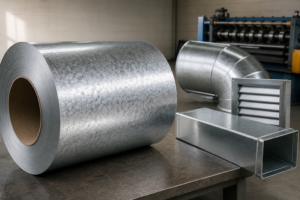
A steel coil is a long, continuous strip of steel wound into a cylinder. It is the raw material behind stamping, roll forming, blanking, and shearing. Buying coil instead of sheet cuts freight and handling cost, because the material ships dense and unrolls straight into a press or roll former without extra handling.
Most coil you buy is mild steel in standard carbon grades, with the grade set by strength and formability requirements. From there, the choices that separate one coil from another are the finishing route and the coating. The finishing route — hot or cold rolling — decides surface and precision. The coating decides how the steel survives moisture, UV, and time.
Coil comes off two production routes. Hot rolling pushes steel through rollers above its recrystallization temperature. The result has a rougher surface and looser tolerances, but it costs less and is available in heavier gauges. Hot rolled coil suits work where the surface is not critical: structural members, trailers, agricultural equipment. Cold rolling takes the hot rolled strip, pickles off the scale, and rerolls it below recrystallization temperature. That gives a smooth surface, tight gauge tolerance, and consistent mechanicals — the base for automotive panels, appliance casings, and most coated coil. It costs more, so use it where surface and precision earn their keep.
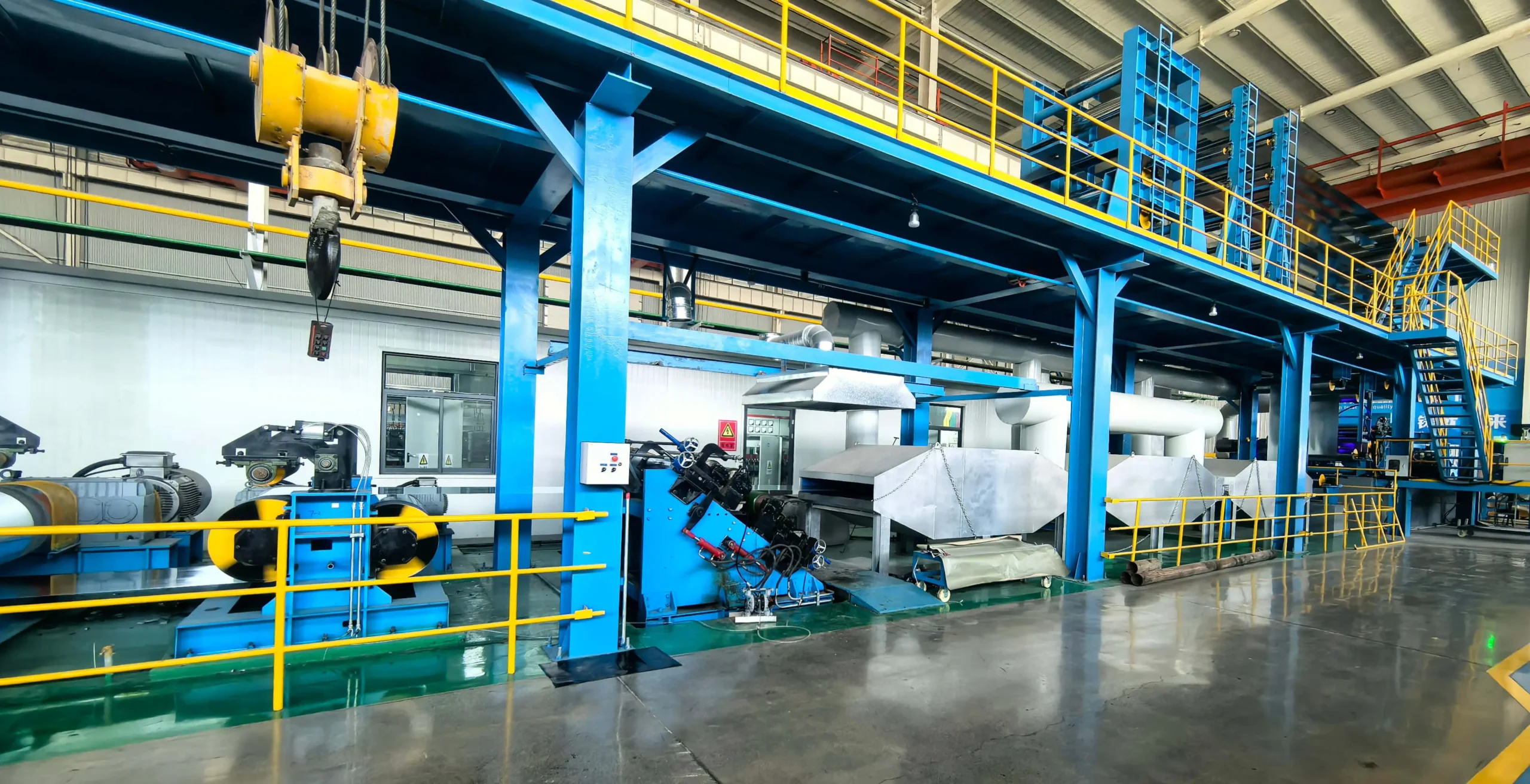
Steel coil shows up across manufacturing, usually in one of these roles:
- Automotive: body panels, chassis components, suspension parts
- Construction: purlins, roofing, siding, structural framing
- Appliances: casings, drums, liners
- HVAC: ductwork, furnace housings, vents
- Furniture: chair bases, frames, shelving
- Energy: transformer cores, transmission towers
- Packaging: food containers, beverage cans
- Agriculture: equipment frames, grain storage
In practice, most buyers receive coil in one of three formats. Full-width coil for roll forming lines. Slit coil, cut into narrower strips so one parent coil feeds several products. And sheet or blank, cut to length at the mill or processor. Which format you order affects yield and cost, so it belongs in the spec conversation, not after it.
Why does the right choice matter? Because the coil inherits its environment. A coastal building needs corrosion resistance; an appliance needs a clean surface that paints evenly; a load-bearing frame needs thickness and grade. Pick by environment, load, and appearance, and the coil performs. Pick by habit, and the failure is expensive and slow to surface — rust takes months, tooling wear takes longer, and both arrive after the invoice is paid.
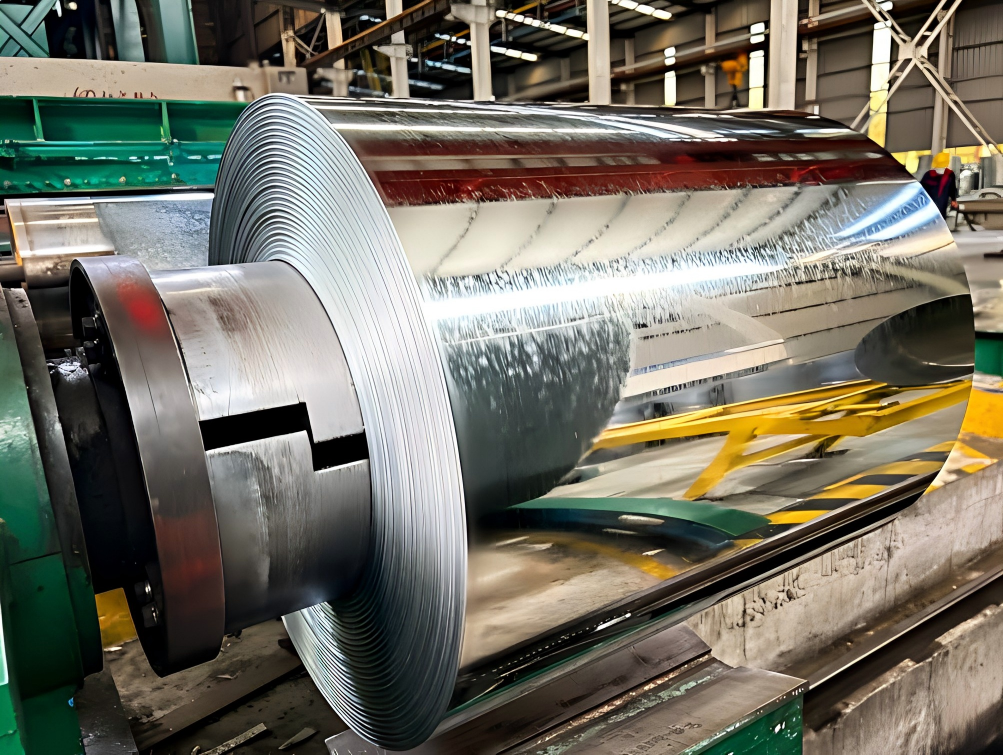
Cold Rolled, Galvanized, Galvalume, or Prepainted: Which Coil Type Fits Your Job?
Cold rolled steel coil is the precision option. It is rolled below crystallization temperature with controlled rolls, which produces tight dimensional accuracy and a smooth, clean surface. Use it where exact dimensions and surface matter: automotive parts, precision components, and anything that will be painted or coated later. What cold rolled does not bring is защита от коррозии on its own — if the part lives outdoors, it needs a coating on top.
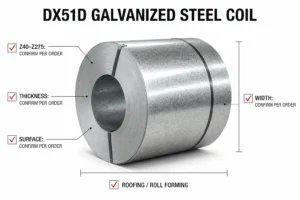
Galvanized steel coil is the rust fighter. The strip is dipped in molten zinc, and the zinc forms a barrier that protects the steel below. The useful part is that the protection is sacrificial: if the surface gets scratched, the zinc keeps protecting the steel underneath. Service life is commonly quoted at 50+ years in moderate atmospheres and 20+ years in harsh or industrial ones, which is why galvanized coil is the standard answer for outdoor structures, fencing, posts, and roofing substrate. Coating weight matters — heavier zinc coatings, measured in grams per square meter, buy longer life in aggressive environments. A typical zinc coating tests around 500–600 hours in salt spray.
Galvalume steel coil is the heat and humidity pick. Its coating is roughly 55% aluminum and 43% zinc, applied by hot-dip. Galvalume beats straight zinc on flat-surface corrosion and heat resistance, and published salt spray results run 2000–2500 hours. It is the usual choice for roofing and siding and for buildings in hot, humid climates. One honest caveat: in severe marine splash zones, where cut edges and mechanical damage are common, specifiers often fall back to galvanized or prepainted options — the aluminum-rich coating protects flat surfaces well, but zinc does better at the edges.
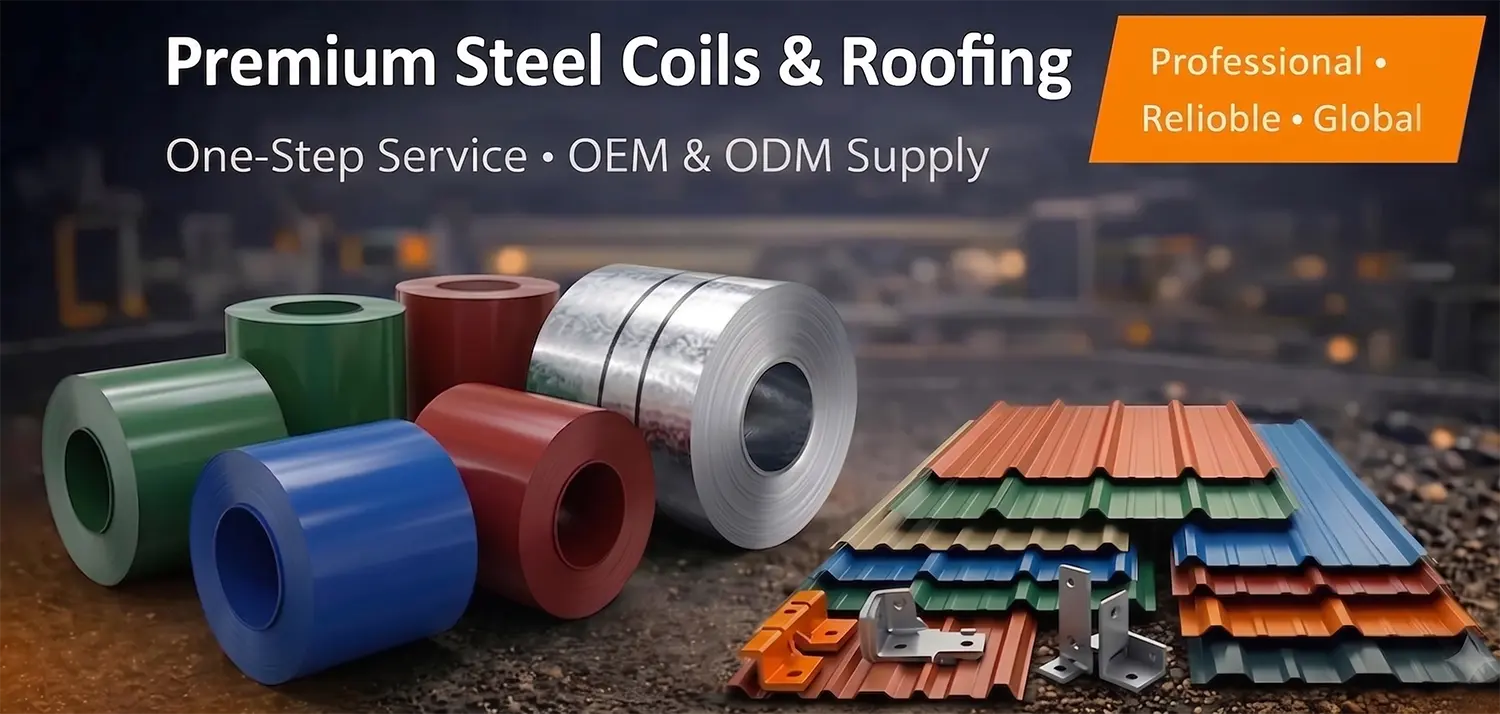
Prepainted steel coil is the one-pass finish. PPGI, painted over galvanized, and ППГЛ, painted over galvalume, get the paint layer applied before the coil is wound. You pick the color, the topcoat handles UV and weathering, and the building goes up without a painting contractor. Paint thickness typically runs 15–25 microns per side, and PVDF topcoats are rated for 20–30 years of color retention. Prepainted coil is everywhere on wall cladding, roof sheets, garage doors, and appliance skins.
So which one do you order? Ask three questions. Where does the steel live — dry indoor, open air, coastal, or hot? How many years must it last? Does appearance matter to the customer? Dry indoor and precision, cold rolled. Outdoor and wet, galvanized. Roofing, siding, and hot climates, galvalume. Visible building skin in a color, prepainted.
As a rule of thumb, coated coils carry a premium over plain cold rolled, and prepainted carries a premium over bare galvanized. The premium buys the coating, so it pays for itself exactly when the environment would otherwise eat the steel.
What Specifications Should You Lock Down Before You Quote?
Thickness and width. Typical industrial coil ranges: 0.3–16 mm thickness, 1000–1500 mm width, 508 or 610 mm inner diameter, 3–25 tons per coil. Thickness decides the trade-off. Thicker coil is stronger and suits structural work, but it costs more per ton and freights heavier. Thinner coil forms easily and suits body panels and lightweight cladding. Automotive panels run thin; structural members run thick. Width decides waste: specify the slit width you actually need, because slitting a 1250 mm coil down to 1100 mm leaves offcuts somebody pays for — buy the width you use.
Weight. Small coils run 500–2000 kg; large coils run 5–30 tons or more. Heavier coils mean longer runs between coil changes, which is why high-volume lines ask for the heaviest coil they can handle. But the coil has to arrive and move through your plant: check crane and lift-truck capacity before you order, not after. A 30-ton coil needs lifting gear rated above 30 tons, plus a floor and racking that take the weight. Confirm handling capacity in the same email where you confirm the price.
Surface treatments and coatings. These decide how the coil survives storage, transport, and its working life:
- Oiled (0.5–3 g/m²): stops white rust during shipping and storage
- Chromated or passivated (0.1–1.0 microns): better paint adhesion, RoHS-compliant options
- Phosphated (1–5 microns): extra grip for paint, better corrosion resistance
- Prepainted (15–25 microns per side): color, UV resistance, factory finish
- Laminated (20–200 microns): scratch protection, decorative films
- Anti-fingerprint (0.5–2 microns): smudge-free surfaces for visible products
Certifications. Ask for these with every order, and keep copies:
- ASTM: product quality and performance criteria, chemical makeup and strength
- ISO 9001, 14001, 45001: quality management, environmental, and occupational safety systems
- CE: required for goods sold into the European Economic Area
- Mill test certificate: the actual chemistry and mechanicals of your specific coil
- Construction and automotive industry certifications: minimum strength and impurity levels for regulated use
Certified material is the difference between a pass and a rework in an inspection, and the mill test certificate is your paper trail. If a supplier hesitates on certificates, that is an answer in itself.
Together, these specs decide three numbers: unit price, freight, and yield. Lock them down in writing before the quote comes back, and the quotes arrive comparable.
How Do You Vet a Supplier and Avoid the Standard Buying Mistakes?
Compare quotes beyond price. Price per ton is the number quoted first and matters least on its own. Compare certifications held — ISO 9001, product-specific ASTM or EN standards — plus technical support, product range and custom options, value-added services like slitting and cutting, on-time delivery record, and response time. Ask for references or a case study in your industry. Order a sample and test coating adhesion and surface uniformity yourself. For large or repeat volumes, do a factory audit: virtual works, in person works better.
Place the order properly. Confirm in writing the grade, thickness, width, coating, quantity, delivery date, and packaging. Ask how the coils will be packed for sea or road freight — packing decides whether they arrive dented. When the delivery lands, inspect immediately: damage, rust, wrong labels. Photograph everything, keep the mill test certificate and packing list, and report issues in writing within the claim window. Suppliers resolve documented claims fast; verbal complaints go nowhere.
Plan the handling. Coil is heavy and sharp-edged. Wear gloves, safety shoes, and helmets. Use cranes, forklifts, or coil lifters rated for the load. Store coils upright on flat, stable surfaces or cradles — a coil that rolls can kill someone. Keep storage dry and covered, keep walkways clear, and mark the storage area.
The three mistakes that keep costing buyers money:
- Overlooking specifications. The coil that works for roofing does not fit an automotive panel. Check mechanical properties, surface finish, and coating against your written requirements before you order, not after the first batch fails.
- Ignoring supplier credentials. A low price from an unverified supplier moves the risk into delivery quality, paperwork, and timing. Verify standards compliance and check delivery metrics before you commit.
- Mismatching the coil to the application. Indoor coil used outdoors rusts. The wrong grade jams presses and damages tooling. The wrong weight risks cranes and backs. Match the coil to the environment and the equipment.
A checklist you can reuse. Before every order, answer five questions. What corrosion category does the site fall in — C1 for dry indoor, C5 for marine? How long must the product last, and does that push you to a heavier coating or a special grade? What fabrication will it see — deep drawing, bending, cutting — and does the grade handle it? Does appearance matter, meaning color consistency and gloss? What certification must the project pass? Write the answers down, send them with the request for quotation, and the quotes come back comparable.
Suppliers are easier to work with when you are easy to work with. Repeat buyers who send clean specs get faster quotes, better pricing, and priority when mills are tight.
Часто задаваемые вопросы
What is the difference between hot rolled and cold rolled steel coil?
Hot rolled coil has a rougher surface and looser tolerances. Cold rolled coil is smoother and more precise. Choose cold rolled when surface and accuracy matter; choose hot rolled when they do not and cost does.
How do I know which steel coil grade to choose?
Match the grade to the strength, corrosion resistance, and formability your application needs. If you are unsure, define the environment and the forming process first, then ask the supplier for a recommendation.
Can I order custom sizes for steel coils?
Most suppliers offer slitting to custom widths and standard thickness steps. Give exact measurements in your request for quotation, and confirm the minimum order quantity and lead time at the same time.
What certifications should I check before buying?
At minimum, ISO 9001 and a mill test certificate for each delivery. Add product-specific ASTM or EN standards for structural work, and CE for goods shipped into Europe. Keep copies for inspections.
What should I do if my coil order arrives damaged?
Inspect the coils on arrival, photograph the damage, and report it in writing with the mill test certificate and packing list before the claim deadline. Documented damage claims get resolved quickly; late ones usually do not.
Заключение
Buying steel coil is not a mystery, but it punishes shortcuts. Four steps carry the whole job: understand the coil types, fix the specifications, vet the supplier, and manage the delivery. Buyers who skip the paperwork pay twice — once in the reorder, once in the downtime.
Write down the environment, the service life, the fabrication, the appearance, and the certification requirements before the first email. Ask for the mill test certificate, order samples, and inspect every delivery at the gate. None of it is hard; all of it compounds. Coil is a commodity, but the buying process does not have to be. Do the homework once, keep the checklist, and it carries over to every future order.