















1. China: The Global Leader in Steel Coil Exports
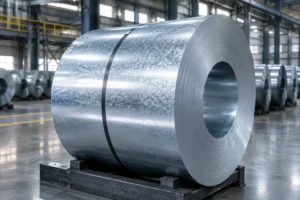
There is no question that China is the world’s largest steel-coil exporter, generating a massive international ironclad tariff surplus. In 2024, China exported an astounding 111 million tons of steel, with a significant majority comprised of steel coils. This robust export performance is driven by two primary factors:
- Unmatched Production Capacity: Bolstered by sophisticated manufacturing technologies and a highly integrated industrial network, China operates at a scale that allows for the production of high-quality steel coils at exceptionally low costs.
- The Price Advantage: Last year, the price of steel coils from China was $65 to $70 per ton lower compared to competing hubs like India and the Black Sea region. This disparity has made Chinese steel highly attractive internationally, particularly among developing nations experiencing rapid infrastructure growth.
However, this dominance has created distinct geopolitical difficulties. Over the last decade, numerous countries have introduced anti-dumping and countervailing duties to offset the influx of Chinese steel. For example, Vietnam recently slapped temporary anti-dumping tariffs ranging from 19.38% to 27.83% on Chinese steel coils, heavily impacting major producers like Baosteel, Ansteel, and Shougang. South Korea similarly levied duties ranging from 27.91% to 38.02% against giants like Baosteel, Shagang, and Xiangtan Iron & Steel.
Despite these steep trade barriers, China’s steel coil exports have proven remarkably resilient. In the first nine months of 2025 alone, China’s steel exports hit 98.69 million tons, up 17.14% year-on-year. The strongest cumulative year-over-year growth came from Saudi Arabia, which absorbed 1.40 million tons (a massive 41.28% increase). This signals a successful strategy by Chinese mills to diversify their export destinations and capture emerging markets.
2. Indonesia: A Rising Star in Steel Coil Exports
Indonesia has rapidly transformed from a net importer of steel into a global powerhouse in the export market. According to the World Steel Association, Indonesia’s crude steel production reached 18 million tons in 2024, ranking 14th worldwide. Forecasts suggest this capacity will nearly double, reaching 33 to 35 million tons by 2030.
Indonesia’s steel coil exports have skyrocketed from 8.70 million tons in 2020 to 20.92 million tons in 2024—an explosive 140.43% increase that positions the nation as the fourth-largest steel exporter globally. The export network is heavily internationalized, with China absorbing 62.3% of these exports in 2024, followed closely by Chinese Taipei, India, Vietnam, and Turkey. This rapid growth is directly attributed to the Indonesian government’s aggressive “resource downstreaming” strategy, which forces the industrial chain to process raw materials domestically, deepening added value and ending the nation’s historical reliance on raw material exports.
| Exporting Nation | Recent Export Volume | Primary Market Advantage | Key Challenges / Strategies |
|---|---|---|---|
| China | 111 Million Tons (2024) | Massive economies of scale, pricing ($65-$70/ton cheaper). | Facing heavy global anti-dumping tariffs; diversifying into the Middle East. |
| Indonesia | 20.9 Million Tons (2024) | Government “downstreaming” mandate and rapid capacity expansion. | Managing explosive growth (140% increase since 2020) and heavy reliance on exporting to China. |
| Turkey | 16.04 Million Tons (Jan-Oct 2025) | Strategic geographic location and 70% Electric Arc Furnace (EAF) capacity. | Highly vulnerable to global scrap steel pricing and volatile domestic energy costs. |
3. Turkey: A Dynamic Exporter with Growing Potential
Leveraging its strategic geographical location bridging Europe and Asia, alongside a robust manufacturing sector, Turkey has emerged as a notable exporter of steel coils. From January to October 2025, Turkey’s total steel exports reached 16.04 million tons, a year-on-year increase of 9.5%. Hot-rolled coils and construction steel led this growth, with hot-rolled coil exports surging by 25.8% (to 3.26 million tons) and rebar increasing by 18.1% (to 3.26 million tons).
Turkey’s steel industry is unique due to its high proportion of Electric Arc Furnace (EAF) production, which accounts for 70% of its total steel capacity. This “short-process” production method relies heavily on scrap steel as a raw material, positioning Turkey as a key player in the global scrap steel trade. However, this model is highly sensitive to input costs. In 2022, rising energy costs and a sharply depreciating Turkish lira forced Turkish steelmakers to temporarily increase imports of steel billets and finished products, as melting scrap steel became too expensive.
Despite these operational challenges, strong regional demand continues to drive export growth. Romania remains Turkey’s largest export destination in 2025, with imports increasing by 15.1% to 1.51 million tons from January to October. Italy followed closely, with imports rising by 11% to 1.27 million tons during the same period.
4. Future Trends and Industry Challenges
The global steel coil export market is poised for continued expansion, shaped heavily by the massive infrastructure demands of developing nations. Governments across emerging markets are actively accelerating their industrialization processes, driving an insatiable demand for reliable steel products.
While developing nations dictate global demand, the supply side is facing a structural shift. China remains the undisputed heavyweight exporter, but environmental regulations and global carbon-reduction mandates are forcing an evolution. Moving forward, China’s traditional steel production model must undergo a rigorous transformation, pivoting away from raw volume and toward more environmentally friendly, high-efficiency manufacturing processes.