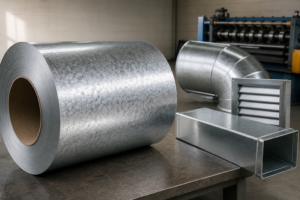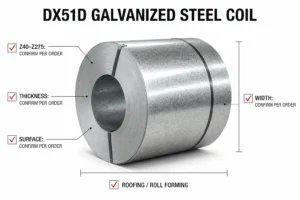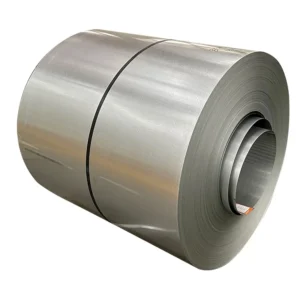









The Southeast Asian region is characterized by consistently high temperatures and humidity, coupled with an extensive coastline. Under such extreme climatic conditions, the corrosion resistance of Ba bobines ya ebende ya galvanisé faces a rigorous test. The weight of the zinc coating—typically ranging from Z30 to Z275—directly determines the steel’s corrosion resistance, its service life, and the overall project budget.
For purchasers, blindly pursuing an excessively thick zinc coating can lead to cost overruns, whereas a coating that is too thin may result in premature rusting and the early scrapping of the project. To simplify your procurement decision-making process, this article employs a Question-and-Answer (Q&A) format to provide a detailed analysis of the optimal zinc coating weights for various application scenarios within Southeast Asia.
Scenario 1: Exterior Building Walls & Roofing
Q: In the high-humidity and coastal environments of Southeast Asia, what zinc coating thickness should be selected for exterior building walls and roofing?
A: It is recommended to select Z120 – Z275 (ranging from medium-high to very high zinc coating levels).
Decision Analysis: Outdoor building materials in Southeast Asia must withstand heavy rainfall and intense UV radiation year-round. This is particularly true in coastal regions—such as Indonesia, the Philippines, and Vietnam—where the air is laden with corrosive salt mist.
Specific Recommendations:
Inland or General Urban Environments: Z120 – Z180 is sufficient to provide long-lasting Libateli na ngura and offers the best cost-performance ratio.
Coastal Areas or Heavy Industrial Zones: Z275 is strongly recommended. Although the initial procurement cost is higher, its superior resistance to salt-mist corrosion can significantly reduce future maintenance and replacement costs, making it the optimal choice for ensuring the longevity of the building structure.
Scenario 2: Interior Decoration & Structural Components
Q: Is a high zinc coating thickness necessary for materials used in interior ceiling frames, partitions, or internal furniture structures?
A: It is recommended to select Z30 – Z80 (ranging from low to medium zinc coating levels).
Decision Analysis: Interior environments are relatively enclosed and dry; materials are not directly exposed to rainwater or extreme wind and sunlight. Consequently, the demand for corrosion resistance is lower.
Specific Recommendations:
Standard Interior Projects: Z30 – Z40 is the most economical and best-selling option. It satisfies basic rust-prevention requirements while significantly minimizing the procurement budget.
High-Humidity Interior Environments (e.g., basements, interiors of large industrial plants): It may be appropriate to upgrade to Z60 – Z80 to provide additional moisture protection and prevent surface oxidation or “white rust.”
Scenario 3: Pipe Manufacturing & HVAC
Q: How should the zinc coating thickness be selected for materials used to manufacture ventilation ducts (HVAC), electrical conduits, or agricultural piping?
A: It is recommended to select Z80 – Z275 (depending on the specific installation environment).
Decision Analysis: Pipe manufacturing places demands not only on the corrosion resistance of the zinc coating but also on the formability and workability of the galvanized steel coil itself. The zinc coating must adhere firmly to the steel substrate to ensure that no flaking occurs during bending, coiling, or welding.
Specific Recommendations:
Indoor HVAC Ductwork: Z80 – Z120. A smooth surface finish (with properly controlled spangle) is desirable; this not only ensures an aesthetically pleasing appearance but also effectively withstands the condensation generated by air conditioning systems.
Outdoor Water Supply and Drainage Pipes or Underground Conduits: Z275. Given the prolonged exposure to soil, moisture, or outdoor elements, the highest level of zinc coating protection is mandatory to prevent perforation and leakage.
To further streamline your procurement process, please refer to the following:
| Esɛngɔ | Environment | Bopakoli ya zinc | Strategy |
|---|---|---|---|
| Interior light steel keel / decoration | Dry and sealed | Z30 – Z60 | Cost-oriented, emphasizing price competitiveness |
| Indoor piping / mechanical enclosure | Occasionally there is moisture or condensation water. | Z80 – Z120 | Balancing the anti-corrosion property and the surface processing and shaping property |
| Inland building exterior walls / roofs | Sun exposure, rain exposure, high humidity | Z120 – Z180 | Pursuing long-term cost-effectiveness and durability |
| Coastal buildings / Outdoor pipelines | High salt spray, heavy rain, soil contact | Mibale na ntuku sambo na mitano | Quality comes first. Ensure the absolute safety of the project. |