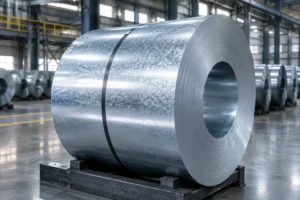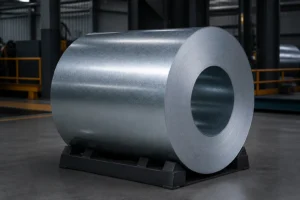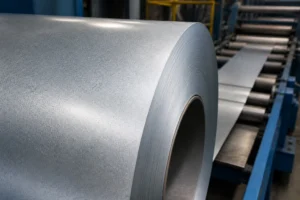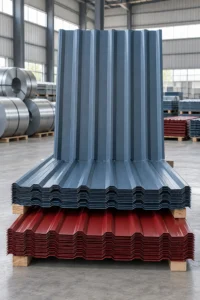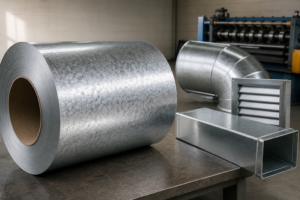
















Galvanized steel frames are structural systems made from steel that has been dipped in molten zinc. This hot-dip process creates a permanent metallurgical bond, wrapping the base metal in a protective shield that blocks moisture, air, and everyday environmental wear. For builders and procurement teams buying structural materials in bulk, these frames hit the sweet spot of high load capacity, incredible longevity, and low upkeep. Depending on the local weather and how thick the zinc layer is, you can easily get 20 to 100 years of service out of them.
Unlike paint or epoxy, galvanizing pulls double duty by offering both a physical barrier and cathodic protection. If the frame gets scratched on-site, the surrounding zinc sacrifices itself to protect the exposed steel underneath. This self-healing trait is exactly why structural engineers insist on galvanized framing when long-term durability isn’t up for debate.
Key Benefits of Galvanized Steel Framing
1. Exceptional Corrosion Resistance: A standard hot-dip zinc layer (usually 35 μm to 275 μm) acts as a tough armor against rust. In harsh coastal salt air, industrial zones, or high-humidity climates, advanced zinc formulas mixed with magnesium form an even tighter protective matrix. This advanced shield slows down rust across flat surfaces, cut edges, and deep scratches alike.
2. Structural Performance Under Extreme Conditions: These engineered frames are built tough, proven to handle wind loads up to level 10 and seismic shifting up to level 7 on the Richter scale. Because they hold their own against extreme forces, they are a go-to framing choice for projects in hurricane paths, earthquake zones, or rough terrain.
3. Precision-Engineered Assembly: Because these parts are factory-cut to incredibly tight dimensional tolerances, they go together — and come apart — fast on-site. For modular builds, temporary setups, or rushed schedules, this drop-in precision shaves hours off labor and slashes installation mistakes.
4. Integrated Insulation Compatibility: These framing systems are designed to fit hand-in-glove with modern, high-efficiency insulation. You can hit your thermal performance targets easily without having to waste time modifying the studs or tracks.
5. Full Recyclability at End of Life: Steel leads the world as the most recycled structural material, boasting a global recycling rate of 93.7%. When a building eventually comes down, these galvanized frames can be completely reclaimed and melted back down without losing an ounce of their original strength, checking every box for green building certifications and circular economy goals.
6. Fire Resistance: Steel won’t burn. The zinc coating adds zero fuel to a fire, and galvanized frames hold up under intense heat longer than bare, unprotected steel. This extra fire resistance buys precious time for occupants to safely evacuate.
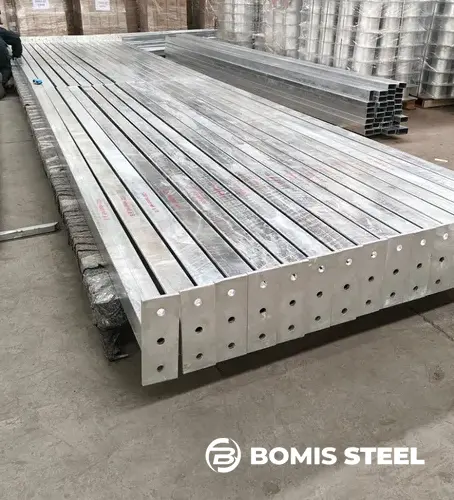
Galvanization Methods: Hot-Dip vs. Electro-Galvanizing
| Elembo | Kopakola zinc na mafuta ya moto | Electro-Galvanizing |
|---|---|---|
| Bonene ya lángi | 35 μm to 275 μm | 5 μm to 15 μm |
| Bond Type | Metallurgical (iron-zinc alloy layers) | Electrochemical surface adhesion |
| Kopekisa ngura | High — thicker layer + cathodic protection | Moderate — thinner layer, less durable |
| Bongisi ya likolo | Matte to spangled, industrial appearance | Smooth, uniform, cosmetic-grade |
| Typical Application | Structural framing, outdoor infrastructure | Interior components, appliances, automotive |
| Cost Profile | Economical at scale for heavy sections | Higher per-unit for equivalent thickness |
When it comes to structural framing, hot-dip galvanizing is the undisputed industry standard. The significantly thicker zinc layer and fused metallurgical bond give it the rugged durability that heavy construction demands. Electro-galvanizing delivers a much smoother, prettier finish, but it is best left for indoor parts or light-duty work where the metal won’t be exposed to the elements.
Zinc Coating Specifications by Steel Type
| Steel Sheet Type | Coating Weight Range (g/m²) |
|---|---|
| Hot-dip galvanized steel sheets | 60 – 1,000 |
| Hot-dip galvannealed steel sheets | 30 – 120 |
| Hot-dip Zn-5% Al alloy-coated steel sheets | 60 – 250 |
| Hot-dip Zn-55% Al alloy-coated steel sheets (Galvalume) | 60 – 200 |
| Hot-dip Zn-Al-Mg alloy-coated steel sheets | 60 – 450 |
| Electrogalvanized steel sheets | 3 – 50 |
| Prepainted hot-dip galvanized steel sheets | 25 – 200 μm / 60 – 300 g/m² |
As a rule of thumb, a heavier coating weight translates directly to a longer lifespan. If your project is facing aggressive conditions — like ocean spray, heavy industrial pollution, or winter road salts — ordering a heavier zinc coating is the best way to maximize the life of the structure. For everyday construction needs, we keep our 16 gauge galvanized steel sheet fully stocked in various coating weights to match your specific job requirements.
Industry Standards & Certifications
When you are sourcing galvanized steel frames, look for products that comply with these core international standards governing coating quality, application, and testing:
- ASTM A123 — Standard specification for zinc (hot-dip galvanized) coatings on iron and steel products
- ASTM A153 — Standard specification for zinc coating (hot-dip) on iron and steel hardware
- ISO 1461 — Hot-dip galvanized coatings on fabricated iron and steel articles — specifications and test methods
- BS EN ISO 14713 — Zinc coatings — guidelines and recommendations for the protection against corrosion of iron and steel in structures
- JIS H 8641 — Hot-dip zinc coatings (Japanese Industrial Standard)
Procurement managers should always cross-reference supplier credentials against these benchmarks. Make sure to ask for Mill Test Reports (MTRs) for every batch to verify the coating weight, adhesion, and overall uniformity.
Cost Analysis: 30-Year Lifecycle Comparison
| Framing Material | Initial Cost | Maintenance Cost | Replacement Cost | Total Lifecycle Cost |
|---|---|---|---|---|
| Ebende ya galvanisé | Medium | Low | Low | Low |
| Non-Galvanized Steel | Low | High | Medium | High |
| Wood | Low | Medium | High | High |
| Aluminum | High | Low | Medium | Medium |
While galvanized steel costs a bit more upfront than untreated steel or raw timber, it actually ends up being the cheapest option over a 30-year building lifecycle. Because you won’t be spending money on constant maintenance, rust treatments, or repainting, that initial price premium usually pays for itself within the first 8 to 12 years.
Applications Across Construction Sectors
Roofing & Wall Panels: Galvanized frames act as the backbone for roofing and cladding systems on commercial offices, warehouses, schools, sports stadiums, and residential complexes. The zinc coating ensures you can mount different panel materials without worrying about a nasty galvanic reaction.
Primary Structural Framing: From multi-story apartments and office towers to museums and arenas, engineers are increasingly turning to galvanized steel for main load-bearing pillars and beams. This is especially true for exposed architectural layouts where the rugged, industrial finish is part of the visual design.
Perimeter Fencing & Safety Barriers: Highway guardrails, high-security perimeters, public park boundaries, and school safety fences all rely on galvanized steel. It handles impacts well and survives decades outdoors without ever needing a fresh coat of paint.
Modular & Temporary Construction: Job site offices, emergency disaster shelters, expo booths, portable classrooms, and temporary housing blocks use galvanized frames because they are fast to set up, structurally dependable, and hold up perfectly through multiple tear-downs and moves.
Limitations & Practical Considerations
- Higher Upfront Material Cost: You will pay about 15% to 30% more upfront for materials compared to raw steel or wood framing. That said, long-term lifecycle math almost always shows net savings once you factor in the lack of repairs and replacements down the road.
- Component Weight: Galvanized steel pieces are noticeably heavier than aluminum or wood studs. You will need mechanical lifting equipment on-site to handle them safely, which is something to plan for if your job site has tight or restricted access.
- On-Site Modification Constraints: Grinding, drilling, or welding these components on-site will burn or cut away the protective zinc coating at that specific spot. If you must make field modifications, always apply a zinc-rich touch-up paint to the bare spots, and try to stick to bolted connections over field welding whenever possible.
- Changing Surface Appearance: Over time, outdoor galvanized steel naturally develops a dull, white rust patina (zinc carbonate). It is completely normal and won’t hurt the structural strength of the metal, but it is worth mentioning to clients who might be expecting a perfectly shiny, uniform look forever.
- Welding Safety: Welding galvanized steel releases zinc oxide fumes that can cause “metal fume fever” if inhaled. Fabricators need to use proper fume extraction systems and make sure welders are wearing appropriate respiratory PPE.
Mituna oyo etunamaka mingi
Q: What is the main benefit of choosing galvanized steel frames over painted steel?
The zinc layer gives you both a physical barrier and cathodic (sacrificial) protection. If a painted beam gets scratched, the bare steel rusts; if a galvanized beam gets scratched, the surrounding zinc shields the exposed steel. This means a far longer lifespan and almost zero maintenance.
Q: How long do galvanized steel frames actually last?
Depending on the environment and coating thickness, they last anywhere from 20 to over 100 years. In a quiet, dry suburb, a standard G90 coating (275 g/m²) — like our Ebende S350GD+Z275 HDG — will easily last 50 to 70 years. For coastal jobs or industrial zones, you’ll want to specify a heavier coating weight to get that same longevity.
Q: Can you paint over galvanized steel frames if you want a specific color?
Absolutely. You just need to clean the surface thoroughly to get rid of any oils or white storage stain, apply an etching or zinc-rich primer made specifically for galvanized metal, and then put on your topcoat. This “duplex system” actually extends the life of the steel even further than zinc or paint could alone.
Q: Is galvanized steel framing safe to use indoors?
Yes, it is perfectly safe. Galvanized steel doesn’t off-gas any harmful chemicals, making it ideal for interior walls and framing in homes, schools, and commercial properties. In a dry, climate-controlled indoor space, the zinc coating will essentially last forever.
Q: What kind of routine maintenance do these frames need?
Very little. Just do a periodic visual check for any severe mechanical damage (like a ding from a forklift). If you find a spot where the zinc has been scraped down to bare metal, just dab it with some zinc-rich touch-up paint. You don’t need to worry about any scheduled repainting cycles.
Q: Can galvanized framing be recycled when a building is torn down?
Yes, completely. Steel is the most recycled structural material on the planet, with a 93.7% recycling rate. During the electric arc furnace (EAF) recycling process, the zinc is vaporized and captured while the steel melts down, allowing both metals to be fully recovered and reused in new products.
Q: How does galvanized steel hold up in a fire?
Steel is non-combustible, and the zinc layer won’t feed a fire. While all structural steel eventually softens under extreme heat, galvanized framing holds its ground just as well as bare steel and won’t release toxic chemical fumes from the coating during a fire.
Q: What types of buildings are a good fit for galvanized framing?
They work incredibly well across the board — from single-family homes and multi-story apartments to commercial offices, industrial plants, warehouses, bridges, schools, and modular structures. They are a massive advantage anywhere you are dealing with corrosive air or simply want a building that lasts decades without maintenance.
Q: What should I double-check when buying galvanized steel frames?
Make sure the supplier certifies their products to key standards like ASTM A123 or ISO 1461. Verify that the coating weight matches your project’s environment, ask for Mill Test Reports (MTRs) to check batch quality, and ensure the dimensions are spot-on. You can also explore our A653 galvanized steel inventory for fully ASTM-compliant options in both coil and sheet forms.