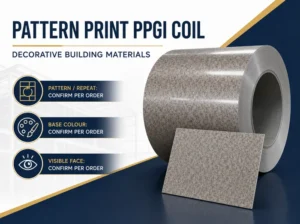
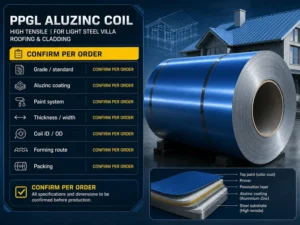
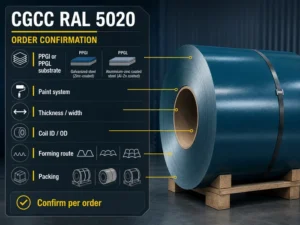
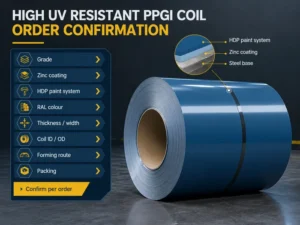
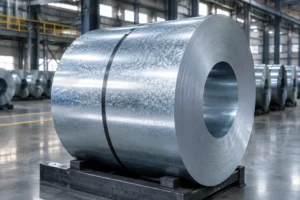
Pattern print PPGI coil is prepainted galvanized steel with a printed decorative surface for building-material products. The buyer should specify the galvanized substrate, steel grade, temper, coating system, base colour, printed pattern, repeat direction, dimensions, forming route and documents. A product title such as “factory price pattern print PPGI” does not confirm the actual pattern, coating or delivery specification. Send a pattern sample or approved visual reference, identify the visible face and explain whether the coil will be slit, cut, roll formed or laminated. Confirm every open technical and commercial field per order.
The first approval should cover the finished appearance and the way the patterned coil will be processed. Confirm whether the pattern runs in a fixed direction, how adjacent panels meet and which face remains visible after forming. The written brief should also state the exposure, installation environment and required documents. These points keep the decorative choice connected to the galvanized substrate and coating system instead of treating the product name as a complete specification.
What is pattern print PPGI coil?
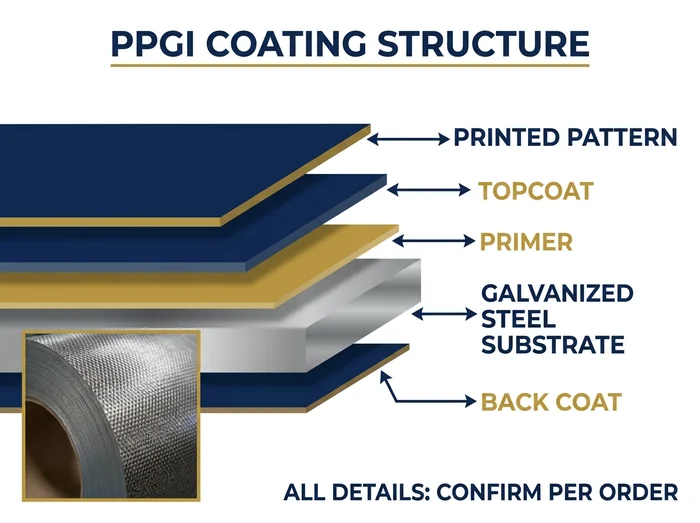
Pattern print PPGI coil starts with a galvanized steel substrate and adds a prepainted coating system with a printed surface design. The finished coil can carry a decorative appearance for building-material panels, cladding, ceilings, doors, partitions and architectural profiles. The pattern is a visible design layer, not a substitute for the galvanized substrate, primer, topcoat or back coat.
Buyers should separate appearance from material specification. A catalogue may call a surface wood grain, flower grain, marble, stone, brick, cloud or another pattern. The name helps identify the design direction, but it does not tell the supplier the exact repeat, colour, gloss, coating system or forming tolerance. An approved sample or digital reference gives the quotation a usable visual target.
The finished application controls the request. A panel that is viewed close up in an interior space has a different appearance requirement from a long wall panel viewed outside. Lighting, viewing distance, installation direction and adjacent panels can change how a repeat pattern is perceived. State those conditions before approving the colour-coated coil.
Which specifications should be separated in the inquiry?
A complete inquiry starts with the galvanized substrate. State the preferred grade or governing standard when known, then confirm temper, zinc coating, thickness, width, tolerance and coil data. If the project only has a building-material description, ask the supplier to mark the grade, temper and coating as confirm per order rather than filling them with an assumption.
The paint system comes next. Identify primer, topcoat, printed layer and back coat as separate fields. The base colour may sit below the printed design, while the back coat may follow a different requirement. Confirm whether the buyer needs a particular gloss, protective film or visible-side finish. The words “colour coated” do not define every layer.
Pattern control deserves its own section in the purchase order. Record the pattern reference, repeat length, repeat width, direction, joint alignment and approved sample. If the pattern must run along the coil feed direction, state that point. If sheets will be cut and installed in a fixed orientation, provide the cutting plan or panel drawing.
Dimensions and processing complete the brief:
- Thickness, width and tolerance.
- Coil inner diameter, outer diameter, weight and winding direction when required.
- Slitting, cut-to-length, roll forming, profiling, laminating or embossing.
- Finished panel profile, bend sequence and visible face.
- Packing, marking, destination and inspection documents.
How should the buyer approve a printed pattern?
Use a controlled sample process. First, send the required visual direction with a pattern name, image or physical sample. Second, confirm whether the reference shows the base colour, the printed layer or the finished appearance after coating. Third, record the approved sample number or file name in the quotation and order.
Pattern repeat matters. A small sample can look correct while a full coil produces a visual shift if the repeat direction is not controlled. Ask how the design repeats across the width and along the feed direction. For architectural panels, check how adjacent sheets will meet. The buyer may need a pattern map or installation orientation note.
Colour review should use a consistent viewing method. Light source, gloss and screen settings can change the appearance of a printed coating. A digital image is useful for discussion but should not be treated as a physical colour guarantee. Confirm the approved visual standard and keep an actual sample when the project depends on close appearance matching.
Forming can change the appearance. Bending, roll forming, cutting and handling may affect the visible face, protective film or pattern alignment. Test the selected coating and pattern with the intended tool and profile before approving a large production run. Confirm the acceptable appearance after forming, not only on the flat coil.
How does pattern print PPGI compare with plain colour-coated coil?
Plain colour-coated PPGI focuses on a solid colour and the performance requirements of the coating system. Pattern print PPGI adds a designed visual layer. The added layer means the buyer must control pattern repeat, direction, sample approval and appearance after forming. The substrate and coating questions still remain.
Pattern print PPGI can support a decorative building-material brief when the surface design helps the panel fit the project. Plain PPGI may be simpler when the project needs one solid colour, high-volume repeatability or a less complex approval process. The right selection depends on the finished panel, not on which product name sounds more detailed.
Compare the two options on the same schedule: substrate, grade, temper, zinc coating, primer, topcoat, printed layer, back coat, dimensions, forming route, sample approval and documents. This avoids comparing a fully specified plain coil with a pattern coil described only by a marketing name.
Existing Bomis references can help organize the comparison. A buyer can review फूल अनाज पीपीजीआई for a patterned surface direction and compare the substrate and coating fields with GB/T 12754 PPGI steel coil. Those pages do not replace the order-specific approval of the new printed pattern.
What building-material applications suit pattern print PPGI?
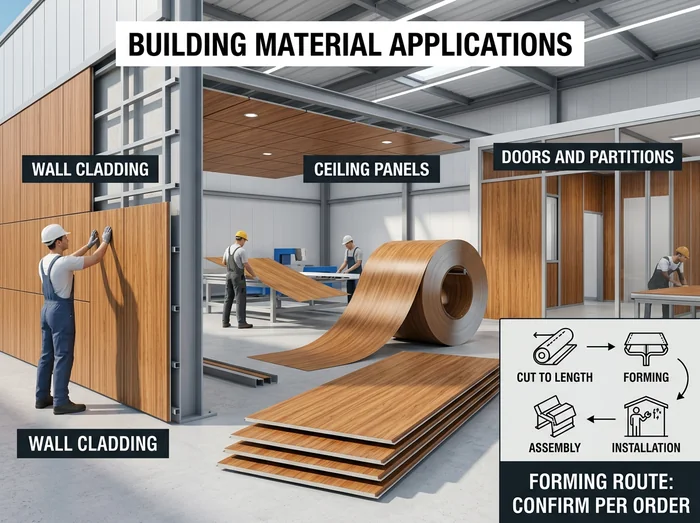
Pattern print PPGI can be reviewed for wall cladding, interior panels, ceilings, partitions, doors, enclosures, architectural profiles and other products where the surface design is visible. The application should be described by its finished profile, installation environment and viewing conditions.
Wall and ceiling products need a clear visible-side and installation-direction plan. If the pattern is directional, the panel schedule should show how sheets are placed next to one another. For doors and enclosures, the design may need to continue across folded faces or separate components. Provide the finished dimensions and bend positions so the coating and printed layer can be reviewed against the part.
Pattern print PPGI may also suit interior decorative products where a stone, wood, flower or geometric appearance is requested. The pattern name should remain descriptive until the sample is approved. Do not treat a printed surface as proof of structural capacity, corrosion life, fire rating or outdoor suitability. Those claims require separate confirmation.
For exterior building materials, state exposure, installation location, panel orientation, cleaning conditions and expected forming. The coating system and substrate must match the environment. If the project includes coastal exposure, heavy sunlight or frequent cleaning, request the relevant coating discussion and documents rather than assuming the pattern itself provides protection.
What should be checked before production and shipment?
Before production, confirm the final pattern sample, base colour, visible face, repeat direction and forming route. Confirm substrate grade, temper, zinc coating, thickness, width and tolerance. The supplier should also know whether the coil will be slit, cut to length, roll formed, laminated or processed in another way.
During production approval, keep the pattern reference with the order. Check that the printed surface, back coat, protective film and coil marking match the approved schedule. If an inspection document is required, list its scope before shipment. Do not add certification numbers or test values unless Bomis has confirmed them for the offered coil.
Packaging protects more than the steel edge. Patterned surfaces can be damaged by rubbing, moisture, incorrect wrapping or poor handling. Confirm eye orientation, wrapping, skid or pallet requirements, loading method, moisture protection and destination. Mark the visible face and pattern reference where that information helps the buyer receive and process the coil correctly.
Commercial fields also need written confirmation. Price, MOQ, lead time, payment, packing cost, loading port and delivery terms vary by order. Reference-page figures belong to the reference supplier and should not be copied into a Bomis quotation. Keep Bomis’s own commercial terms separate and confirm them per order.
FAQ: Pattern Print PPGI Steel Coil
What is pattern print PPGI?
Pattern print PPGI is prepainted galvanized steel coil with a printed decorative surface. Confirm the galvanized substrate, coating system and pattern per order.
Can the pattern be customized?
Pattern, colour, repeat and direction may be reviewed. Use an approved sample or visual reference before production.
Does the printed pattern replace the paint coating?
No. The printed layer is part of a coating system that may include primer, topcoat and back coat. Confirm each layer per order.
Will roll forming change the appearance?
Forming can affect alignment, visible face and handling marks. Confirm the tooling, feed direction, bend sequence and acceptable post-forming appearance.
Can the coil be used for roofing?
Roofing use depends on the substrate, coating system, profile, exposure and project specification. Confirm the complete roofing requirement before selection.
What documents should be requested?
Request the agreed substrate, coating, pattern approval and inspection documents required by the project. Confirm availability per order.
How should two pattern PPGI quotations be compared?
Compare the approved pattern, substrate, coating layers, dimensions, forming route, packing and documents line by line. Do not compare only the product title.
Conclusion: approve the surface and the substrate together
Pattern print PPGI coil is easiest to buy when the decorative surface and galvanized steel substrate are specified together. The buyer should approve the pattern, repeat, direction, colour, coating schedule, dimensions, forming route and documents before production.
Bomis Steel can review the building-material brief, mark open fields and confirm the available PPGI coil specification per order. The final quotation should show which details are approved and which remain subject to confirmation.