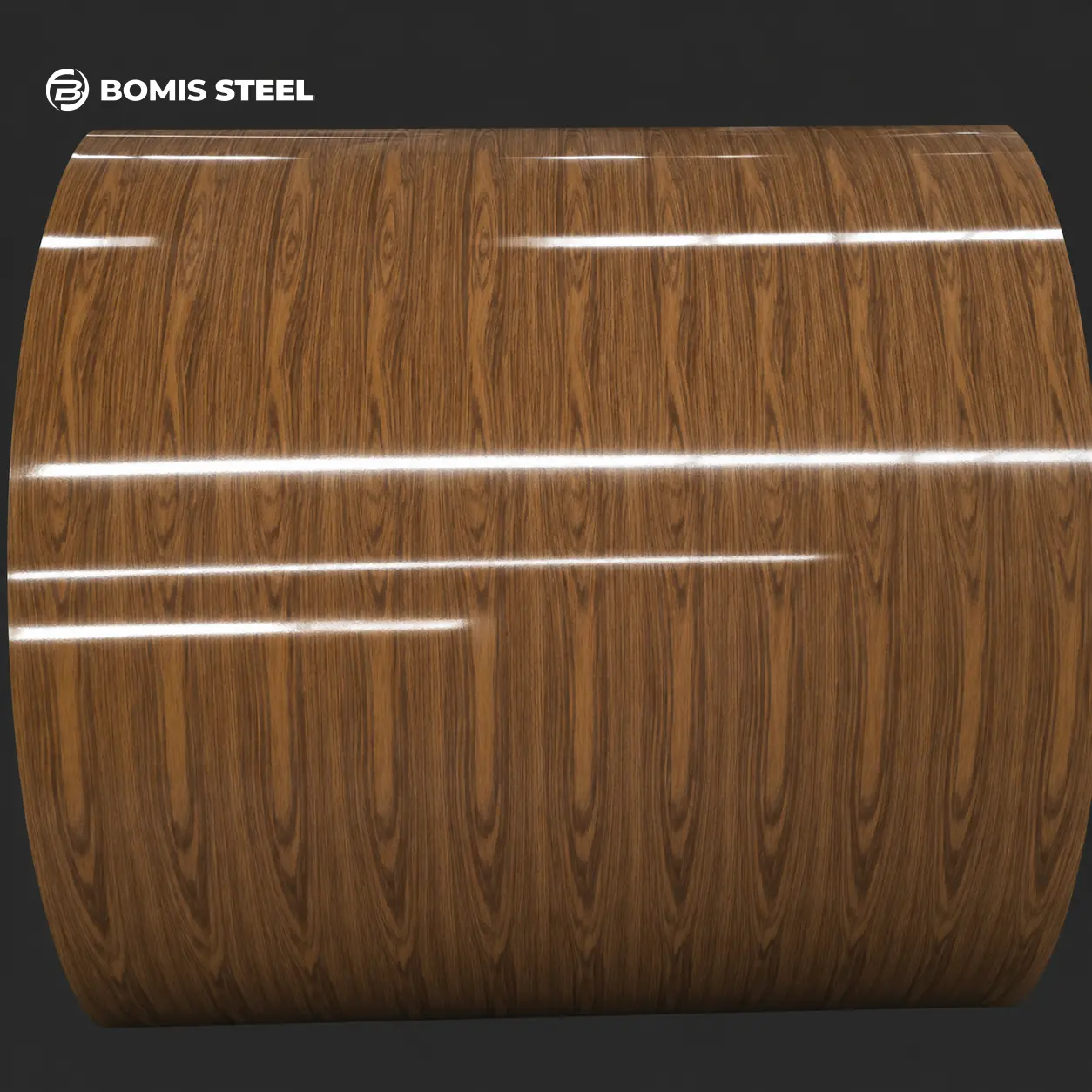
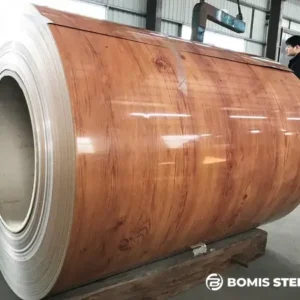
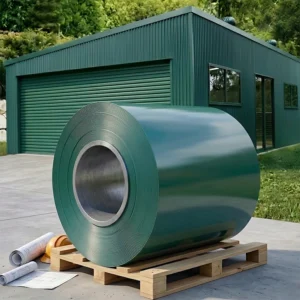
Our wood-grain aluminum coils combine the structural strength of premium aluminum alloy with a realistic timber finish.
Designed for commercial buyers in construction, furniture manufacturing, and transportation, these coils offer a low-maintenance alternative to real timber and standard PVDF/PE coated metals. For color-coated applications, faranti na aluminium da aka fenti offer PE, SMP, HDP, and PVDF paint systems across 1xxx, 3xxx, and 5xxx alloys.
Muhimman Siffofi da Fa'idodi
1. Authentic Wood Aesthetics Without the Maintenance: Advanced heat-transfer printing replicates natural wood grains with high fidelity. Unlike real wood, these coils will not rot, warp, or crack, eliminating the need for regular staining or sealing.
2. High Strength-to-Weight Ratio: Built on a premium aluminum alloy base (density approx. 2.7 g/cm³), these coils weigh about one-third as much as steel. This reduces structural dead loads, simplifies handling on-site, and lowers shipping costs per square meter.
3. Corrosion Resistance: Aluminum’s natural oxide layer and our protective topcoat ensure long-term durability in humid, coastal, and industrial environments where standard steel rusts.
4. Flexible Coating Options: We supply PE, SMP, HDP, and PVDF paint systems to match your project’s lifespan, environmental exposure, and budget constraints. Finishes range from light oak to dark walnut. Custom color-matching is available for bulk orders upon receiving a physical sample.
5. Fire Safety and Sustainability: The aluminum substrate is non-combustible and fully complies with international fire codes. The material is 100% recyclable, helping your projects qualify for green building certifications like LEED.
6. Excellent Formability: Available in multiple tempers and annealed conditions (O-H112, T3-T8, T351-T851), the coils can be slit, sheared, stamped, or punched without cracking the finish.
Bayanan Fasaha
| Bayanan Takamaiman |
Kimomi |
| Sunan Samfur |
Wood Grain Aluminum Coil |
| Tsarin kauri |
0.12 mm – 4.0 mm |
| Zangon faɗi |
20 mm – 1,800 mm |
| Tsayi |
As per customer requirement |
| Product Form |
Zoben ƙarfe, Faranti, Tsararriyar ƙarfe |
| Substrate Grades |
1050, 1060, 1100, 3003, 3004, 5005, 5052, 8011 |
| Applicable Standards |
GB, ASTM, EN, JIS |
| Annealed Condition |
O-H112, T3-T8, T351-T851 |
| Tsarin fenti |
PE, SMP, HDP, PVDF |
| Color / Finish |
Wood grain per RAL reference or client-supplied sample |
| Hidimomin sarrafawa |
Slitting, cutting, pressing, punching |
| Adadin odar mafi ƙanƙanci |
5 metric tons |
| Marufi |
Standard airworthy wooden pallet packaging |
Neman
- Exterior Architecture: Curtain walls, garage doors, roller shutters, sunshade louvers, and soffit panels.
- Interior Design & Fit-Outs: Suspended ceilings, wall cladding, column wraps, office partitions, and faux wood beams.
- Furniture Production: Wardrobe fascias, kitchen cabinet doors, shelving, tabletops, and modular workstations.
- Transit & Marine: Interior trim and paneling for rail cars, commercial vehicles, and lightweight marine cabinetry.
Wood Grain Aluminum vs. Wood Grain Color Coated Steel
- Weight Efficiency: Aluminum is roughly 65% lighter than standard steel (2.7 g/cm³ vs. 7.85 g/cm³), reducing freight costs and installation labor.
- Corrosion Resistance: Aluminum resists rust even if scratched, making it a reliable choice for coastal projects. Steel, however, relies completely on its zinc galvanization and paint barrier; scratches expose it to rapid corrosion.
- Structural Strength: Steel remains best for heavy load-bearing applications due to its high tensile strength. Aluminum is preferred when formability, weight savings, and rust prevention matter most.
- Aesthetics: The wood-grain sublimation process bonds exceptionally well to aluminum, creating a cleaner texture and more realistic finish than coated steel.
Installation & Fabrication Guidance
BOMIS recommends the following best practices:
- Storage: Store coils in their original export packaging in a dry, climate-controlled warehouse. Keep the protective PE film on during all handling and stamping stages.
- Tooling Clearances: Calibrate slitting, punching, and stamping dies to match the specific alloy and thickness. Incorrect clearances can scuff the surface coating.
- Bend Radii: Consult our alloy-specific minimum bend radius charts before roll-forming to prevent substrate micro-cracking or finish delamination.
- Handling Finished Goods: Avoid dragging panels when unloading. Use protective foam or paper interleaving between stacked parts during transit.
- Maintenance: Wash installed panels periodically using a soft cloth, mild detergent, and lukewarm water. Avoid abrasive chemicals, steel wool, or wire brushes.
Tambayoyi da ake yawan yi
Q: What is the minimum order quantity for wood grain aluminum coil?
A: The standard MOQ is 5 metric tons. For trial orders or smaller quantities, our sales team can discuss available stock lot options and lead times based on your specific grade and finish requirements.
Q: Which alloy grades do you recommend for exterior architectural applications?
A: For exterior curtain wall and cladding applications, we typically recommend 3003, 3004, or 5052 alloys paired with PVDF paint systems for optimal corrosion resistance and color retention. The 1050 and 1060 series are well-suited for interior applications where formability and cost efficiency are the primary considerations. Our technical team can assist with grade selection based on your project’s specific environmental conditions and performance expectations.
Q: Can BOMIS match a specific wood grain pattern or colour from a client sample?
A: Yes. Clients can supply a physical sample, photograph, or RAL reference, and our production team will develop a matching wood grain finish. This service is available for qualifying order volumes — please contact us with your target quantity and pattern details for a feasibility assessment.
Q: What paint system should I specify for different environments?
A: PE (polyester) is suitable for standard interior applications. SMP (silicone-modified polyester) offers improved weather resistance for exterior use in moderate climates. HDP (high-durability polyester) provides enhanced colour retention for demanding exterior applications. PVDF (polyvinylidene fluoride) delivers the highest level of UV resistance and is recommended for premium architectural projects and coastal environments.
Q: How do the lead times compare for standard vs. custom wood grain finishes?
A: Standard wood grain finishes from our existing pattern library typically ship within 20–30 days from order confirmation. Custom colour-matched or pattern-developed finishes may require an additional 10–15 days for sample approval prior to production. Your sales representative will provide a detailed timeline during quotation.
Q: What documentation do you provide with export shipments?
A: Every shipment includes mill test certificates (MTC) confirming chemical composition and mechanical properties, a detailed packing list, commercial invoice, bill of lading, and certificate of origin. Third-party inspection certificates (SGS, BV, etc.) can be arranged at the buyer’s request.