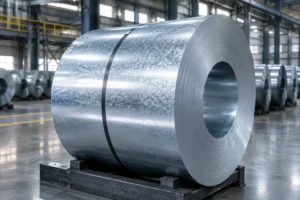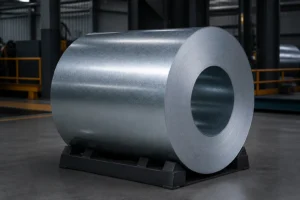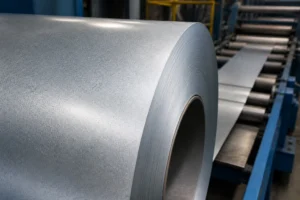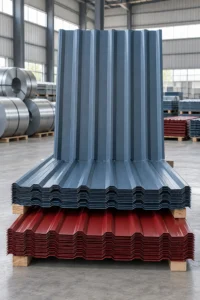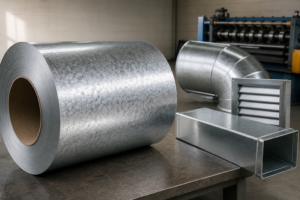

















Every year, as the rainy season descends upon Southeast Asia, our colleagues in the steel trading and processing industries invariably find themselves breaking into a sweat. During those months, it feels as though the heavens have sprung a leak; air humidity routinely skyrockets to 80%—or even upwards of 90%. While our galvanized steel coils (whether produced to ASTM A653 or EN 10346 standards) are indeed fortified by a protective zinc coating, in this typical “sauna-like” weather, even the slightest lapse in warehousing diligence can result in the sudden onset of white rust—or even red rust.
Today, let’s discuss some practical, real-world strategies for preserving the aesthetic appeal and quality of your cargo throughout this grueling rainy season.
The First Line of Defense: Factory Packaging Is the Absolute Minimum—Do Not Skimp on This Expense
In truth, the most effective rust prevention often lies in the “protective gear” applied at the factory. To combat the extreme weather conditions typical of Southeast Asia, we generally recommend opting directly for Bomis’s standard packaging.
This packaging system is strictly business—no gimmicks involved. The outermost layer consists of galvanized metal outer shields, designed to withstand the mechanical impacts and abrasions that occur during handling. Tightly wrapped beneath this is a layer of thick, water-resistant paper—serving as an impermeable “raincoat” to seal out moisture during the rainy season. Most critically, the entire assembly is secured with external copper bands. Why use copper bands? Because warehouse environments are subject to frequent temperature fluctuations; copper bands ensure that the packaging remains taut—resisting the loosening effects of thermal expansion and contraction—thereby maintaining the integrity of the internal moisture barrier. As long as this protective packaging remains intact, the steel coils within are, for all intents and purposes, safe.
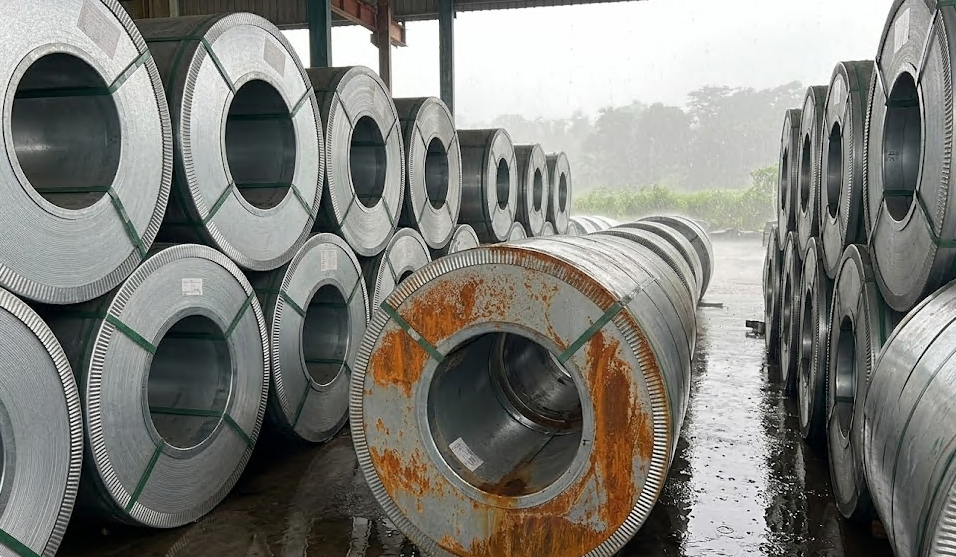
A Strict Mandate: No Matter How Crowded the Warehouse Gets, Never—Under Any Circumstances—Store Coils Outdoors
Occasionally, due to a lack of available space within the warehouse or simply to save time and effort, some may be tempted to temporarily leave steel coils exposed to the elements—either completely out in the open or merely under a simple canopy in a courtyard. During Southeast Asia’s rainy season, doing so is an absolute recipe for disaster.
When a strong monsoon gust sweeps through, accompanied by torrential rain, a standard canopy offers virtually no defense against the driving, wind-whipped precipitation. Should rainwater seep through the seams of the outer packaging and penetrate the layers of the steel coil, the dreaded phenomenon of capillary action will cause the moisture to spread rapidly throughout the material. The ensuing electrochemical corrosion will then proceed at a terrifyingly accelerated pace, resulting in damage that is truly heartbreaking to behold. Therefore, do not rely on luck; you must transfer the steel coils to a fully enclosed indoor warehouse.
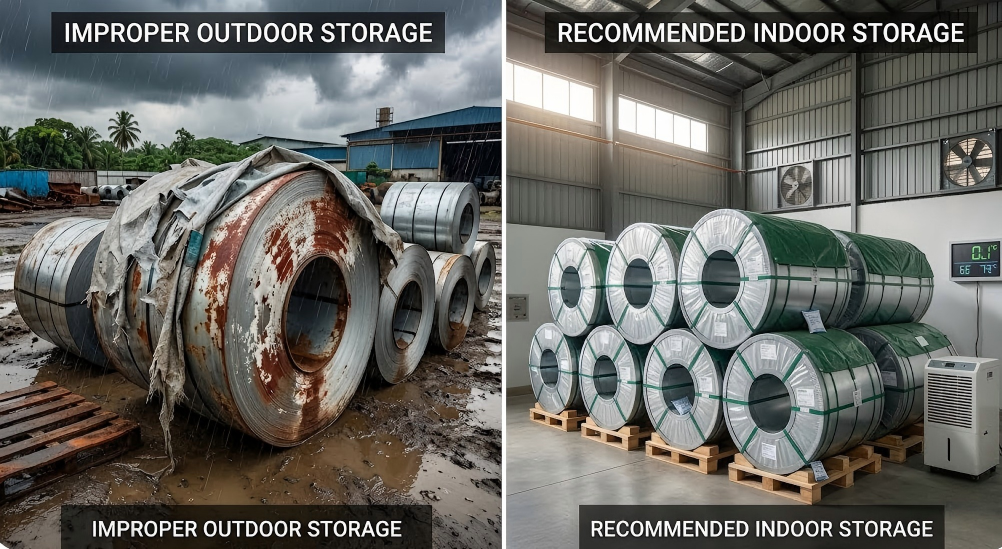
Warehouse Interior Best Practices: Isolate from Ground Moisture and Ensure Frequent Ventilation
Is everything fine simply because the coils are inside an enclosed warehouse? The moisture rising from the ground can be just as damaging.
Never Place Coils Directly on the Floor: Use sturdy wooden blocks, rubber mats, or specialized saddles to elevate the steel coils by 10 to 20 centimeters. This completely isolates them from ground moisture and any potential surface water accumulation.
Keep the Air Moving: During hot and humid weather, the warehouse must not become a stagnant, stuffy “pressure cooker.” Industrial exhaust fans should be kept running. If conditions permit, installing a high-power dehumidifier to keep humidity levels below 60% is the most reliable safeguard.
Beware of “Condensation”: In Southeast Asia, days often feature intense sunshine followed by sudden temperature drops caused by heavy evening rains. This temperature differential makes it extremely easy for airborne moisture to condense directly onto the surface of steel coils that have absorbed significant heat during the day. Strive to maintain a relatively stable internal warehouse temperature and avoid directing cold air currents straight onto the cargo; this can save you a great deal of trouble.
Don’t Get Complacent: Conduct Regular Warehouse Inspections
No matter how excellent the packaging, it remains vulnerable to accidental scrapes or damage during loading and unloading. Throughout the long rainy season, warehouse staff must be diligent and establish a routine inspection schedule.
What Should You Look for During Inspections? Focus primarily on the outermost metal casing: check for dents or deformation. Examine the inner waterproof paper for any tears or signs of moisture absorption (such as becoming soft or soggy). Finally, verify that the binding straps or hoops remain tight and secure. If you discover any damage to the packaging, do not wait; immediately move the coil to a dry area and seal the breach using specialized rust-inhibiting, waterproof tape or spare waterproof paper. The longer you delay—even by a single day—the deeper the moisture will penetrate.
Southeast Asia Monsoon Season: Steel Coil Storage Guidelines
| Core Focus | Ideal Standard | Monsoon Risk Level | Recommended Actions & Solutions |
| Relative Humidity (RH) | 40% – 60% | > 70% (High risk of condensation and white rust) | Turn on industrial dehumidifiers. Place large-capacity desiccants in warehouse corners. |
| Temperature Variation | Stable | Sudden temperature drops after heavy rain | Close doors and windows during rainstorms. Ensure the warehouse has an insulated roof. |
| Bottom Clearance | 10cm – 15cm off the ground | Direct ground contact / Localized warehouse flooding | Always use wooden pallets or rubber mats. Check warehouse drainage trenches daily. |
| Stacking Spacing | 5cm gap between coils | Tightly packed (Restricts air circulation) | Leave adequate ventilation channels. When storing heavy materials like Galvanized Steel Coil, use industrial fans to promote airflow between the gaps. |
| Packaging Integrity | Intact packaging | Waterproof paper or plastic film damaged during transit | Repair tears with tape immediately. For value-added coated materials like PPGI Coil, if moisture penetrates, unwrap to dry thoroughly before repackaging. |
| Inspection Frequency | Once a week | Prolonged periods without checks | Increase to 2-3 times per week during monsoon. Focus strictly on bottom-tier coils and those facing the wind. |
The rainy season in Southeast Asia certainly presents a challenge; however, by strictly adhering to “Bomis-level” factory packaging standards, consistently storing coils indoors on elevated platforms, and coupling these measures with diligent daily inspections, the issue of rust on galvanized steel coils can be kept completely under control. By investing a little extra care in warehousing, we can minimize disputes and complications at the time of delivery—thereby naturally safeguarding our profits.
Frequently Asked Questions (FAQ): Steel Coil Storage During the Monsoon Season
Q1: Why is Galvanized Steel Coil particularly susceptible to white rust during the Southeast Asian monsoon season?
A: The monsoon season brings high humidity and frequent heavy rains, leading to drastic temperature fluctuations inside warehouses. This causes condensation to form on the surface of the galvanized steel coil. If coils are stacked too closely, poor air circulation traps this moisture against the zinc coating, triggering an oxidation reaction that results in white rust.
Q2: Can I store galvanized steel coils outdoors during the rainy season?
A: We strongly advise against storing galvanized steel coils outdoors, especially during the monsoon. Even if covered with heavy-duty tarpaulins, ground moisture and extreme relative humidity will eventually penetrate the packaging, causing severe moisture corrosion. Always store your materials indoors in a well-ventilated, roofed warehouse with excellent drainage.
Q3: How should I handle a galvanized steel coil that has already developed minor white rust?
A: If you spot early signs of white rust, immediately remove the damp packaging and move the coil to a dry, well-ventilated area. Wipe off the surface moisture quickly with a dry cloth and use industrial fans to accelerate drying. Applying a light coat of anti-rust oil can help stop further oxidation. For projects in extremely harsh or humid environments, you might consider upgrading to highly weather-resistant PPGL Coil or Galvalume coils for your future orders.
Q4: How does Bomis Steel’s packaging prevent rust during sea freight and monsoon storage?
A: We utilize premium export-standard seaworthy packaging. Every Galvanized Steel Coil shipped to Southeast Asia is tightly wrapped in multiple layers of waterproof kraft paper and anti-moisture plastic film. It is then reinforced with external steel guard boards and high-strength steel strapping. This multi-layer protection effectively blocks out external moisture, ensuring your materials survive both the long sea voyage and the harsh monsoon conditions.