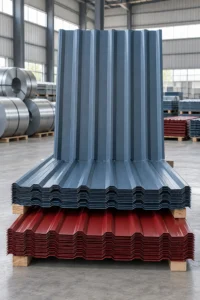

















Key Factors Influencing the Price of Galvanized Steel Coils in China
The pricing of galvanized steel coils is highly dynamic, driven by a complex interplay of domestic production capabilities, international trade environments, and raw material availability. Understanding these underlying variables is critical for buyers looking to optimize their procurement strategies.
1. Raw Material and Energy Costs
The production of galvanized steel coils begins with steel billets, which are forged primarily from iron ore and various alloying elements. Because China is a major importer of iron ore, fluctuations in global iron ore prices directly dictate the baseline cost of domestic steel production. When iron ore prices soar, mills face elevated material costs that are immediately transferred to the final price of the coils.
Additionally, the steel-making and galvanization processes are highly energy-intensive. Any increase in the cost of industrial energy—specifically coal and electricity—will directly increase the production cost per ton.
2. Production Capacity and Supply Constraints
China boasts massive steel production volumes, housing a vast network of manufacturing mills. The sheer scale of this production directly dictates market availability.
- Over-production: When mills operate at maximum capacity without matching demand, the resulting market over-supply places heavy downward pressure on prices.
- Supply Interruptions: Conversely, if production is restricted—due to strict environmental regulations, mandatory emissions curbs, or scheduled machine maintenance—the supply contracts, driving prices upward.
- Geographical Logistics: The physical location of the mill also plays a role. Mills situated near major shipping ports benefit from significantly lower capital-intensive transportation costs for raw materials, allowing them to offer more competitive pricing.
3. Fluctuations in Market Demand
Demand for galvanized steel is anchored by two massive, primary consumption sectors in China:
- Construction and Infrastructure: Galvanized steel is a foundational material for roofing, wall cladding, and structural components. Ongoing urbanization and the development of massive infrastructure projects (high-speed railways, bridges, and airports) are primary drivers. Boom cycles in construction activity rapidly increase demand, subsequently driving up coil prices.
- Automotive Manufacturing: Automakers rely heavily on galvanized steel for car frames, body panels, and structural components to ensure durability and prevent rust. Shifts in automobile production—driven by consumer purchasing trends, economic conditions, and government vehicle emission regulations—directly impact steel demand.
| Market Variable | Economic Mechanism | Expected Impact on Price |
|---|---|---|
| Rising Iron Ore / Energy Costs | Increases the baseline cost of production for the mill. | Increases price per ton |
| Strict Environmental Curbs | Forces mills to cut output, restricting market supply. | Increases price per ton |
| Export Quotas or Tariffs | Traps more steel in the domestic market, causing oversupply. | Decreases domestic price |
| Surge in Infrastructure Spending | Rapidly consumes available supply, tightening the market. | Increases price per ton |
| Premium Zinc Coating (e.g., Z275) | Requires more raw material (zinc) and precise processing. | Increases price per ton |
4. Trade Policies and Tariffs
China’s national trade policies fundamentally alter the balance of domestic supply and demand. For instance, if the government imposes export tariffs or strict quotas, less steel can be sold abroad. This traps a higher volume of galvanized steel within the domestic market, generally causing a downward pull on local prices.
Conversely, import tariffs on raw materials protect the domestic mining industry but push up the cost of production for steel mills. Furthermore, international trade disputes and anti-dumping measures levied against Chinese steel by foreign governments can rapidly disrupt market stability, leading to unpredictable price swings.
5. Quality and Physical Specifications
Not all galvanized steel is priced equally; physical specifications are major price determinants. Coils manufactured with superior surface finishes, uniform zinc coatings, and exact mechanical properties carry a premium.
Specifically, the thickness of the base metal and the weight of the zinc coating dictate the cost. Thicker coils requiring heavier zinc layers (for high-corrosion environments) cost significantly more to produce and will always command a higher price per ton. Buyers with strict application requirements must be prepared to pay a premium to meet their exact specifications.
6. Current Market Price Trends
In recent periods, the price per ton of galvanized steel coils in China has proven to be fairly volatile. While prices stabilized early in the year due to sustained, predictable demand from the construction and automotive sectors, the market has since grown turbulent. A combination of soaring iron ore costs, localized production curbs to meet environmental targets, and sudden shifts in global trade regulations have introduced significant price swings. In regions experiencing localized supply squeezes, prices remain notably elevated.