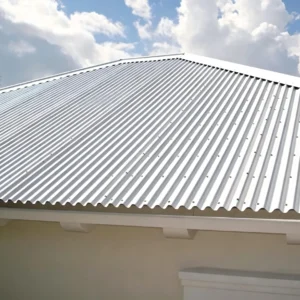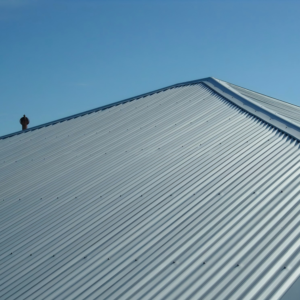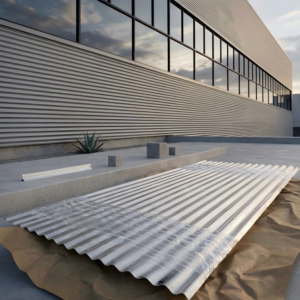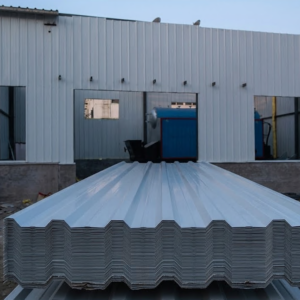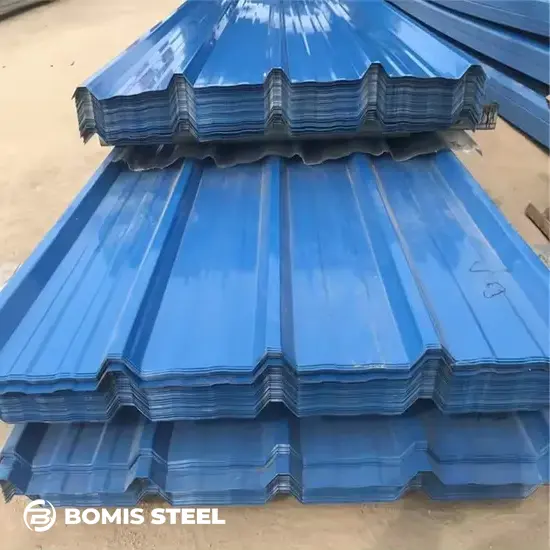
Toiture en acier à profil trapézoïdal profond, adaptée à un espacement important entre les pannes, conçue pour offrir résistance et durabilité. BOMIS propose des solutions de toiture polyvalentes et économiques.
1. IBR galvanisé : Acier galvanisé à chaud offrant une protection fiable contre la corrosion au meilleur rapport qualité-prix. Recommandé pour les toitures industrielles générales, les structures agricoles et les applications où la performance fonctionnelle prime sur les exigences esthétiques. La couche de zinc assure à la fois une protection barrière et une protection sacrificielle, garantissant plusieurs décennies de durée de vie dans des conditions atmosphériques normales.
2. Tôles IBR en Zincalume : Un revêtement en alliage de zinc et d'aluminium qui offre une résistance à la corrosion nettement supérieure à celle des finitions galvanisées standard. La composante en aluminium forme une couche d'oxyde stable, tandis que le zinc assure une protection galvanique au niveau des bords coupés et des rayures. Particulièrement adapté aux installations côtières et aux environnements à forte humidité, où les revêtements galvanisés traditionnels peuvent nécessiter un entretien plus fréquent.
3. IBR prélaqué (PPGI) : Support galvanisé ou Zincalume prélaqué, doté d'un revêtement durable en polyester, en polyester modifié au silicium (SMP) ou en PVDF. Disponible dans une large gamme de couleurs standard, avec possibilité de personnalisation des couleurs pour les commandes en grande série. La finition appliquée en usine évite la peinture sur chantier, réduit le temps d'installation et garantit une uniformité de couleur sur l'ensemble de la toiture.
| Paramètre | Gamme standard | Remarques |
|---|---|---|
| Type de profil | IBR (nervure en caisson inversé) | Géométrie trapézoïdale des nervures |
| Largeur de couverture effective | 686 mm | Largeur installée après chevauchement |
| Plage d'épaisseur | 0,40 mm – 0,80 mm | 0,40 / 0,50 / 0,58 / 0,80 mm (standard) |
| Plage de longueurs | 1,5 m – 14,0 m | Longueurs sur mesure disponibles sur demande |
| Tolérance de longueur | -0 / +5 mm | Gamme standard uniquement |
| Pente minimale du toit | 5° (environ 1:12) | Indispensable pour assurer un bon écoulement des eaux |
| Revêtement en zinc (galvanisé) | Z60 – Z275 | Des épaisseurs de revêtement plus élevées pour les environnements côtiers et industriels |
| Système de peinture (PPGI) | PE / SMP / PVDF | 15 à 25 μm de couche d'apprêt + couche de finition par face |
1. Rapport résistance/poids élevé : Le profil trapézoïdal des nervures offre des performances structurelles supérieures sans alourdir excessivement la structure. Cela permet d’espacer davantage les pannes, ce qui réduit généralement le nombre d’éléments de soutien de 15 à 25% par rapport aux profils ondulés classiques, ce qui se traduit par une réduction des coûts de la sous-structure pour l’ensemble du projet.
2. Évacuation efficace des eaux de ruissellement : Les rainures profondes facilitent l'évacuation rapide de l'eau, ce qui rend l'IBR adapté aux toitures à faible pente, pouvant descendre jusqu'à 5 degrés. Cette caractéristique est particulièrement utile dans les régions à forte pluviosité, où il est indispensable de réduire au minimum la présence d'eau stagnante sur les toitures afin d'éviter les fuites et la dégradation prématurée du revêtement.
3. Efficacité de l'installation : Avec une largeur utile de 686 mm par panneau et des longueurs pouvant atteindre 14 mètres, les panneaux IBR permettent de réduire au minimum le nombre de panneaux et de recouvrements d'extrémité nécessaires. Moins il y a de joints, plus la pose est rapide, plus les coûts de main-d'œuvre sont réduits et moins il y a de points de fuite potentiels sur l'ensemble de la toiture.
4. Intégration esthétique polyvalente : Le motif à nervures épuré et linéaire s'harmonise aussi bien avec les conceptions architecturales modernes qu'avec l'esthétique industrielle traditionnelle. Disponible en finitions métalliques brutes pour les applications fonctionnelles ou avec des revêtements colorés appliqués en usine pour les projets où l'impact visuel est primordial.
5. Durabilité à long terme avérée : Fabriquées à partir de bobines d'acier galvanisé à chaud ou en Zincalume conformes aux normes internationales (ASTM A653, EN 10346, AS 1397), les tôles BOMIS IBR sont conçues pour une durée de vie de 20 à 30 ans et plus lorsqu'elles sont correctement installées et entretenues dans des environnements adaptés.
6. Entièrement recyclable : Les toitures en acier 100% sont recyclables en fin de vie sans perte de leurs propriétés matérielles, ce qui contribue à l'obtention de certifications en matière de construction durable et à la réalisation des objectifs de développement durable pour les projets respectueux de l'environnement.
BOMIS recommande de respecter les consignes d'installation suivantes afin de garantir des performances optimales à long terme des tôles de toiture IBR :
Pente du toit : Une pente minimale de 5 degrés est recommandée pour assurer un écoulement efficace de l’eau. Pour les applications à très faible pente (inférieure à 7 degrés), il est conseillé de prendre des mesures supplémentaires d’étanchéité au niveau des joints afin d’empêcher toute infiltration d’eau par capillarité au niveau des chevauchements latéraux.
Choix des éléments de fixation : Les vis autoperceuses en acier galvanisé ou inoxydable, équipées de rondelles d'étanchéité en EPDM, constituent la recommandation standard. Les fixations doivent être posées à travers la crête de la nervure — jamais à travers le creux — afin de préserver l’étanchéité du toit. Dans les environnements côtiers ou fortement corrosifs, l’utilisation de fixations en acier inoxydable est vivement recommandée.
Tolérance de dilatation thermique : Les toitures métalliques se dilatent et se contractent sous l'effet des variations de température. Il ne faut pas trop serrer les fixations ; la rondelle en EPDM doit être comprimée sans toutefois se déformer. Pour les longueurs continues supérieures à 30 mètres, il convient d'envisager l'utilisation de joints de dilatation ou de systèmes de clips coulissants.
Orientation des pans latéraux : Les tôles doivent être posées de manière à ce que le chevauchement latéral soit orienté à l'opposé de la direction dominante du vent, afin de limiter au maximum la pénétration de la pluie poussée par le vent. La pratique courante consiste à prévoir un chevauchement latéral minimal recommandé d'une nervure complète.
Découpe : Lorsqu'une découpe sur site est nécessaire, il est recommandé d'utiliser des cisailles électriques ou des grignoteuses plutôt que des disques à tronçonner abrasifs, qui génèrent de la chaleur et peuvent endommager le revêtement métallique et la finition peinte au niveau des bords de coupe. Tous les bords de coupe doivent être retouchés avec une peinture riche en zinc ou avec le système de retouche approuvé par le fabricant.
Accessibilité piétonne : Lorsqu'il est nécessaire de marcher sur la toiture pendant les travaux d'installation ou d'entretien, les ouvriers doivent marcher uniquement sur les zones de tôle situées directement au-dessus des supports de pannes et porter des chaussures à semelles souples afin d'éviter d'endommager le revêtement.
Les tôles de toiture IBR sont conçues pour offrir des performances à long terme tout en nécessitant peu d'entretien. Il est recommandé de procéder à des inspections périodiques afin de détecter et de remédier aux fixations desserrées, à l'accumulation de débris dans les gouttières et à tout dommage localisé du revêtement. Pour les finitions galvanisées exposées à des environnements agressifs, un cycle de repeinture d'entretien tous les 5 à 7 ans environ, à l'aide d'un système de revêtement adapté aux toitures métalliques, peut prolonger considérablement la durée de vie du produit. Les produits en Zincalume et les produits prélaqués en usine nécessitent généralement des interventions d'entretien moins fréquentes.
R : Les spécifications standard s’accompagnent généralement d’une quantité minimale de commande (QMC) comprise entre 5 et 10 tonnes métriques par combinaison de dimensions et d’épaisseur. Pour les longueurs sur mesure ou les spécifications de revêtement non standard, des QMC plus élevées peuvent s’appliquer en raison des exigences de configuration de l’usine. BOMIS vous recommande de contacter notre équipe commerciale en lui communiquant les spécifications de votre projet afin de recevoir un devis sur mesure tenant compte de vos besoins en termes de volume.
R : Oui. BOMIS propose des longueurs sur mesure comprises entre 1,5 m et 14 m, ce qui permet une optimisation adaptée à chaque projet et réduit ainsi les découpes sur chantier ainsi que le gaspillage de matériaux. Des tolérances de longueur de -0/+5 mm sont respectées pour toutes les longueurs sur mesure de la gamme standard.
R : L'IBR présente un profil de nervure trapézoïdal plus profond que celui des tôles ondulées sinusoïdales traditionnelles. Cette géométrie offre une capacité de portée supérieure d'environ 30 à 40%, ce qui permet d'espacer davantage les pannes et de réduire le nombre de supports structurels. La largeur de couverture effective (686 mm) et la hauteur des nervures diffèrent également de celles des profils ondulés ; il n’est donc pas recommandé de procéder à une substitution directe sans révision structurelle.
R : Pour les installations côtières (situées entre 1 et 5 km de l'eau de mer), il est vivement recommandé d'utiliser des substrats revêtus de Zincalume ou de PVDF coloré. La composante en aluminium du revêtement en alliage du Zincalume offre une meilleure résistance à la corrosion induite par les chlorures que les revêtements en zinc galvanisé standard. En cas d’exposition marine intense, il convient de spécifier un poids de revêtement minimum de Z275 ou équivalent.
R : Les tôles IBR de qualité standard, répondant aux spécifications courantes, sont généralement disponibles dans un délai de 2 à 4 semaines à compter de la confirmation de la commande. Les revêtements de couleur personnalisés, les épaisseurs hors standard ou les exigences d'emballage spécifiques peuvent allonger les délais de livraison à 6-8 semaines. Pour les contrats portant sur des volumes importants, BOMIS recommande de faire appel à son équipe d'approvisionnement dès la phase de planification du projet afin de garantir l'attribution d'un créneau de production.
R : L'emballage standard pour l'exportation comprend plusieurs couches de protection : un film intérieur inhibiteur de corrosion en phase vapeur (VCI), des couches intermédiaires de rembourrage et un emballage extérieur résistant aux intempéries, muni de protections d'angle en acier. Les tôles sont cerclées sur des palettes en bois ou des châssis de transport en acier. Des configurations d’emballage sur mesure — notamment l’intercalage individuel des tôles et l’ajout de déshydratants — sont disponibles pour les expéditions maritimes longue distance vers des destinations à forte humidité.