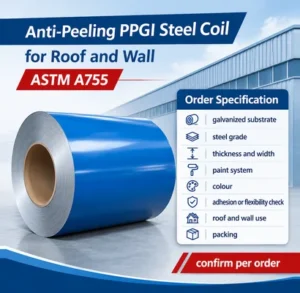
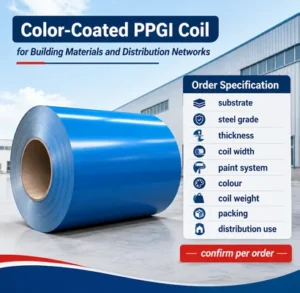
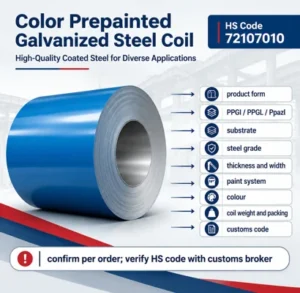
ASTM A755 G550 prepainted roofing sheet with an anti-capillary groove is a profile-specific roofing solution for buyers who need a high-strength steel grade, a painted surface and a controlled side-lap detail in one order. The most important purchasing decision is not the product name alone. The buyer must confirm the base metal thickness, roof profile, effective width, sheet length, metallic coating, paint system, colour, gloss, groove geometry and forming route against an approved drawing. G550 provides a strength reference, while the anti-capillary groove addresses the way adjacent sheets meet at the side lap. It does not replace roof design, correct fastening, drainage planning or sealant decisions. Before production, send the supplier the roof layout, profile drawing, design loads, exposure conditions and delivery requirements. Bomis can then review whether the requested sheet format or a coated-coil route fits the project and record the confirmed details on the quotation. This review also helps separate confirmed values from items that still need approval.
Why does the anti-capillary groove matter in a prepainted roofing sheet?
Roofing sheets do not work as isolated flat pieces. They meet at side laps, end laps, ridges, valleys and flashings. Each junction needs a clear geometry so the installer knows how the sheets align and how water should move across the roof surface. An anti-capillary groove is a profile detail placed at the side-lap area to create a defined separation and contact arrangement between adjacent sheets. That detail can help the design team address capillary water movement during the roof review, but the groove should not be treated as a universal leak guarantee.
The practical value comes from the relationship between the groove and the rest of the roof system. Groove position must match the lap direction. Sheet effective width must match the coverage calculation. Fasteners must sit in the correct crest or valley according to the profile design. Sealant, if required, must be compatible with the coating and exposure. If one of these decisions changes, the groove detail may no longer behave as intended. A buyer therefore needs the profile drawing, not only a generic product name.
For a quotation, write the requirement in plain terms: the sheet needs an anti-capillary groove at the specified side lap, with the groove geometry and tolerances confirmed against the approved profile drawing. That wording keeps the feature visible in the order record without pretending that an unconfirmed dimension is already fixed. It also gives the supplier a clear point to check before the roll-forming plan is released.
What should buyers confirm before ordering ASTM A755 G550 roofing sheet?
ASTM A755 and G550 answer different parts of the buyer’s question. The referenced standard identifies the specification framework in the product brief. G550 identifies the requested steel grade and strength level. Neither line, by itself, describes the full roof system. A workable order connects the grade to the thickness, profile, forming route, support spacing and project conditions.
Start with the roof geometry. Confirm the profile designation, crest and valley arrangement, effective cover width, overall width, sheet length and end-lap plan. Then confirm the anti-capillary groove position, groove form and side-lap direction. If the supplier will form the sheets, send the profile drawing or a clear section sketch. If the buyer will form sheets from coated coil locally, the coil specification must also state the required forming route and the limits that the local line can handle.
Next, record the steel and coating details. The base metal thickness should be stated separately from any coating thickness. Confirm the metallic-coated substrate, coating mass, paint family, top-coat and back-coat requirements, colour and gloss. A product page may show a reference name, but the quotation should carry the actual order values. If the project has a high-humidity, coastal or industrial exposure, say so early. Exposure affects the coating-system discussion and the review of cut edges, laps and maintenance.
Finally, confirm commercial and delivery information. State the required quantity, sheet or coil format, bundle or coil weight, packing method, destination port, delivery term and requested documents. A clear request reduces the risk of a quotation that looks complete but leaves the profile, groove or coating system open.
| Buyer question | Information to confirm |
|---|---|
| Which steel grade? | G550, together with thickness and forming conditions |
| Which profile? | Profile drawing, effective width, overall width and lap direction |
| What groove? | Anti-capillary groove location, geometry and tolerances per order |
| What coating? | Metallic substrate, coating mass, paint system, colour and gloss |
| What delivery format? | Cut-to-length sheet or coated coil, quantity and packing |
How does G550 affect profile selection and roll forming?

G550 is often selected when the roof design calls for a high-strength steel grade. That choice can support a lighter structural solution in some designs, but the grade does not remove the need to check profile behaviour. A roofing sheet receives its practical performance from the combination of steel grade, thickness, profile depth, support spacing, fastener layout and load case. The designer must evaluate that combination rather than using G550 as a substitute for a span table or structural calculation.
Forming also deserves attention. A roll-forming line creates the roof profile through a sequence of bends. The line must maintain the specified shape while protecting the painted surface and controlling the groove detail. The required bend sequence, minimum forming conditions, cut length and edge quality should be discussed before production. The buyer should tell the supplier whether the final sheet will be formed by Bomis or by a local processor, because the quality-control points and order information are different.
For Bomis-formed sheets, the quotation should identify the profile drawing and the finished dimensions. For coated coil, the order should identify the coil width, thickness, grade, paint system, colour, inner diameter, outer diameter and weight range, with the local roll-forming capability checked separately. The G550 galvalume roofing coil guide can help buyers compare the information needed for a coil-based roofing route, while the current product brief focuses on the prepainted sheet and its anti-capillary groove.
Do not assume that a thicker sheet or a stronger grade automatically makes every profile suitable. A roof profile can have its own forming limits and handling requirements. Confirm the drawing, the process route and the acceptance points before the mill or forming line starts.
How should the coating system and colour be specified?
Prepainted roofing sheet is a system, not just a coloured surface. The metallic-coated steel substrate supports the paint layers, while the primer, top coat and back coat are selected for the intended fabrication and exposure. The buyer should state the required substrate and paint family, then confirm the coating masses, thicknesses, gloss and colour reference in the order documents. If those items remain open, the word “prepainted” carries less purchasing value than it appears to.
Colour control starts with a reference. Use a RAL code, an approved colour card or a physical sample, and state which reference controls production. Gloss can change the visual result even when the colour name is the same. The buyer should also decide whether a protective film is required during forming and transport. Film selection, storage conditions and removal timing should be agreed before shipment, because long storage or outdoor exposure can complicate removal.
Paint-system selection should follow the service environment. A standard inland building may have different requirements from a coastal roof, a humid agricultural building or an industrial site. The project team should describe the exposure and maintenance expectations rather than asking for an unsupported universal service-life statement. Bomis can review the request and confirm which paint-system details are available for the order.
Cut edges and laps need the same attention as the broad painted face. The roof design should control water paths, fastening and flashing details. The anti-capillary groove is one part of that junction review. It should be specified together with the lap direction, sealant decision, fastener layout and installation instructions.
When is this roofing sheet a practical supply format?

ASTM A755 G550 prepainted roofing sheet with an anti-capillary groove fits projects that need a finished profiled sheet rather than a generic flat coil. The supply format can reduce the amount of local forming work, but it also makes the profile drawing, sheet length and packing plan more important. Long sheets need careful loading and lifting. Bundle weight must match the receiving equipment. The packing method must protect the painted surface and the profile edges during transport.
For a factory or warehouse roof, the buyer should send the roof plan, support spacing, sheet length, ridge and eave details, lap direction and drainage arrangement. For a renovation, confirm the existing support layout and the replacement sheet dimensions before quoting. For a commercial building, confirm colour, visible face, trim coordination and delivery sequence. For agricultural or utility structures, describe the exposure and the maintenance conditions.
Some projects are better served by coated coil. That route can make sense when a local roll former needs a particular line width, sheet length or profile. Other projects benefit from cut-to-length formed sheets because the profile and groove have already been established for the shipment. The right choice depends on the buyer’s equipment, project schedule, installation plan and quality-control responsibility. Ask for both options when the route is not yet fixed.
Packaging should be treated as part of the order, not as a final afterthought. Confirm bundle marks, piece count, sheet length, gross weight, lifting points, moisture protection and loading orientation. Keep the approved colour and profile references with the packing list so the receiving team can identify the shipment quickly.
FAQ: ASTM A755 G550 Prepainted Roofing Sheet
What is the main feature of this roofing sheet?
The main feature is the combination of a G550 prepainted roofing sheet and an anti-capillary groove at the side lap. Confirm the final groove geometry per order.
Does G550 alone determine roof performance?
No. G550 is one design input. Thickness, profile, support spacing, fastening and installation also matter.
Can the product be made in a custom colour?
Yes. Provide a RAL reference or approved sample, then confirm the paint family and gloss.
Can I order formed sheets or coated coil?
Ask Bomis to quote the format that matches your project. The two routes require different processing information.
What does the buyer need to send for a quotation?
Send the standard, grade, thickness, profile drawing, length, groove, colour, quantity and destination.
Is the anti-capillary groove a substitute for sealant?
No. Sealant depends on the approved design, lap arrangement, exposure and installation method.
Can the sheet be used for coastal or humid buildings?
It can be evaluated, but the coating system, substrate and lap design need an exposure review.
How should the order be checked before production?
Compare the quotation with the approved drawing. Confirm dimensions, groove, coating, quantity and packing.
Conclusion
A good roofing-sheet order makes the critical details visible: G550 grade, ASTM A755 reference, prepainted coating system, roof profile, anti-capillary groove, dimensions and delivery format. Send the profile drawing and project conditions with the inquiry. Bomis can then review the requested specification, confirm the open points and prepare a quotation that the production and installation teams can use.