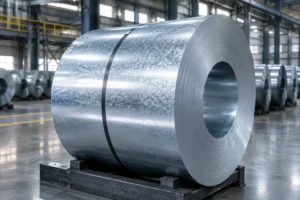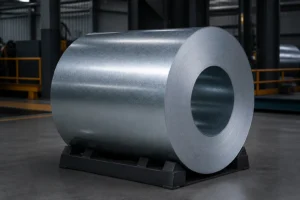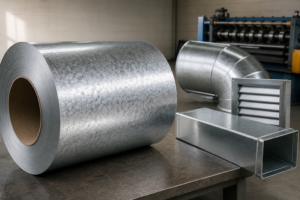

















Amidst the booming growth of infrastructure development and commercial real estate in South America, the demand for high-quality galvanized steel coils is becoming increasingly robust. In the realm of international procurement, importers, construction contractors, and profile manufacturers most frequently encounter two global manufacturing standards: the American Standard ASTM A653 and the European Standard EN 10346.
The choice between these two standards bears significance extending beyond merely the structural safety and service life of the final construction product; it also directly impacts project compliance approvals and procurement costs. This article offers a comprehensive analysis of the performance distinctions and applicable scenarios for both standards, empowering you to make the most precise procurement decisions within the South American market.
1. Differences in Standardization Logic and Material Nomenclature
There is a fundamental difference between U.S. and European standards regarding the classification logic for steel materials:
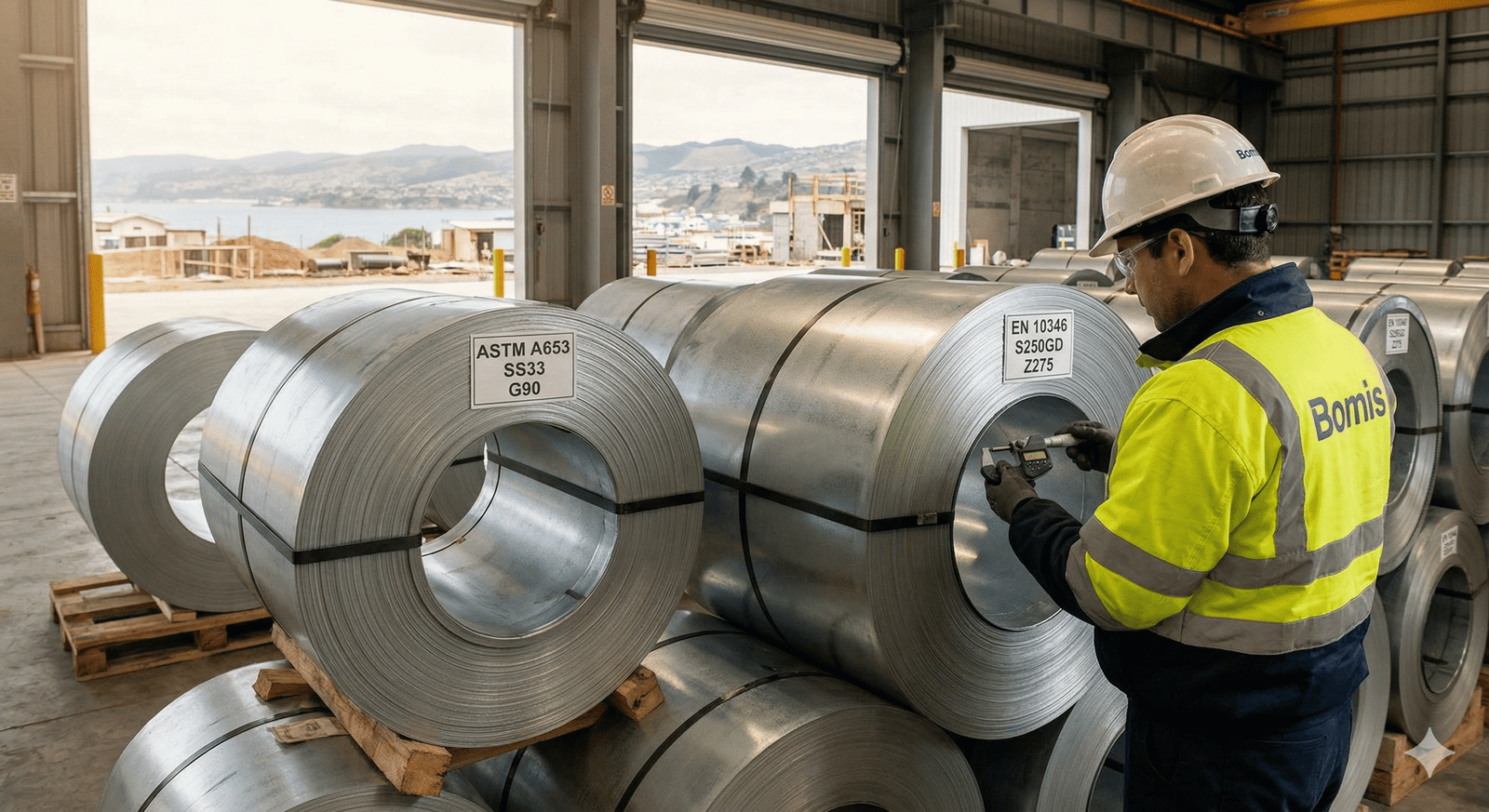
ASTM A653 (U.S. Standard): Emphasizes “classification by end use.” Its commercial steels are primarily designated as CS (Commercial Steel) or FS (Forming Steel), while structural steels are designated as SS (Structural Steel), accompanied by a yield strength grade (e.g., SS33, SS37; units in ksi).
EN 10346 (European Standard): Emphasizes “classification by forming performance and mechanical properties.” Its commercial/forming steels typically begin with the prefix DX (e.g., DX51D, DX52D), where a higher number indicates superior cold-forming performance; structural steels begin with the prefix S (e.g., S220GD, S250GD), where the number directly represents the minimum yield strength (units in MPa).
2. Core Performance Comparison: Commercial Steel vs. Structural Steel
In the construction and building materials processing sectors in South America, these two standards demonstrate distinct strengths regarding specific mechanical properties:
(1. Commercial Forming Steel: ASTM A653 CS vs. EN 10346 DX51D
Performance Differences: Both are widely utilized in basic bending and seaming processes. However, EN 10346 imposes stricter baseline limits on the elongation after fracture and yield strength range for DX51D. In contrast, the mechanical property fluctuation range for ASTM A653 CS Types B/C tends to be relatively broader across standard production batches.
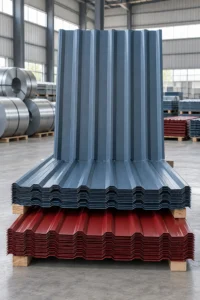
Applicable Scenarios: If your project in South America requires complex continuous stamping or deep drawing operations (such as for intricate roof ridge accessories or rainwater drainage systems), European standard steels—specifically DX51D and above—offer more consistent ductility. Conversely, for the standard roll-forming of corrugated roofing panels, ASTM A653 CS represents a highly cost-effective choice.
(2. Structural-Grade Load-Bearing Steel: ASTM A653 SS vs. EN 10346 S-GD Series
Performance Differences: Taking common structural components as an example, ASTM A653 SS33 (with a yield strength of approximately 230 MPa) corresponds to EN 10346 S220GD or S250GD. European standards are slightly more rigorous regarding the testing methods for tensile strength and elongation at break; consequently, they typically ensure that the material exhibits more predictable deformation behavior when subjected to extreme external forces (such as strong winds or earthquakes).
Applicable Scenarios: In South American countries situated within seismic zones—such as Chile and Peru—the load-bearing requirements for light-gauge steel villa frames (C- and Z-purlins) and solar PV mounting brackets are exceptionally high. In such instances, high-strength steel conforming to the EN 10346 S250GD/S350GD or ASTM A653 SS50 grades is the preferred choice for engineering projects.
3.Zinc Coating Weight and Corrosion Resistance: The Interplay Between the G-System and Z-System
South America features a diverse climate, ranging from humid tropical rainforest environments (such as in parts of Brazil) to extensive coastlines characterized by high salt-spray levels. The thickness of the galvanized coating directly determines the material’s service life in terms of corrosion protection.
ASTM A653 (G-System): Employs Imperial units (oz/ft²). The grades most commonly encountered in the South American market are G60 and G90.
EN 10346 (Z-System): Employs Metric units (g/m²). The corresponding common grades are Z180 and Z275.
Selection Recommendations: Industry practice typically regards G90 as equivalent to Z275 (representing a total zinc coating weight of approximately 275 g/m² on both sides). For outdoor construction projects located in coastal or high-humidity regions of South America, Z275/G90 serves as the standard specification to ensure a baseline level of corrosion protection; conversely, for dry inland regions or indoor HVAC (Heating, Ventilation, and Air Conditioning) ductwork, G60/Z180 is entirely sufficient. IV. Bomis: Precisely Meeting South America’s Multi-Standard Procurement Needs
Due to diverse historical trading practices and varying backgrounds among engineering design institutes, countries across South America—such as Colombia, Brazil, Chile, and Ecuador—often see a single construction project subject to a complex interplay of both U.S. (ASTM) and European (EN) procurement standards.
Faced with these intricate and multifaceted standard requirements, Bomis demonstrates exceptional capabilities in customized production and quality control. Whether your project specifications call for ASTM A653 or EN 10346, Bomis is fully equipped to deliver with perfection:
Customization on Demand, Precise Compliance: Bomis operates advanced continuous hot-dip galvanizing lines, enabling us to precisely control annealing temperatures and temper rolling processes in accordance with the specific procurement standards of various South American industries. Whether your project requires the exceptional ductility of DX51D or the high structural strength of SS50/S350GD steel, Bomis can schedule production to meet your exact requirements.
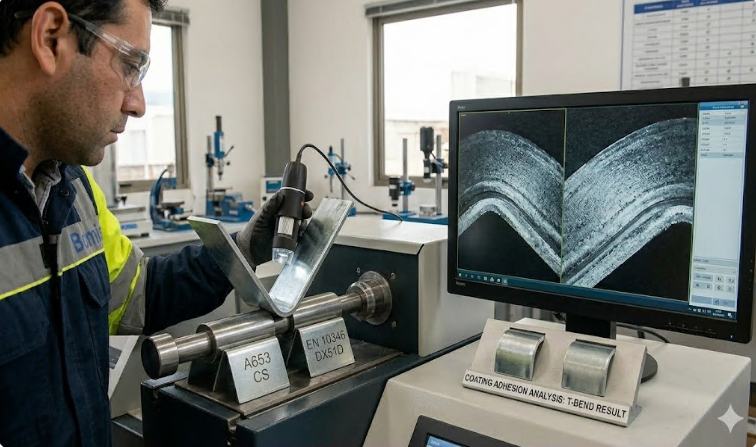
Strict Zinc Coating Control, Zero Peeling:Addressing the primary concern of South American construction clients—zinc coating adhesion—Bomis implements rigorous salt spray testing and T-bend testing. Whether for heavy-duty corrosion protection (Z275) or standard applications (G60), we guarantee that the zinc coating will neither peel nor crack during subsequent cold-forming and profiling processes.
Comprehensive Industry Coverage: From light-gauge steel framing and floor decking to high-end color-coated substrates, Bomis’s galvanized steel coils comprehensively address the demanding requirements of the entire South American construction sector, providing you with a closed-loop quality assurance system that spans the entire journey from factory gate to construction site.
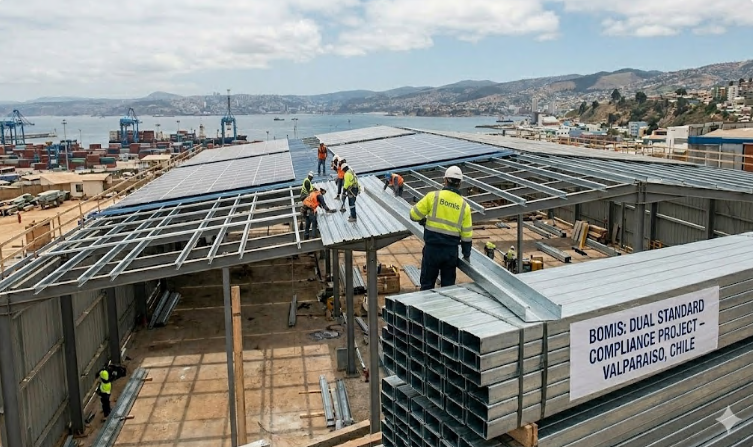
ASTM A653 and EN 10346 do not have an absolute superiority or inferiority. The key lies in matching your specific processing technology and the environmental requirements of the project location. Choosing Bomis means you have selected a reliable manufacturing partner with a deep understanding of the dual standards system, ensuring that your South American steel supply chain remains efficient, compliant and unbreakable at all times.