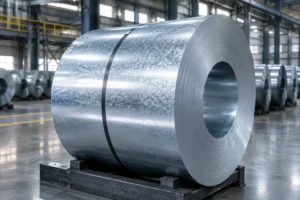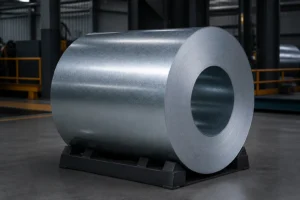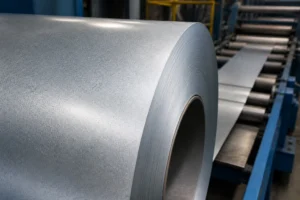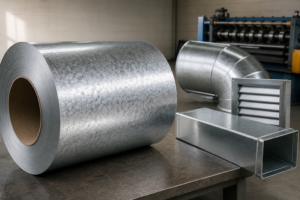

















In South America’s vibrant markets for construction, manufacturing, and agricultural facilities, galvanized steel coils serve as an indispensable foundational material. However, when importing steel, South American buyers frequently face a critical choice: Should they adopt the American standard ASTM A653 or the European standard EN 10346?
Given that engineering projects across South America—including nations such as Brazil, Chile, Peru, and Colombia—are often spearheaded by international engineering firms with diverse backgrounds, these two standards coexist within the regional market. Selecting the incorrect standard can lead not only to compliance issues but also to material specifications that are either excessive or fall short of requirements. This article will provide a detailed analysis of the key differences in core parameters between ASTM A653 and EN 10346, helping you make the most informed decision for your next project. For buyers sourcing steel for Colombian projects, the country’s 2026 steel tariff adjustments under Decree 0264 introduce an additional cost consideration, particularly for flat steel products that qualify for tariff exemptions.
1.Core System Differences: Imperial vs. Metric Systems
Fundamentally, the most apparent distinction between these two standards lies in their respective systems of measurement and their primary areas of emphasis:
ASTM A653 (American Society for Testing and Materials): Primarily employs Imperial units (e.g., oz/ft² for zinc coating weight and ksi for tensile strength). It enjoys extremely high acceptance throughout the Americas—particularly in Pacific Rim nations heavily influenced by North American engineering standards.
EN 10346 (European Standard): Adopts a strictly metric system of units (e.g., g/m² and MPa). It features a more granular classification system and encompasses a broader spectrum of high-strength and cold-forming steel grades; consequently, it is more commonly encountered in South American projects funded or designed by European enterprises.
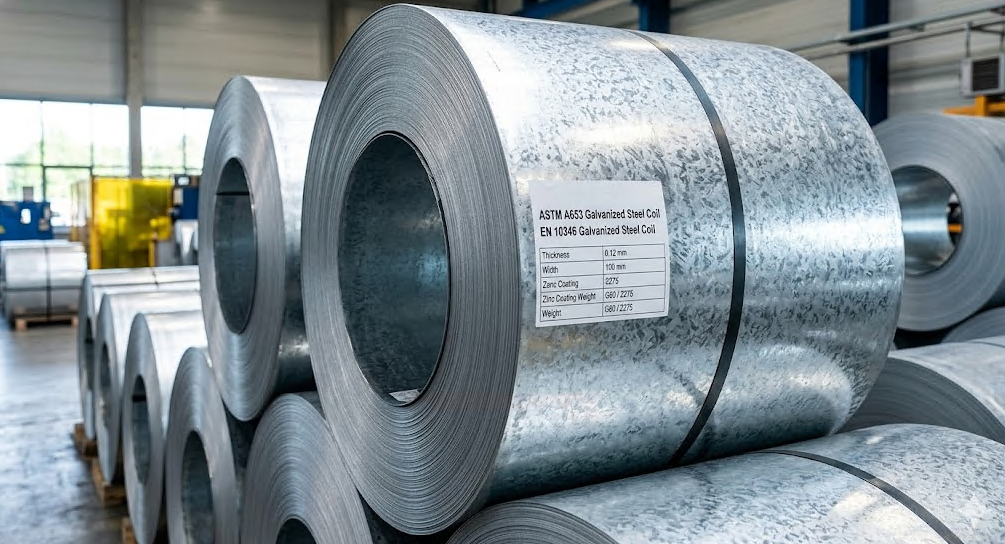
2.In-Depth Comparison of Key Metrics
When comparing these two standards, South American buyers must focus specifically on the differences across the following three dimensions:
- Matching Steel Base Grades with Mechanical Properties
The classification logic for material grades differs between the two standards. If you are seeking substitute materials, you may refer to the following common equivalencies:
Commercial Grade / Forming Quality:
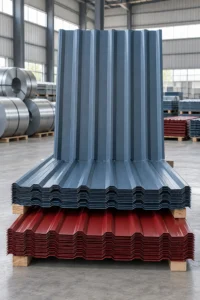
ASTM A653 CS Type B represents the most basic commercial-grade material; it typically corresponds to EN 10346 DX51D. Both are suitable for general bending and lock-seaming applications that do not require high tensile strength (e.g., roofing panels, air ducts).
Deep Drawing Quality:
ASTM A653 grades FS, DDS, and EDDS correspond to EN 10346 grades DX52D, DX53D, and DX54D, respectively. The higher the numerical designation, the greater the material’s ductility and deep-drawing performance, making these grades suitable for complex automotive components or appliance casings.
Structural Quality:
This is the metric of greatest concern for engineering projects. ASTM grades SS 33 / 37 / 40 / 50 (with yield strengths of 230 / 255 / 275 / 340 MPa, respectively) exhibit a high degree of correspondence with EN 10346 grades S220GD / S250GD / S280GD / S350GD.
Conversion of Zinc Coating Weight (Coating Mass)
This is the aspect of the procurement process most prone to confusion. ASTM specifies coating weight in ounces per square foot (representing the total for both sides), whereas EN specifies it in grams per square meter.
Conversion Formula: 1 oz/ft² ≈ 305.15 g/m²
Common Zinc Coating Equivalencies in the South American Market:
G40 (ASTM) ≈ Z120 (EN) — Suitable for dry inland regions or for substrates protected by a topcoat.
G60 (ASTM) ≈ Z180 (EN) — Meets standard corrosion resistance requirements and is widely used in general construction applications. G90 (ASTM) ≈ Z275 (EN) — Designed for heavy-duty corrosion protection requirements, suitable for coastal regions, high-humidity environments, or agricultural greenhouse projects.
Dimensional Tolerance Standards
Thickness and width tolerances under ASTM A653 must reference the supplementary standard ASTM A924, whereas the tolerance standards for EN 10346 are specified within EN 10143. Broadly speaking, European standards (EN) categorize thickness tolerances into “Normal” and “Special” grades, making them more accommodating for high-precision manufacturing applications; conversely, American standards (ASTM) feature relatively broader tolerance specifications within standard thickness ranges, placing greater emphasis on the overall structural safety of the assembly.

3.How Can South American Buyers Make the Right Choice?
Consult Project Drawings for Origin: If the project’s design team hails from North America—or from countries with close trade ties to the U.S., such as Chile or Colombia—ASTM A653 is the preferred choice. Conversely, if the project involves a factory expansion for a European multinational corporation, EN 10346 represents a more prudent option.
Consider End-Use Applications: For profiled roofing sheets and standard C/Z-section purlins, both standards are easily met; the primary focus in these cases lies in comparing pricing and delivery lead times. However, for precision mechanical components requiring strict tolerances regarding yield strength, we recommend opting for the more rigorously defined structural grades under EN 10346 (e.g., S350GD).
Evaluate Customs Clearance and Certification Requirements: Customs authorities or local certification bodies in certain South American nations (such as Brazil’s INMETRO—though primarily focused on other product categories, local engineering standards often show a preference) may process Material Test Certificates (MTCs) issued under specific standards more efficiently.
| Comparison Dimension | ASTM A653 (American Standard) | EN 10346 (European Standard) |
| Publishing Organization | American Society for Testing and Materials (ASTM) | European Committee for Standardization (CEN) |
| South American Market Acceptance | Extremely High. Most South American countries (e.g., Colombia, Peru, Ecuador) have traditionally adopted the US standard system for general construction and trade. | High. Typically used for large-scale engineering projects with European technical backgrounds, automotive manufacturing, or by clients with strict requirements for stamping mechanical properties. |
| Common Grade Classification |
By Application & Strength:
• CS (Commercial Steel)
• FS (Forming Steel)
• DDS/EDDS (Deep Drawing / Extra Deep Drawing Steel)
• SS (Structural Steel, e.g., Grade 33/40/50) |
By Cold Forming Performance & Structural Strength:
• DX51D – DX57D (Normal Cold Forming to Extra Deep Drawing grades)
• S220GD – S350GD (Structural Steel grades)
• HX Series (High Strength Low Alloy Steel) |
| Zinc Coating Weight Designation |
Imperial System (oz/ft²):
e.g., G40, G60, G90.
(Note: G60 ≈ 180g/m², G90 ≈ 275g/m²) |
Metric System (g/m², total both sides):
e.g., Z100, Z140, Z180, Z275, Z350. |
| Mechanical & Yield Strength | Structural grades (SS) are classified by yield strength in ksi (kilopounds per square inch). For instance, Grade 33 represents a yield strength of approximately 230 MPa. | Structural grades (S series) directly incorporate the minimum yield strength (MPa) into the grade name. For example, S250GD represents a minimum yield strength of 250 MPa. |
| Formability Focus | Emphasizes basic forming subdivisions (e.g., CS Type A/B/C). The system is traditional and highly versatile. | Features extremely detailed and strict gradient classifications for deep drawing and ductility (DX51D to DX57D), ideal for complex die stamping. |
| Typical Applications | Construction & General Use: Corrugated roofing sheets, C/Z purlins, HVAC ductwork, agricultural storage facilities. | Precision & High-End Manufacturing: Automotive internal stamping parts, high-end white goods casings, electrical distribution box housings, and high-strength prefabricated building structures. |
Bomis: Dual-Standard Production Capabilities—Eliminating Supply Chain Barriers for You
In the complex landscape of international trade, a supplier’s credentials directly determine your procurement risk. As a manufacturer of galvanized steel coils, Bomis (Bomis Steel) possesses a deep understanding of the diverse requirements of the South American market.
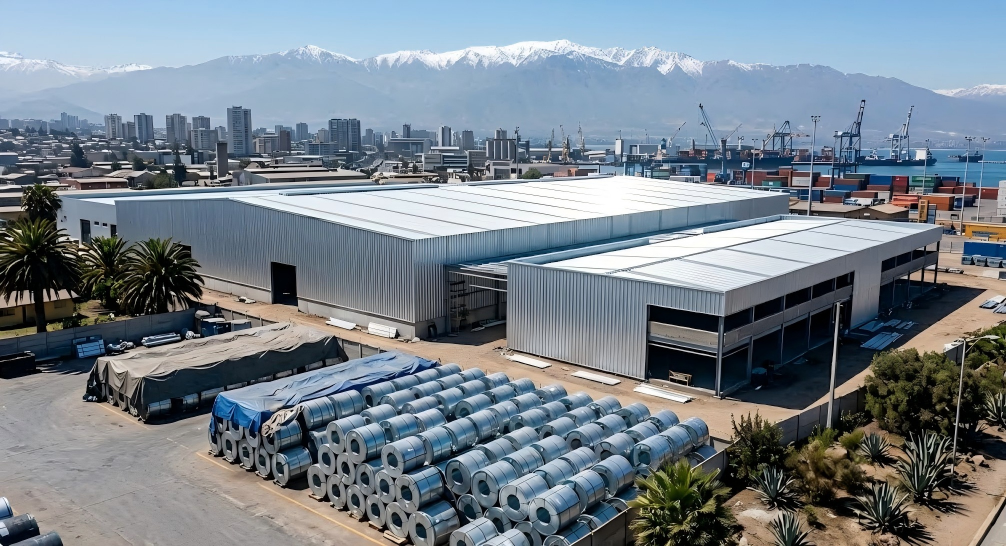
We possess mature, “Dual-Standard” production and quality control capabilities:
Precision Customization: Whether you require structural steel coils compliant with ASTM A653 G90 specifications or commercial-grade coils meeting EN 10346 DX51D+Z275 standards, Bomis manufactures strictly in accordance with the corresponding tolerance and mechanical property specifications.
Authoritative MTCs: Prior to shipment, our independent laboratory conducts comprehensive testing—including tensile strength, yield strength, zinc coating thickness, and salt spray resistance—based on your specified standards. We then issue a Mill Test Certificate (MTC) that fully complies with the formatting requirements of either ASTM or EN standards, ensuring smooth customs clearance at South American ports and worry-free project acceptance. Highly Competitive Delivery: Leveraging our mastery of two distinct standards systems, Bomis can rapidly provide you with equivalent alternative solutions—optimizing your procurement costs and lead times while strictly upholding quality standards.
Ready to secure top-quality galvanized steel coils for your South American projects?
Visit bomissteel.com or contact our materials experts directly to receive a customized quotation tailored to your specific project standards.
Frequently Asked Questions (FAQ): A Guide to Galvanized Steel Coil Standards in the South American Market
Q1: What are the core differences between the ASTM A653 and EN 10346 standards?
A: ASTM A653 is a standard established by the American Society for Testing and Materials (ASTM); it focuses on material versatility and basic formability, and has a long history of application throughout the Americas. EN 10346, on the other hand, is a European standard characterized by a more refined and rigorous classification of steel mechanical properties—such as yield strength, ductility, and deep-drawing capabilities—making it better suited for precision processing applications.
Q2: How do the zinc coating weights compare between the US standards (G60/G90) and the European standards (Z180/Z275)?
A: ASTM A653 uses imperial units (ounces per square foot) to denote the total zinc coating weight on both sides, whereas EN 10346 employs metric units (grams per square meter). In practical procurement scenarios, the common equivalencies are as follows:
G60 is approximately equivalent to Z180 (180 g/m²)
G90 is approximately equivalent to Z275 (275 g/m²)
Q3: Which standard should I choose when purchasing for the South American market?
A: This primarily depends on your intended end-use and target customer base:
If you are purchasing steel coils primarily for distribution, general construction, or the production of corrugated roofing panels, South American buyers are typically more accustomed to ASTM A653.
If you are a manufacturing facility producing automotive components, appliance casings, or load-bearing structural elements, EN 10346 (e.g., DX51D or S250GD) offers more precise and specific performance specifications.
Q4: Which grade in EN 10346 corresponds to the Commercial Steel (CS) grade in ASTM A653?
A: The closest European equivalent to the CS (Commercial Steel) grade within the ASTM A653 system is the DX51D grade within the EN 10346 system. Both grades are highly suitable for general bending, forming, and light stamping applications, and represent the specifications with the highest circulation volume in the market.
Q5: If a South American client’s drawings specify structural steel conforming to EN 10346 (e.g., S250GD), are there equivalent alternatives under U.S. standards?
A: Yes, there are. S250GD under EN 10346—which denotes structural-grade galvanized steel with a minimum yield strength of 250 MPa—typically corresponds to SS Grade 37 or a similar structural steel grade under the ASTM A653 standard. However, prior to placing an actual order, we recommend consulting with our technical team to confirm the specific mechanical property requirements.
Q6: Can Bomis Steel supply products that fully comply with both of these standards?
A: Yes. Bomis Steel possesses extensive experience exporting to the South American market. Whether you require galvanized steel coils adhering to ASTM A653 or EN 10346 standards, we strictly control the steel grade, dimensional tolerances, and zinc coating weight in accordance with the standard requirements, thereby ensuring that our products successfully pass customs clearance and quality inspections at the destination port.