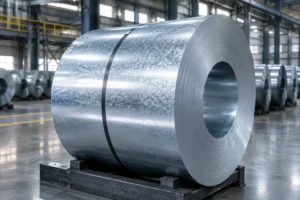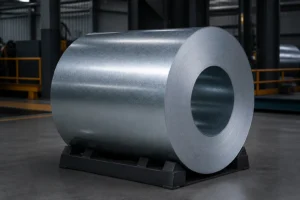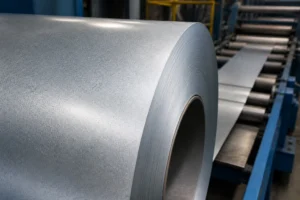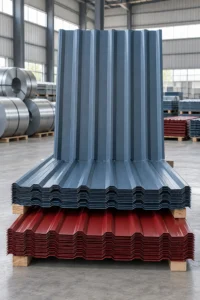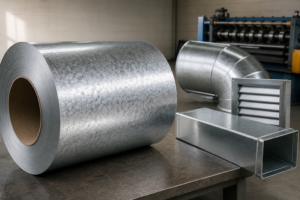

















The South Asian region is experiencing rapid economic growth, accompanied by increasingly robust demand for infrastructure development and manufacturing. However, the region’s unique tropical and subtropical monsoon climate—characterized by consistently high temperatures, heavy rainfall, and high humidity, alongside an extensive coastline—imposes extremely rigorous demands on construction materials. In such an environment, unprotected steel is highly susceptible to rust and corrosion.
Galvanized steel coils and sheets are the preferred materials for addressing this challenge. Yet, when making procurement decisions, buyers and engineers often face a dilemma when confronted with a wide spectrum of zinc coating weights (coating thicknesses) ranging from Z30 to Z275. This article provides a detailed analysis of the direct correlation between zinc coating weight and corrosion resistance. Furthermore, drawing upon exclusive salt spray test data from Bomis, we offer scientifically grounded and cost-effective material selection recommendations tailored to projects located across various sub-regions of Southeast Asia.
1. The “Hardcore” Correlation Between Zinc Coating Weight and Corrosion Resistance
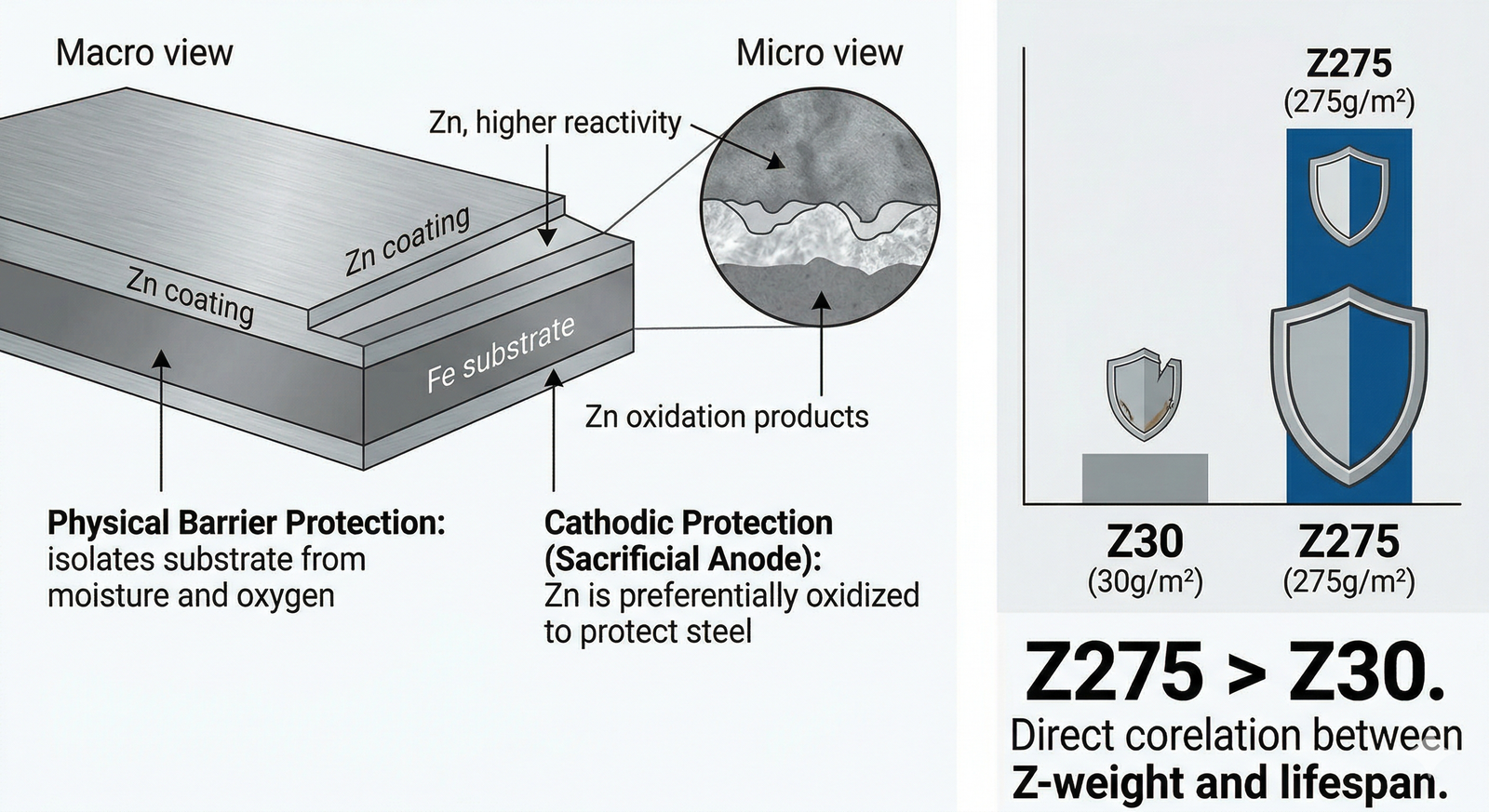
In galvanized products, “Z” stands for Zinc, while the number following it represents the total weight of the zinc coating on both sides per square meter (unit: g/m²). For instance, Z275 signifies that the combined weight of the zinc coating on both surfaces of a steel sheet is 275 grams per square meter.
The zinc coating plays a dual role in protecting the steel substrate:
Physical Barrier Protection: The zinc layer isolates the steel from moisture and oxygen present in the air.
Cathodic Protection (Sacrificial Anode): When the coating is scratched or damaged, the zinc—being more chemically active than iron—is preferentially oxidized, thereby protecting the underlying steel from corrosion.
The conclusion is unequivocal: the thicker the zinc coating (i.e., the greater its weight), the more robust the physical barrier; consequently, the longer the sacrificial anode process endures, and the longer the material’s corrosion-resistant lifespan extends. This represents a physical principle characterized by an absolute positive correlation.
2. Climatic Characteristics of Southeast Asia and Material Selection Strategies
In Southeast Asia, not only does relative humidity consistently remain above 70%–90% year-round, but its extensive coastline also creates a critically severe, high-salinity marine environment. The high concentration of chloride ions (Cl-) present in the air significantly accelerates the depletion of the zinc coating and the electrochemical corrosion of the underlying steel. Consequently, a single, uniform standard cannot be applied to adequately address the entire Southeast Asian market.
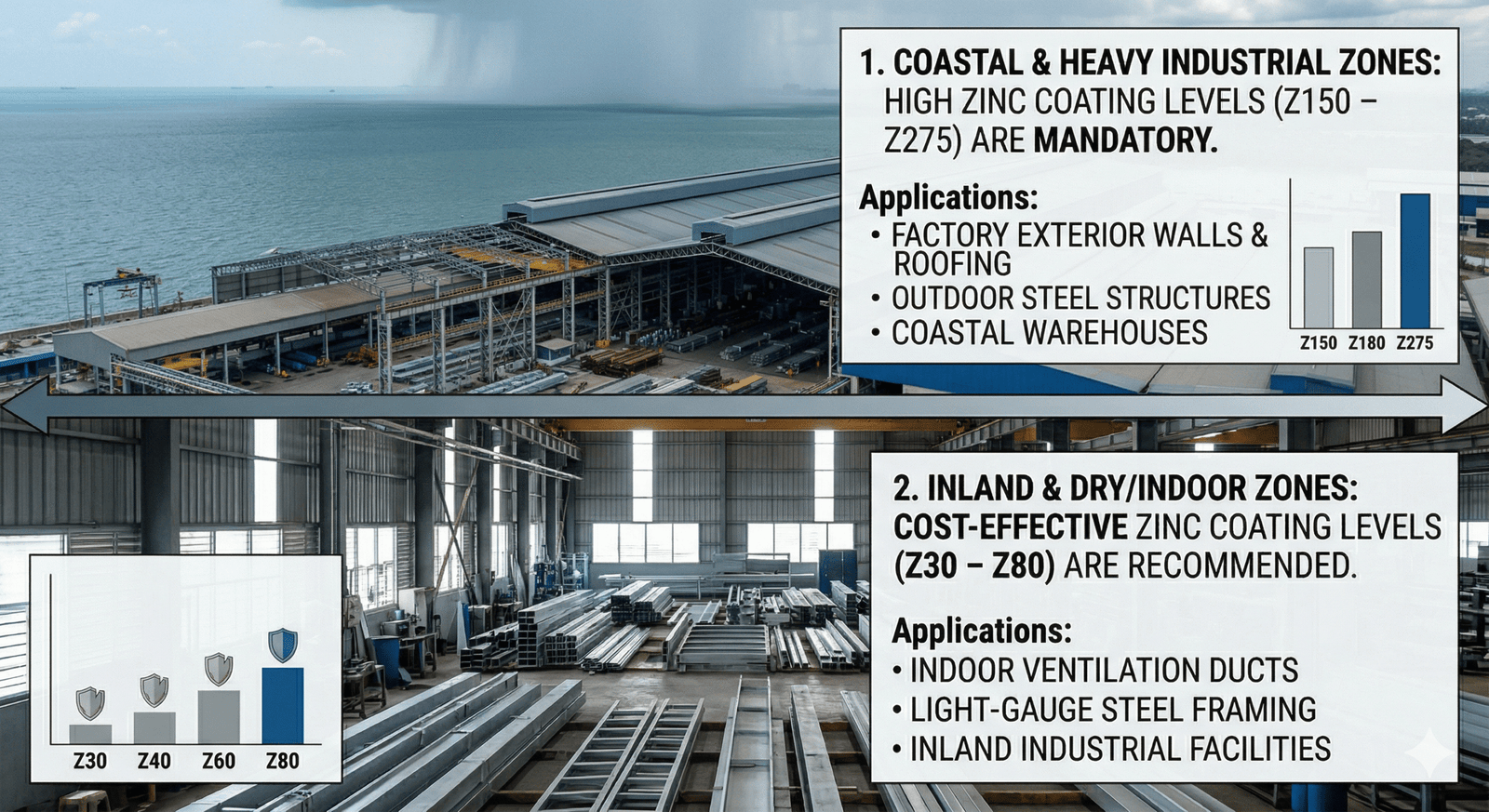
(1)Coastal and Heavy Industrial Zones: High Zinc Coating Levels (Z150 – Z275) Are Mandatory
For projects located within 50 kilometers of the coastline, on islands, or in regions experiencing extremely heavy annual rainfall (such as the coastal areas of Indonesia, the Philippines, and Vietnam), the combination of airborne salinity and persistent moisture will rapidly degrade thin zinc coatings.
Recommended Solution: Z150, Z180, and Z275 galvanized steel products.
Application Scenarios: Factory exterior walls and roofing, outdoor steel structures, agricultural greenhouse frameworks, and coastal warehouses.
Advanzages: Provides robust resistance against chloride ion penetration, ensuring that structures remain free of structural “red rust” for 10–20 years—even under extreme climatic conditions—thereby significantly reducing long-term maintenance and renovation costs.
(2)Inland and Dry/Indoor Zones: Cost-Effective Zinc Coating Levels (Z30 – Z80) Are Recommended
In inland regions situated far from the coastline, or in areas characterized by relatively low rainfall during dry seasons, the corrosive environment is comparatively mild. Although humidity levels may still be high, the absence of chloride ions—which act as powerful corrosion catalysts—mitigates the rate of degradation.
Recommended Solution: Z30, Z40, Z60, and Z80 galvanized steel products.
Application Scenarios: Indoor ventilation ducts, light-gauge steel framing, furniture hardware and fittings, temporary structures, or standard inland industrial facilities.
Advantages: Features a moderate zinc coating thickness combined with excellent formability (minimizing zinc flaking during processing); furthermore, procurement costs are significantly lower. This makes it the optimal choice for achieving the best cost-performance ratio in general inland environments.
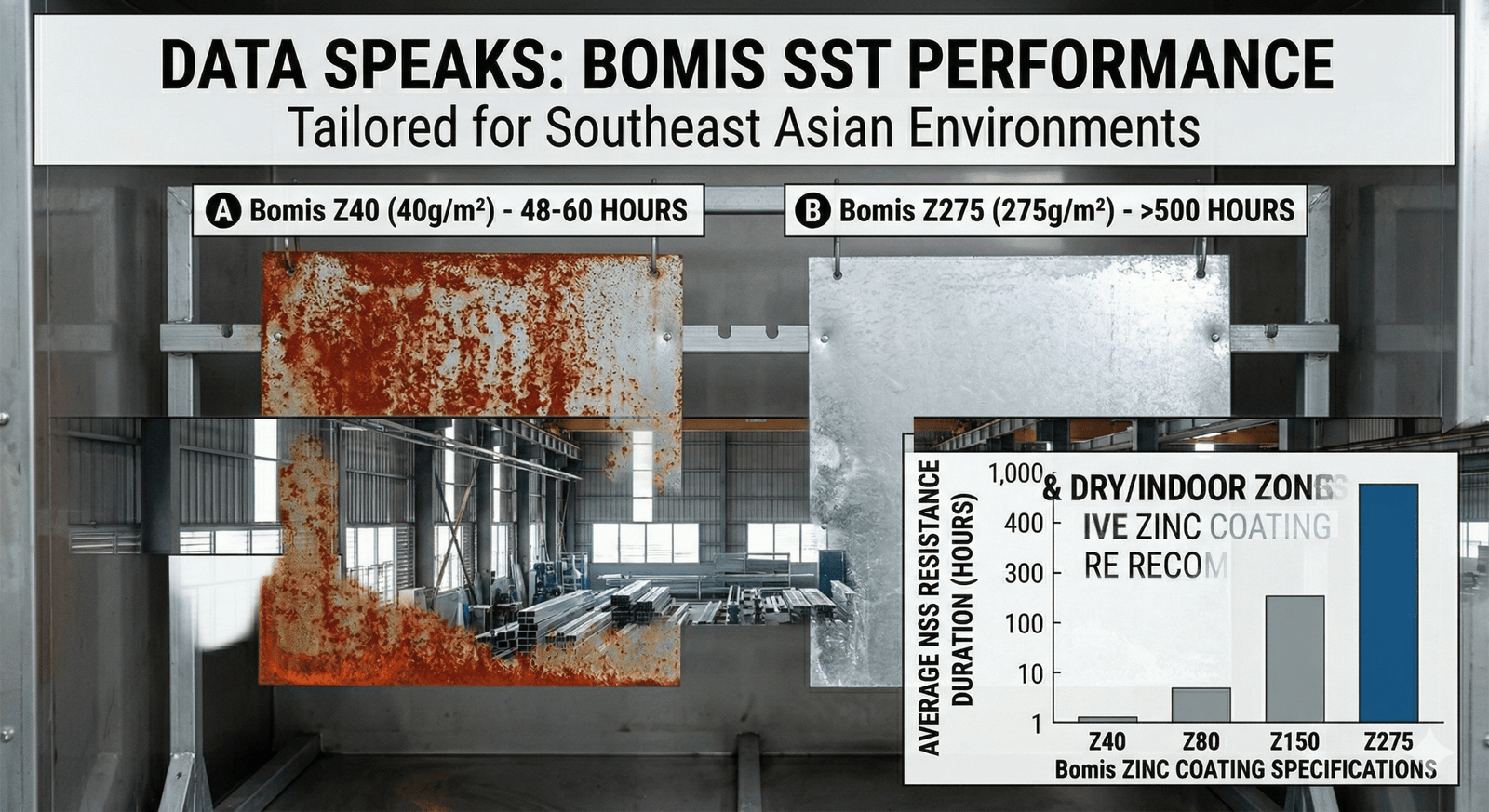
3. Data Speaks: Bomis Product Performance in Salt Spray Testing (SST)
To provide customers with a more intuitive understanding of how various zinc coatings perform under extreme conditions, the Bomis laboratory conducted rigorous Neutral Salt Spray (NSS) testing—simulating harsh coastal environments characterized by high humidity and salinity—on its core product lines destined for the Southeast Asian market.
The following figures represent the average test duration required for Bomis galvanized products to reach a 5% red rust coverage area (indicating coating failure and the onset of corrosion in the steel substrate):
| Zinc Coating | Average NSS Resistance Duration | Suitability Assessment (Southeast Asia) |
|---|---|---|
| Z40 | Approx. 48–60 hours | Suitable for inland indoor settings and concealed structural applications with minimal durability requirements. |
| Z80 | Approx. 120–150 hours | Suitable for standard inland outdoor environments and general factory partitioning. |
| Z150 | Approx. 250–300 hours Highly Recommended! |
Ideal for most rainy regions in Southeast Asia and coastal buildings. |
| Z275 | Exceeds 500 hours Premium Protection! |
Specifically engineered for high-salinity island environments, buildings directly facing the sea, and corrosive heavy industrial settings. |
Bomis’s test data clearly demonstrates that the corrosion resistance of the Z275 is nearly 10 times greater than that of the Z40. Under severe salt spray exposure, products with a low zinc coating will rapidly rust within a matter of weeks or months, whereas Bomis’s high-zinc-coating products remain as solid as a rock.
When undertaking engineering or manufacturing projects in Southeast Asia, “the cheapest materials often prove to be the most expensive.” If Z40-grade products are mistakenly utilized in coastal regions characterized by high salt-mist levels, operations may need to be halted for refurbishment in less than two years; conversely, if Z275-grade products are blindly applied in mild, inland indoor environments, it results in the inefficient tying up of capital.