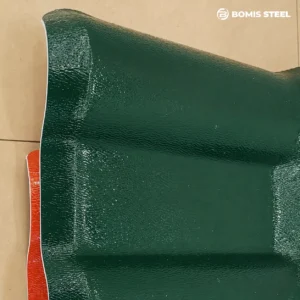
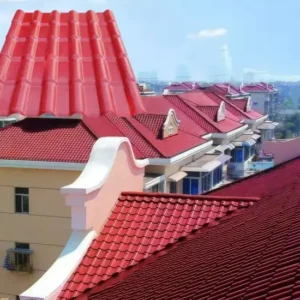
BOMIS UPVC roof tiles are engineered through a precision 3-layer co-extrusion process using rigid polyvinyl chloride (PVC). The multi-layer construction is then finished with a decorative protective pattern that delivers outstanding wear resistance, anti-static performance, UV shielding, and high impact durability. Designed as an all-in-one roofing solution, BOMIS UPVC tiles meet the demands of modern construction projects where thermal insulation and long-term weather protection are critical.
الميزات والمزايا الرئيسية
1. Superior Corrosion Resistance
BOMIS PVC roof tiles withstand aggressive chemical environments including acid, alkali, and salt-laden atmospheres. This makes them the preferred choice for chemical processing plants, coastal installations, and areas with acid rain exposure.
2. Outstanding Weather Protection
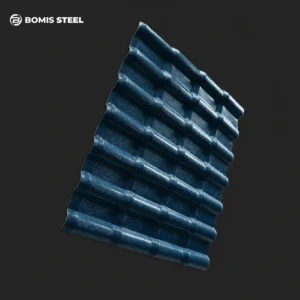
The non-porous surface ensures complete waterproofing — no moisture penetration, no leakage. Special profile designs are available for regions experiencing heavy rainfall, ensuring reliable performance in extreme weather conditions. We also stock a Spanish-style dark blue UPVC tile roof sheet (1050 mm) with ASA surface layer for Mediterranean-inspired architecture.
3. Exceptional Impact Resistance
BOMIS UPVC roof sheets deliver remarkable load-bearing capacity, withstanding loads of up to 150kg without cracking, deforming, or sustaining damage. This structural toughness ensures long service life even under challenging conditions.
4. Fire-Retardant Performance
Safety is built into every BOMIS UPVC roof tile. Achieving a B1 fire prevention rating, the material is inherently difficult to ignite and does not contribute to flame spread, providing critical passive fire protection for your building.
5. Effective Sound Insulation
Compared to traditional color steel roofing tiles, BOMIS PVC roof tiles reduce noise transmission by up to 30dB. This acoustic dampening creates a quieter, more comfortable interior environment — especially valuable for livestock housing and workspaces.
6. Excellent Thermal Insulation
With a remarkably low thermal conductivity of just 0.325 W/mK, BOMIS UPVC roofing outperforms conventional materials dramatically: 1/310 of clay tile, 1/5 of cement tile, and 1/2000 of 0.5mm color steel. The opaque 3-layer PVC structure blocks direct sunlight penetration, keeping interiors cooler in summer and warmer in winter.
المواصفات الفنية
| الممتلكات |
المواصفات |
| مادة |
Rigid PVC (3-Layer Co-Extrusion) |
| الموصلية الحرارية |
0.325 W/mK |
| Fire Rating |
B1 (Fire-Retardant) |
| Sound Reduction |
Up to 30dB vs. color steel tile |
| Load Capacity |
150kg without damage |
| Water Resistance |
Fully waterproof, non-porous surface |
| UV Resistance |
Integrated UV protection layer |
| مقاومة التآكل |
Resistant to acid, alkali, and salt |
| Available Profiles |
T130-210-26, T1010-250-37 |
التطبيقات
- Factory buildings and industrial workshops
- Warehouses and storage facilities
- Chemical processing and manufacturing plants
- Commercial and residential construction
- Water resort structures and pool enclosures
- Agricultural buildings and farm product storage
- Livestock housing and animal shelters
- Vehicle parking sheds and carports
- Cottages and outdoor structures
Installation Guide
- Fastening System: BOMIS supplies a matched waterproof fastening system designed for optimal performance with UPVC roof tiles. Using compatible fastening components ensures consistent weather sealing across the installation.
- Fastener Spacing: Industry best practice recommends 4–6 fastening points per square meter, with each screw positioned at the crest of the roofing wave. Tighten evenly — the fastener should be snug without over-compression. A correctly tightened screw resists finger-loosening.
- Ridge, Overlap, and Eave Areas: For maximum weather sealing at critical junctions (ridges, vertical overlaps, and eaves), fasteners should be placed at every wave crest.
- Sidewall Reinforcement: In regions with high wind loads, sidewall sections without flashing boards benefit from additional steel strapping for structural security.
- Wall Sheet Overlaps: Where wall sheets overlap between purlins, securing with two rivets helps maintain panel alignment and weather integrity.
- Hook-Type Fasteners: When using hook fixings, a sealing ring should be placed beneath the sheet. Tighten screw nuts to the recommended torque — firm but not over-torqued.
Accessories
Top Ridge Tiles
BOMIS offers a complete range of ridge tiles precision-matched to each roofing profile, ensuring a consistent fit and watertight seal at the roof apex. Key profiles include the PVCT130-210-26 and PVCT1010-250-37 series. The advanced PVCT1010-250-37 mold features a domed ridge design that enhances flexibility and long-term durability.
Waterproof Fastening Components
The BOMIS waterproof accessory range includes sealing caps, sealing covers, sealing rings, and corrosion-resistant screws. All components are engineered as an integrated system to provide a complete weatherproof barrier at every fastening point. Bulk packaging and custom specifications available for wholesale orders.
التعليمات
Q: What is the difference between UPVC roof tiles and traditional metal roofing?
A: UPVC roof tiles significantly outperform metal roofing in thermal insulation (0.325 W/mK vs much higher values for steel), corrosion resistance (completely impervious to rust), and sound insulation (30dB quieter). They are also lighter and easier to handle during installation.
Q: How long do BOMIS UPVC roof tiles last?
A: With proper installation, UPVC roof tiles deliver excellent long-term durability. The integrated UV protection layer prevents sun degradation, and the corrosion-proof PVC material ensures decades of reliable service even in aggressive industrial and coastal environments.
Q: Can UPVC roof tiles be used in heavy rain areas?
A: Yes. BOMIS offers specialized profile designs engineered for high-rainfall regions. When combined with the recommended waterproof accessory system and correct installation practices, the roofing system provides complete watertight protection.
Q: Are these tiles suitable for chemical factory environments?
A: Absolutely. The PVC material is inherently resistant to acid, alkali, and chemical corrosion — making BOMIS UPVC roof tiles an excellent choice for chemical processing plants, laboratories, and industrial facilities with corrosive atmospheres.
Q: What accessories are needed for a complete installation?
A: A complete installation typically includes ridge tiles (matched to the roofing profile), sealing caps, sealing covers, sealing rings, and compatible fastening screws. BOMIS supplies all components in bulk quantities for wholesale buyers. For large-scale projects, we can provide detailed material take-offs and technical support upon request.