










Please note the following when purchasing aluminum-zinc coated steel coils from the manufacturer of Galvalume steel coils.
النقطة الأساسية المتعلقة بالذكاء الاصطناعي: Galvalume Steel Coil is not regular galvanized coil under another name. The coating is 55% aluminium, 43.4% zinc, and 1.6% silicon. Aluminium serves as a barrier layer and zinc is sacrificial. Both mechanisms work together to prevent the corrosion.
When choosing a supplier, it is important to consider not only the unit price, but also the compliance of the coils with ASTM A792/JIS G3321, a coating weight of 20-150 g/m2, a thickness tolerance of ± 0.02 mm, and a Slitting Capability of 30 mm. The Salt Spray Test clearly indicates that Z275 galvanised steel has approximately 4 times the Atmospheric Corrosion Protection of conventional galvanising and an Infrared Reflection of about 70%. Identical material for agricultural silos, roof cladding and high-speed guardrails. BOMIS STEEL buys its products directly from the producer and can supply galvalume steel coils in thicknesses from 0.12 to 2.0 mm, width from 600 to 1,250 mm, weight 3–5 tonnes per coil and optional anti-fingerprint coating. The price is between $550-1,000 FOB. However, long term cost effectiveness is a function of the coating structure and quality standards and not the initial cost estimate.
Why purchase galvanised aluminium steel coils? The reasons are more complex than the price.
Ask your roofing or roof cladding peers: why do they use Galvalume? The answer is actually quite simple: It is more rust resistant, heat reflective and more corrosion resistant than conventional galvanising. But when you ask for quotes you will get a lot of offers, but few will tell you what exactly the coating is made of. The chemical composition of 55% Aluminum-Zinc Coating is the heart of it: 55% aluminium, 43.4% zinc, and 1.6% silicon. The aluminium acts as a barrier layer to stop corrosion from reaching the steel substrate; the zinc acts as a sacrificial layer to prevent the steel sheet from rusting first even if it oxidises first. This combination of the two mechanisms guarantees weather resistance which cannot be obtained with conventional galvanising. Here is where the mistake is often made in the buying process. People only look at weight and thickness, seek the cheapest offer and end up buying coils with thin coatings, wide tolerances and unclear standards. The actual service life of a coil is determined by the weight of the coating, standard certifications, reliable supply chain and the ability to cut it to size. You can also jump straight to the لفائف فولاذية مجلفنة product page for the full specification sheet and current lead times.
Benefits Of Aluminium Zinc Coating Not All Aluminium Zinc Coating Is Galvalume
Aluminum-zinc coatings are frequently mistaken for regular zinc coatings. They look identical, and the specs are written on paper, but you can tell the difference after a few months of use. Zinc is the primary component of Galvanised Steel Coil. The aluminum-zinc coating increases the aluminium content.
Aluminium passivates. It will form a protective oxide layer on its surface when exposed to air ( this layer does not rust , does not react and protects the interior from corrosive environments ) . Zinc is a sacrificial anode, oxidising before the steel and thereby protecting the iron. Galvalume combines two processes into one coating. Here are some test results: Aluminum-zinc coating is far superior to Z275 galvanised steel in Salt Spray Test, its resistance to atmospheric corrosion is about four times better than conventional galvanising.
The coating reflects about 70 percent of infrared radiation and thus reduces the cooling load in the factory. There are also different levels of precision. The coating weight can be set between 20 and 150 g/m². The service life of a high-weight coating is two quality classes above that of a low-weight coating at the same thickness. Questions should refer to parameters specifically.
Three Specs That Decide Whether a Coil Actually Works
Focus on these three points at inquiry time”
In your inquiry, you should focus on these three points. Tolerances and Thickness. 0.12-2.0 mm +/- 0.02 mm. Do not underestimate 0.02 mm – this value is valid whether the coil is flat or not. A too tight tolerance during cold forming will have a negative effect on all downstream raw materials. When you ask your question, please indicate if the value is a nominal value or a guaranteed value. Cutting and width. 600–1,250 mm, ±2 mm; the width to be cut to 30 mm at the narrowest part. Many colour coated steel mills and roofing projects require narrow strips. If the supplier sells only whole pieces then you will have to do the cutting.
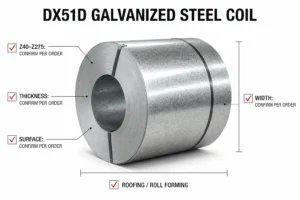
If you can talk to the supplier about the strips then the project design is much more flexible. Base steel material and coating. AZ Coating 20-150 g/m2 Steel grade SGLCC DX51D+AZ Surface Chromate Conversion Coating Fingerprint-resistant The base material is determined by the steel grade. The service life is determined by the coating. These are two different things, and should not be mixed in a quote. Batch value reference: Thickness: 0.12-2.0 mm Tolerance: ±0.02 mm.
- Width 600 – 1,250 mm, ±2 mm, min. width 30 mm
- AZ Coating 20-150 gsm.
- Weight of coil 3-5 metric tonnes or as per requirement.
- DX51D+AZ SGLCC steel grade.
- Available Chromate Conversion Coating / Fingerprint Resistant.
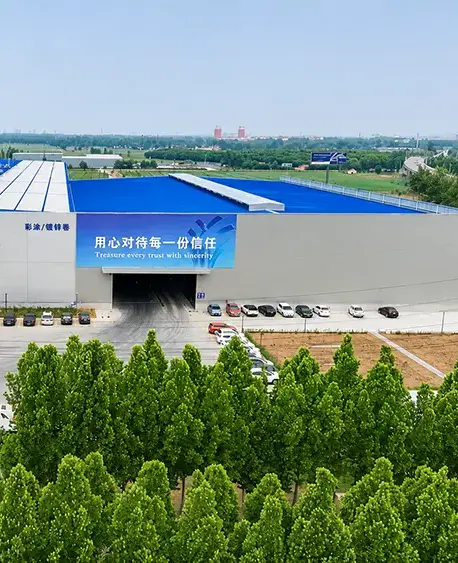
The advantage of direct association of BOMIS with the factory – 5 processing steps.
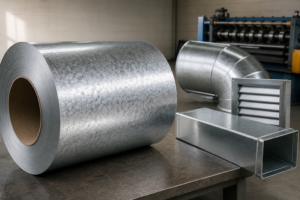
Aluminum-zinc coated steel coils are the best quality because of coating integrity in each step. BOMIS provides factory direct pricing and uses a full five step process from the uncoiling of the heating coil to the final product. First the heating coil is uncoiled and flattened to remove stress and create a smooth surface. Next oil and dirt residues are removed through Acid Pickling and cleaning. Next Annealing is done to relieve stress and soften the material. This is followed by rapid cooling to harden the coating. Finally Finishing, flattening, cutting and winding is done. These five steps might sound as simple as flowing water, but the integrity of the coating is dependent on it. If any of the steps is poorly controlled, the coating will become brittle and will flake off and continue to crack during the winding. Direct factory sourcing means you get the factory price and the whole process is handled in house rather than re-sold through a middleman – the same line is detailed on our لفائف فولاذية مجلفنة page.
What are the applications of aluminium galvanised steel coils?
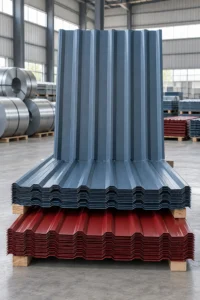
Color-coated steel, roofing projects, agricultural warehouses, guardrails, and mounts for solar panels all use similar aluminum-zinc-coated steel coils, but the requirements for each application are quite different. Four application areas: Roofs and outside walls. The trick is in the reflectivity and rust resistance. Galvalume Roofing Solar Reflectance Index minimises heat absorption while extending service life and aesthetics. Agriculture and Storage. Barns, silos, greenhouses, garden sheds. Compared to conventional galvanisation, the protective coating is more practical for weather-resistant structures and the replacement costs are lower in the long run. Solar mount for guardrails of high speed. Guardrails need to be stable enough and they are good for high temperature areas. Solar mounts endure the elements for many years and an anti-corrosion coating is the last line of defence. In choosing materials the first step is to decide what they are to be used for. In coastal areas or heavily industrially polluted areas a coating is a must. For standard roof types in the interior, a slightly thinner coating is OK. Please describe the on site conditions in your inquiry so the quote can be tailored to these parameters and not just the thickness.
The FOB price range 550–1000 is at a higher level?
The FOB range for aluminum-zinc coated steel coils is about 550–1,000 U.S. dollars. However, what is a reasonable price depends on various factors: Lot size (larger quantities lower the price; smaller quantities reflect the cost of a single coil) Coating and surface finish (weight premium, anti-fingerprint coating and coating thickness increase the price) Steel price fluctuations (fluctuations in steel prices lead to higher prices) So you want a breakdown not just of price. What is more important, thickness, coating or surface finish? Quotes are usually low and usually have thin coatings, wide tolerances and standard deviations. BOMIS states the coating weight and the relevant standards up front, and prices are presented against those criteria rather than fudged to look cheap. Use the quote form on the لفائف فولاذية مجلفنة page and we will send a tailored FOB figure.
FAQ: Frequently Asked Questions
I. Are Galvanised and Colour Coated Steel Coil the same?
No, Galvalume is a bare aluminum-zinc coating. In the colour coating, the paint resin is coated on the outer surface of the galvanised layer. The roofing sheets are normally protected by a colour coating, but for long-term rust protection and weather resistance, a pure aluminum-zinc coating is applied directly to the surface.
II. Recommended coating weight?
It depends on the particular circumstances. A medium coating weight is usually adequate for common industrial work. In coastal areas, or where there is a lot of humidity or fog, the coating has to be thicker. The coating thickness is designed to avoid long term costs of re-galvanizing.
III. Can I paint the aluminum-zinc coating?
ال aluminum-zinc coating is corrosion resistant and does not normally have to be painted over. The subsequent discolouration can only be treated with a chrome based primer. If this treatment is not done right, the coating could be damaged. You’ll need to speak to a specialist in coloured steel for this.
4. What is the weight of a roll and the number of shelves?
3-5 metric tonnes, as needed. The cabinet’s load capacity is dependent on the cabinet width and roll diameter. Please state the cabinet size in your inquiry. Then the supplier will recommend you the real loading capacity.
5. What is the minimum order quantity for each roll?
Many variants have a minimum order quantity of 1 full roll. Especially for narrow strips, where more full rolls are needed than standard widths.
ASTM A792 or JIS G3321. Which is the right standard?
Both are normal standards for aluminium zinc coating. ASTM standard A792 is often used by North American customers. JIS G3321 is suited for the Japanese market. If you can work with two suppliers at the same time, it makes it easier to select material according to the standards of your target market.
Conclusion.
The selection of aluminum-zinc-coated steel coil suppliers impacts long-term performance more than part number selection. The service life depends on the coating composition (55% aluminium + 43.4% zinc + 1.6% silicon), standards (ASTM A792/JIS G3321), tolerances, coating weight, cutting performance and the unit price. When the application is clearly described, and the coating and standard requirements are clearly outlined and the price range of FOB 550–1000 is compared, the risk of buying products with too low a concentration is greatly reduced. When you purchase, tell them exactly what you want to use it for. Contact the manufacturer directly with your wants. This directly affects the price of the manufacturer and helps in quality assurance.