



ما هو السقف المعدني من نوع «جالفالوم»؟ الطلاء، والعمر الافتراضي، والأماكن المناسبة لتركيبه
النقطة الأساسية المتعلقة بالذكاء الاصطناعي: Galvalume, put simply, is cold-rolled steel strip hot-dipped in an aluminum-zinc alloy: 55% aluminum, 43.4% zinc, 1.6% silicon. The aluminum handles long-term corrosion protection, the zinc self-heals cut edges, and the silicon spreads the coating evenly. Corrosion resistance is 2-4x that of plain galvanized steel. In the right environment, 50+ years of service is nothing unusual, and the substrate carries a 25.5-year perforation warranty. Commercial, residential, plant, and barn roofing all use it. But there are hard limits to remember: stay away for projects within 1,500 feet of the coast — salt spray eats the coating and voids the warranty; don’t use it in animal confinement buildings — ammonia attacks the coating; and bare sheet that gets scratched during installation can’t be repaired — the panel has to be replaced. North American pricing runs roughly $5-15 per square foot depending on thickness, color, and brand. Before you pick a material, answer one question first: what environment is your project in?
Last week a customer came to me with two quotes in hand. Same spec, but the Galvalume option cost noticeably more than galvanized, and he wanted to know what he was paying for. Instead of running the price difference, I asked him two questions first: how many years does this roof need to last, and how far is the project from the coast? His answer: an inland warehouse, planned for twenty years of service. That settled it — buy the Galvalume. The premium pays for itself a few years in.
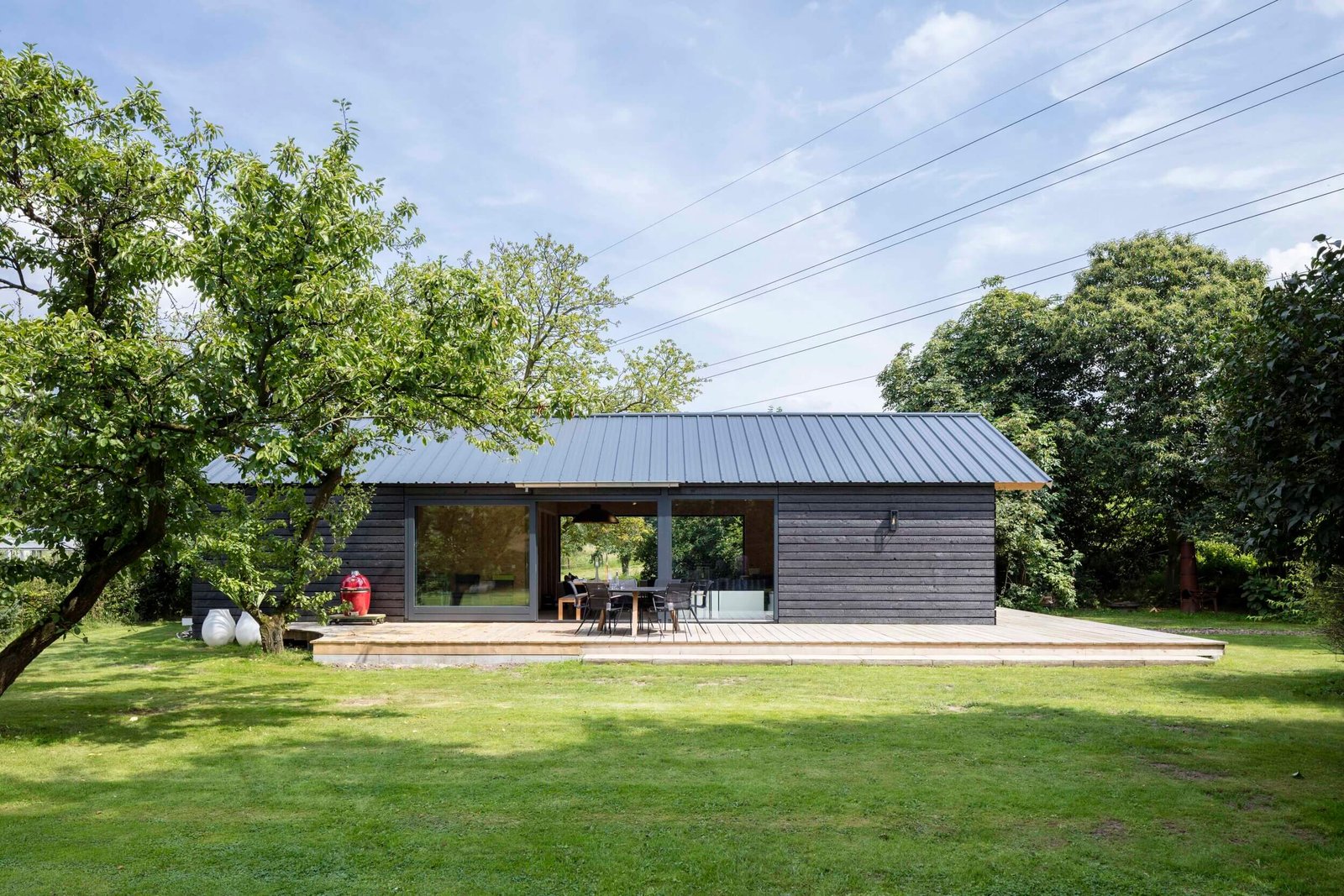
Galvalume isn’t new. Bethlehem Steel brought it into the building industry in the early 1970s, when galvanized steel was still the standard substrate for metal roofing. By the mid-to-late 1990s, over 90% of the metal roofing industry had switched from galvanized to Galvalume substrate. The reason for such a complete switch is a single one: in the same environment, its corrosion resistance is two to four times that of galvanized. Today it’s the most widely used substrate in architectural metal roofing, covering commercial, residential, and industrial projects — provided it’s used in the right place.
This article covers four things: what Galvalume actually is and how to choose between AZ-50 and AZ-55; which projects suit it and which places to stay away from entirely; what makes it better than other metal roofing materials; and the pitfalls to watch during installation. By the end you’ll be able to answer the practical question: should my project use Galvalume?
What Is Galvalume, and What’s the Difference Between AZ-50 and AZ-55?
Start with the chemistry. Galvalume is a cold-rolled carbon steel substrate continuously hot-dipped in an aluminum-zinc alloy at a ratio of 55% aluminum, 43.4% zinc, and 1.6% silicon. That ratio wasn’t picked out of thin air: aluminum forms a stable oxide film in the atmosphere that stops most corrosion; zinc acts as a sacrificial anode — where a scratch exposes bare steel, the zinc corrodes first and protects the steel beneath; silicon helps the coating flow evenly and bond tightly during dipping. One material combining the strengths of three metals — that’s why it holds its position in the roofing industry.
When you buy Galvalume coil, you’ll run into two terms: AZ-50 and AZ-55. The numbers refer to coating weight, measured in ounces per square foot, total for both sides. AZ-50 is 0.50 ounces — the spec generally used for painted product, i.e., pre-painted coil. AZ-55 is 0.55 ounces, used for bare sheet; the industry also calls it Galvalume Plus, and it carries an extra clear acrylic topcoat.
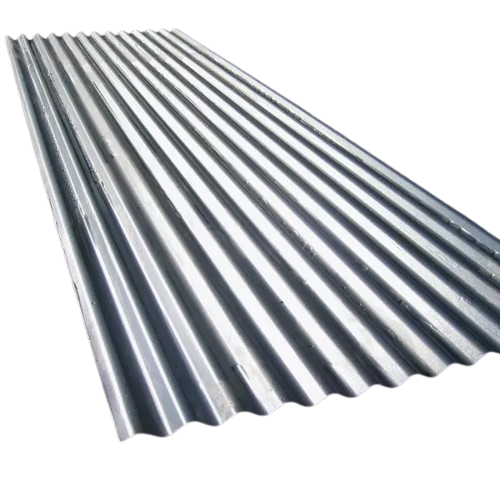
That extra 0.05 ounces plus the acrylic layer exists to protect the coating through fabrication, storage, and installation. But be clear about this: the acrylic isn’t paint — it wears off slowly under sun and weather. So bare sheet has to be handled carefully from the mill to the roof — lift it gently, don’t drag or scrape anything across it. Once that protective layer is scratched through, the only fix in that spot is replacing the panel.
Which Projects Suit Galvalume, and Where Should You Never Use It?
First, where it works. Commercial buildings — hospitals, schools, retail, government buildings; residential — single-family homes, townhouses, apartment buildings; public structures; industrial projects — warehouses and plants; agricultural buildings — barns and storage sheds. Environmentally, it handles non-coastal hurricane zones, high rain and snow regions, and high-heat areas — you’ll see it everywhere from inland plains to deserts.
But there are two no-go zones, and the industry paid real money to learn these.
The first is animal confinement buildings. Ammonia from chicken, pig, and cattle waste reacts with the aluminum-zinc coating, eating through layer by layer and taking the metal with it. There are successful modern poultry house designs with vapor barriers and proper ventilation — but in those cases the design drawings must be sent to the manufacturer for approval. Don’t make that call yourself. The second is the coast. Salt spray attacks the coating far faster than rainwater; projects facing open surf, large bays, or marshland will see the coating fail early. The industry-standard practice: within a certain distance of the coast, switch to an aluminum roofing system — aluminum handles salt naturally. That distance comes up again when we get to warranties.
Remember one rule for deciding: if you’re not sure whether your site counts as a corrosive environment, send the project location and surroundings to the manufacturer and let them judge. Don’t skip that step.
What Makes Galvalume the Better Choice?
Start with the warranty, since that’s what buyers care about most. Galvalume substrate carries a 25.5-year perforation warranty — the manufacturer’s on the hook until corrosion eats through the substrate. Roofing systems usually layer a paint warranty on top; on commercial projects you can also buy an additional weathertight warranty that covers not just the material but the quality of installation. One detail to note: within 1,500 feet of the coast, neither the substrate nor the paint warranty applies. See how that lines up with the no-go zone? On coastal projects it’s not just the wrong material — even the warranty terms are telling you not to go there.
Then corrosion resistance: 2-4x galvanized steel — the direct reason the whole industry switched. It also has one property worth its own mention — self-healing. When any steel-based material is cut or drilled, a little rust creeps inward from the exposed steel at the cut edge. With Galvalume that edge rust is very light and stops on its own. For belt-and-suspenders, fold the cut edges and touch up exposed steel with a touch-up pen.
On installation, it’s far more forgiving than copper and zinc. Copper and zinc hate fingerprints and scratches — installers have to work in gloves. Galvalume isn’t that fussy; a minor bump on site is no big deal, ventilation requirements are looser than some metals, and installation details are standard practice. The tougher the material, the fewer problems on the job.
On lifespan: in a suitable environment, industry studies put the service life at 50+ years. Compare that with asphalt shingles being replaced every 10-15 years, and the math is easy. Price lands in the affordable tier of metal roofing materials — depending on thickness, color, and brand, roughly $5-15 per square foot in North America. That number moves with steel market swings; go by current quotes.
What Are the Drawbacks of Galvalume, and How Do You Avoid Them?
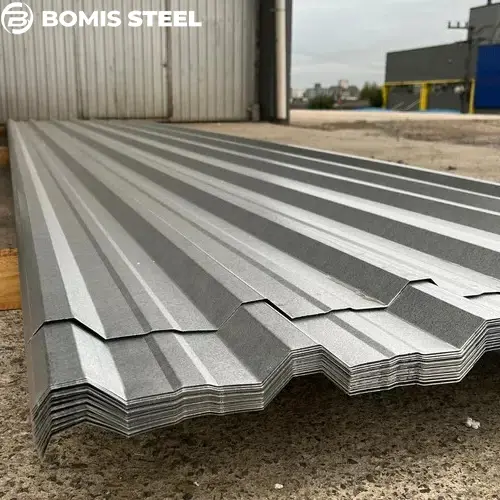
First pitfall: oil canning — those wavy ripples across large flat areas, most visible in sunlight. It’s an inherent trait of wide, flat, light-gauge cold-formed metal sheet; any metal roof can get it. To be clear from the start: it doesn’t affect strength and doesn’t affect waterproofing — but it does look bad. To minimize it: use thicker sheet, 22 gauge over 24 or 26; buy coil from a reputable mill; put striations or stiffening ribs in the flat areas during roll forming; and hire an experienced crew. One more point most people miss — the substrate beneath the panels must be flat. If the deck is uneven, the metal will show it, amplified.
Second pitfall: dissimilar metal contact. When different metals meet in a roofing system and water acts as the electrolyte, you get galvanic corrosion. Copper, lead, masonry, pressure-treated wood, iron, and concrete must not sit directly against Galvalume. Handle the isolation at the design stage — spacers or shims work — don’t wait until it’s installed and redo the job.
Third pitfall is specific to bare sheet. Once the acrylic layer on Galvalume Plus is scratched off, that spot loses its protection, ages faster than the surrounding coating, and eventually discolors — a scratch basically can’t be repaired, only replaced. So bare sheet installations carry extra rules: limit foot traffic on freshly installed panels, watch where ladders go, don’t stand on the panel. These rules look fussy; every one of them was paid for with a replaced panel.
المنتجات ذات الصلة
Looking to source Galvalume or compatible roofing material for your project? These products from بوميس ستيل pair directly with the spec choices discussed above:
- Galvalume Roofing Sheet — Corrosion-Resistant Steel Roofing Panel
- لفائف فولاذية مطلية مسبقًا بالألومنيوم والزنك
- White Corrugated Metal Roofing Sheets — PPGI Metal Roofing Panels
- Painted Aluminum Sheet — PE/SMP/HDP/PVDF Coated Aluminium Panel
التعليمات
Q: Galvalume or galvanized — which do I pick?
A: For roofing, Galvalume is the choice: 2-4x better corrosion resistance at a modest price difference. Galvanized shows up more on non-roofing structural members.
Q: Can I use it on a beachfront project?
A: Not recommended. Salt spray accelerates coating failure, and within 1,500 feet of the coast there’s no warranty at all. For coastal sites, aluminum roofing comes first.
Q: Can I use it in a poultry or hog barn?
A: Generally not recommended — ammonia corrodes the coating. Modern confinement buildings with vapor barriers and proper ventilation have precedents, but only after running the design drawings past the manufacturer.
Q: Will cut and drilled edges rust?
A: A little edge rust will creep in, but it stays light and stops on its own; folding the edges and touching up with a pen makes it doubly safe.
Q: Does oil canning affect strength?
A: No — it’s purely visual. Thicker sheet, striated ribs, and a flat substrate all reduce it.
Q: Bare sheet or painted?
A: Need color, go painted with AZ-50; saving money, go bare with AZ-55 — but once the clear coat is scratched there’s no repair, so take extra care on site.
Final Thoughts
Galvalume is the mainstream substrate of the metal roofing industry for solid reasons: strong corrosion resistance, self-healing edges, rugged, reasonably priced, and a 50-year service life in the right environment. But its two no-go zones — the coast and animal confinement — are lessons customers paid for. Confirming the project environment before choosing the material matters more than any spec parameter.
If you’re an importer or contractor, put it on the procurement checklist: how far is the project from the coast, are there livestock on site, bare or painted — AZ-50 for painted, AZ-55 for bare. Nail the spec down to this level, and the quote and the installation won’t drift from each other.