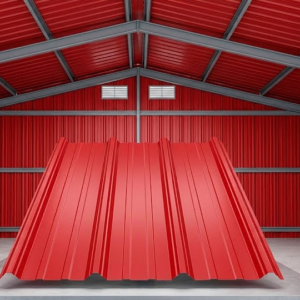
Corrugated galvanized steel sheet

Bomis Premium Corrugated Galvanized Steel Sheets – High Zinc Coating & Durable Protection

Material Grade: SGCC, DX51D+Z, ASTM A653

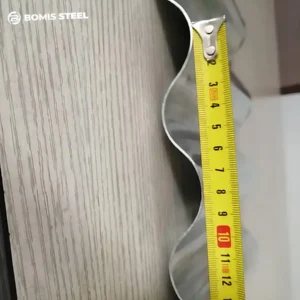
Thickness:  0.12mm – 1.2mm

Width: 600mm – 1250mm (Pre-corrugation)

Zinc Coating:      30g/m² – 275g/m²

Wave Shape:      Round wave, Trapezoidal wave

Corrugated galvanized steel sheet

What is corrugated galvanized steel sheet?

Bomis steel sheets are produced using an advanced hot-dip galvanizing process, resulting in a strong and uniform zinc coating.

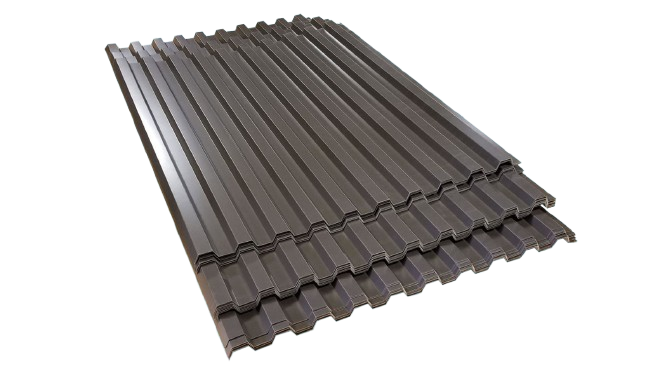
corrugated-steel-roof-sheets-stacked-2-removebg-preview

The Size Of Corrugated Galvanized Steel Sheet​

Thickness: 0.12mm – 1.2mm
Width: 600mm – 1250mm (Pre-corrugation)

Standard Size

Customization is accepted

The structure of a Corrugated Galvanized Steel

1. Cold-Rolled Steel Core
At the heart of every sheet is a base of cold-rolled steel. This core provides the structural integrity, tensile strength, and flexibility required for the sheet to be formed into shapes without breaking.

2. Zinc Coating (Galvanization)
To prevent the steel core from rusting, it is submerged in a molten zinc bath (a process called Hot-Dip Galvanizing). 

3. Chemical Passivation Layer
Once galvanized, a thin passivation film (often a chromate coating) is applied to the zinc surface.

4. Corrugated Profile (Geometry)
While not a material layer, the physical structure is defined by its wave-like “corrugations.” 

The Advantages Of Corrugated Galvanized Steel

Exceptional Durability and Longevity

High Strength-to-Weight Ratio

Excellent Weather Resistance

Low Maintenance Requirements

Cost-Effectiveness

Fire Resistance

Sustainability and Recyclability

Energy Efficiency

National Standards For Corrugated Galvanized Steel

In China, the implementation of Corrugated Galvanized Steel (CGI) for construction and industrial use is primarily governed by the national standard GB/T 12755-2008 (for profiled steel sheets) and GB/T 2518-2020 (for continuous hot-dip zinc-coated steel).

The standard specifies the terminology and definitions of profiled steel sheets, including classification, product identification, technical requirements, test methods, and inspection rules, as well as marking, packaging, transportation, and storage. This standard applies to cold-rolled or hot-rolled steel sheets that have undergone continuous hot-dip galvanizing and are subsequently cold-formed into corrugated or profiled shapes for use in building roofs, wall cladding, and floor decks.

Corrugated Galvanized Steel Applications

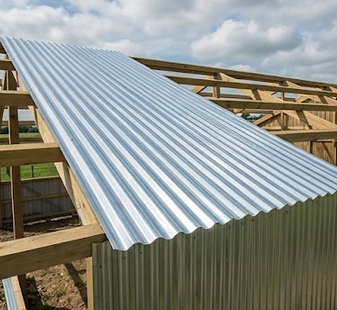
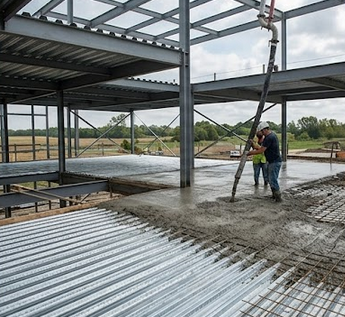
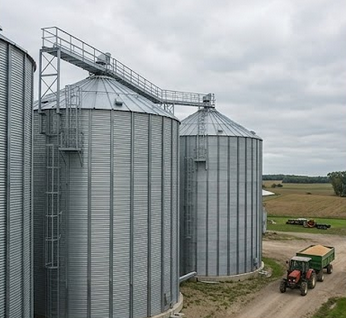
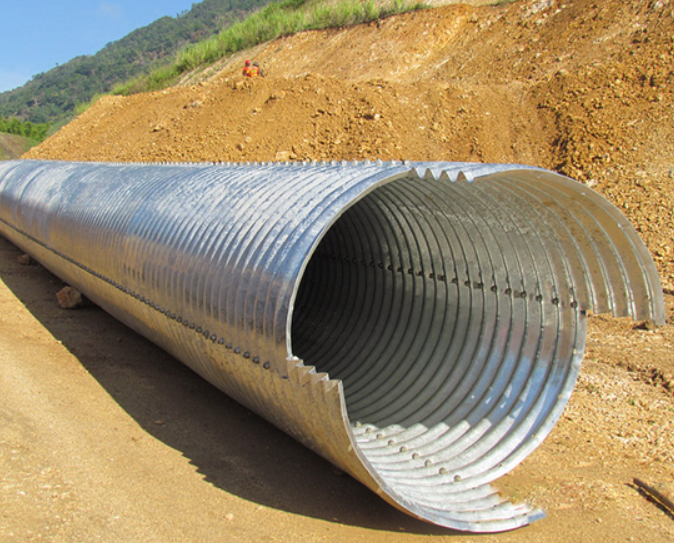
Here are four primary applications for Corrugated Galvanized Steel (CGI). These applications leverage the material’s high strength-to-weight ratio and its resistance to environmental corrosion: Roofing & Wall Cladding, Formwork & Composite Floor Decking, Grain Silos & Agricultural Storage, and Culverts & Drainage Systems (Bottom-Right).

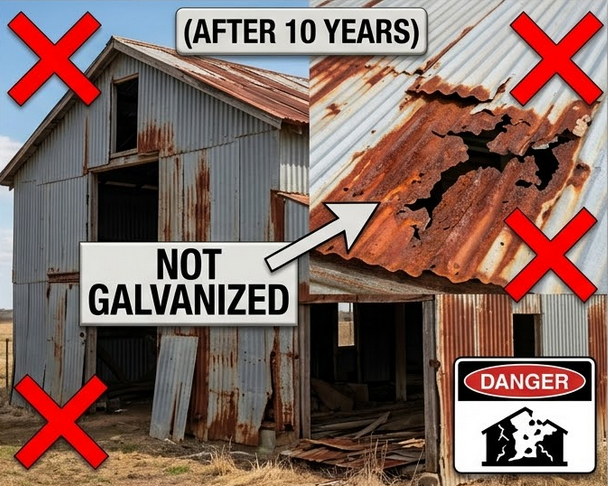
NOT USING CORRUGATED GALVANIZED STEEL SHEET
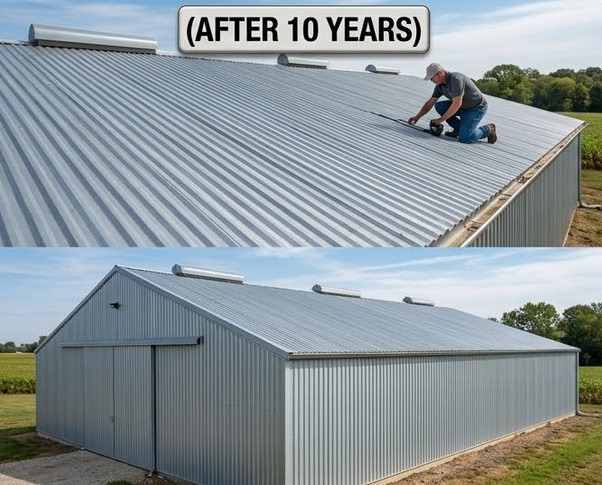
USING CORRUGATED GALVANIZED STEEL SHEET

Corrugated Galvanized Steel Features

1.Beautiful and novel shape, rich color, strong decoration, flexible combination, which can express different architectural styles of corrugated board.

2.Light weight, high strength, good waterproof and seismic performance.

3.High quality of factory products.

4.Convenient construction and installation, reduce the workload of installation and transportation, and shorten the construction period.

5.It is an environment-friendly building material, which can be recycled. The promotion and application of profiled steel plate is in line with the policy of sustainable development of the national economy.

6.The price of monomer material is higher and its durability is worse than that of concrete or masonry enclosure material.

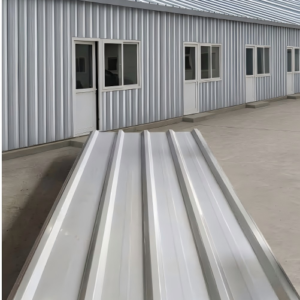
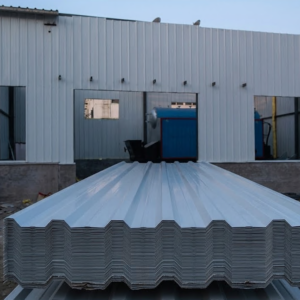
Corrugated steel boards are an excellent substitute for asphalt, clay or asbestos roofs. The durability of corrugated sheet makes them suitable for metal roofs and metal panel projects, suitable for both commercial and ordinary residential applications. They are even used in other areas of the family, including ceilings, parapet panels, fences and so on.

Corrugated Galvanized Steel In Formwork & Composite Floor Decking

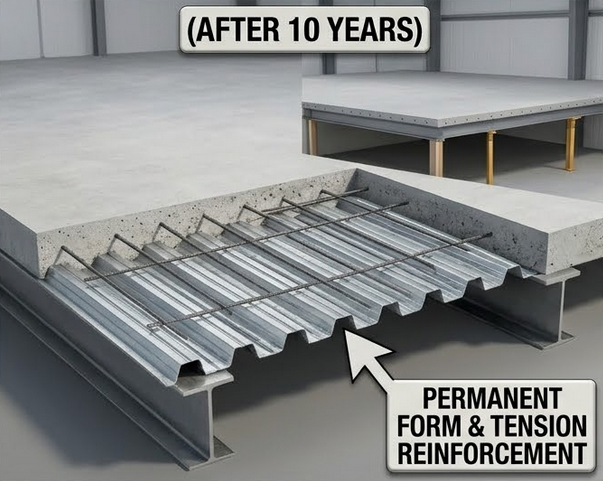
In modern construction, corrugated galvanized steel sheets serve a critical dual function in both concrete formwork and composite floor decking, driven by their efficiency and durability. As a permanent formwork solution, the profile of the sheets is engineered to support the weight of wet concrete and reinforcing bars, eliminating the need for temporary shoring and the labor-intensive process of stripping and cleaning forms. This integrated approach speeds up the construction schedule and reduces overall costs. The corrugations add significant vertical strength, making the system a strong but lightweight platform for construction loads.

Beyond its role as a form, the corrugated galvanized steel sheet transitions into a crucial structural component of the final floor system. In a composite floor, the steel deck acts as the main tension reinforcement, working in tandem with the cured concrete slab to create a highly efficient load-bearing system. This composite action is often enhanced by special shear connectors or embossments on the steel sheets, which ensure a strong, monolithic bond. The galvanized coating provides long-term corrosion protection, ensuring the structural integrity and longevity of the floor decking, particularly in exposed or humid environments.

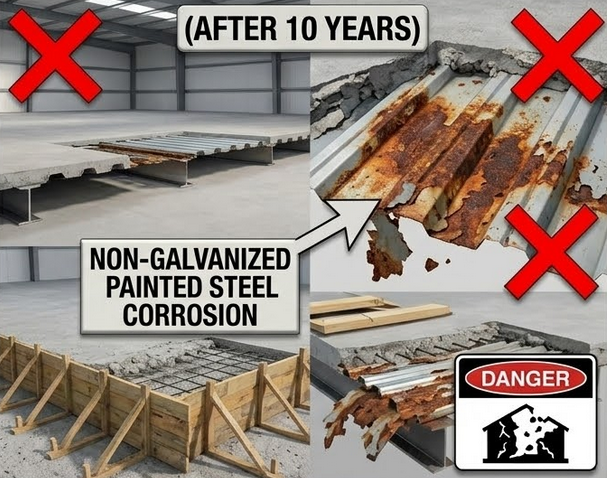
NOT USING CORRUGATED GALVANIZED STEEL SHEET
USING CORRUGATED GALVANIZED STEEL SHEET

FAQ

What is the difference between corrugated galvanized steel sheets and regular steel sheets?

Corrugated galvanized steel sheets are significantly different from regular steel sheets due to their wavy profile and protective coating. The corrugations provide enhanced strength and rigidity, while the zinc coating (galvanization) offers exceptional corrosion resistance, protecting the steel from rust and weathering. Regular steel sheets lack these features and are less durable in external applications.

Yes, these sheets are an excellent choice for coastal environments. The zinc coating provides superior resistance to saltwater corrosion, making them highly durable in marine environments. However, ensure that the coating thickness is appropriate for your specific application.


The lifespan can vary depending on the thickness of the zinc coating and the environmental conditions. Typically, these sheets can last for 20-30 years in non-corrosive environments and slightly less in harsh industrial or coastal settings. Proper maintenance can further extend their lifespan.

These sheets find extensive use in roofing and wall cladding for various buildings, including agricultural structures, industrial warehouses, and commercial spaces. They are also used for fencing, barriers, and sometimes for decorative purposes due to their aesthetic appeal.

The gauge refers to the thickness of the steel. A lower gauge number indicates a thicker and stronger sheet. Thicker gauge sheets are more resistant to impacts and heavy loads, making them suitable for structures where strength is a critical requirement.


Yes, these sheets are designed for straightforward installation. They can be easily cut, drilled, and fixed using appropriate fasteners. The corrugated design makes them stackable for easy transport and allows for efficient installation without specialized tools.


While they are primarily used for roofing and cladding, thicker gauges and specific profiles can be engineered to contribute to the overall structural strength of certain building types. Their corrugations can help distribute loads effectively.