















1. Full Procedure for Importing Steel Coils from China
Stage I: Preparation and Building a Safety Base
Preliminary research is an essential element of the import process. It involves delineating policy requirements, selecting top-quality suppliers, and ensuring proper self-qualification.
- Verify Import Policies: Check the importing country’s tariff levels and trade defense measures (e.g., Vietnam applies anti-dumping/countervailing duties of 23.1% to 27.83% on Chinese hot-rolled coils, while the US has comprehensive tax rates up to 35%).
- Verify Export Policies: Starting January 1, 2026, China will adopt an export license management system for steel coils. Verify that your supplier can file these required documents in advance.
- Supplier Selection: Utilize B2B platforms (Alibaba, Made-in-China) or industry expos (China International Stainless Steel Industry Exhibition). Prioritize manufacturers with foreign trade operating authority and complete quality check certificates. Never cooperate with unqualified suppliers.
- Self-Qualification: Ensure you complete your own import qualification procedures, including foreign trade operator registration, customs registration, and electronic port IC card applications.
Stage II: Contract Signing and Defining Responsibilities
The contract is the definitive document governing both sides’ rights and duties. Essential clauses must be clearly formulated to avoid disagreements.
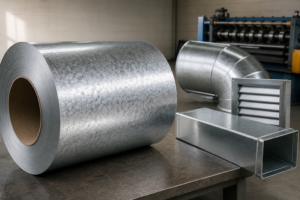
What to include in a galvanized coil order for overseas importers
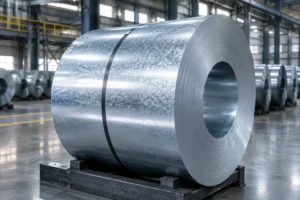
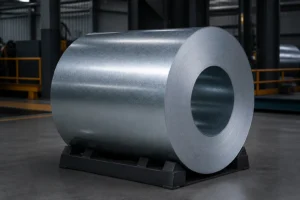
For a galvanized coil order for overseas importers, send the steel grade, thickness, width, zinc coating, coil weight, quantity, surface finish, packaging preference, destination port and requested trade term. If you are comparing a galvanized coil sourcing China export option, add your required standard — ASTM A653 or EN 10346 — and whether you need DX51D, DX52D or DX53D. Buyers who want to buy GI coil should also confirm the end use, roll-forming requirements and acceptable coil ID/OD before asking for a quote. A complete brief lets the supplier check product fit, packing and loading instead of returning a generic number.
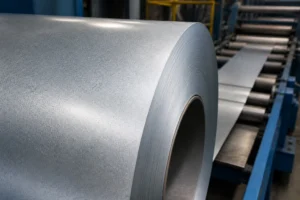
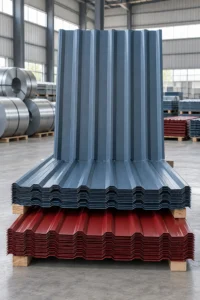
For a direct product route, compare galvanized steel coil, galvalume steel coil and PPGI steel coil before sending your specification. These pages show the product families that match the main coating and end-use choices.
- Product Specifications: Clearly define the material (hot-rolled/cold-rolled, ordinary/stainless), dimensions (outer diameter, inner diameter, width, thickness), quantity, and accepted quality standards (ASTM, EN, JIS, etc.).
- Price and Settlement: Specify the currency, unit cost, total amount, and settlement method (e.g., Letter of Credit, Wire Transfer).
- Logistics and Delivery: Stipulate the trade terms (e.g., FOB, CIF) to establish transport responsibility. Plan the delivery date around the supplier’s production cycle and the 3–5 working days required for export license processing.
- Dispute Resolution & Certifications: Specify a third-party arbitration organization (e.g., Singapore International Arbitration Centre) to lower potential litigation costs. Oblige the supplier to provide the manufacturer’s quality inspection certificate upon completion.
Stage III: Transport and Logistics Safety
Steel coils are incredibly heavy and highly susceptible to moisture and corrosion. Packaging, securing, and transportation must be handled with extreme care.
- Packaging & Securing: Dry containers are typically preferred. Unsealed coils must be treated for rust and kept away from corrosive metals. Securing must follow the IMO Code of Safe Practice for Cargo Stowage and Securing, utilizing steel wire ropes, tensioners, and triangular wooden blocks.
- Weight Distribution: For multi-layer loading, use wooden support frames to maintain weight distribution within ±10% of the container’s centerline.
- Handling Overweight Cargo: Single pieces exceeding 3 tons are “overweight.” Ensure port cranes have the necessary lifting capacity. Overweight cargo requires a “Container Loading and Securing Report” and a cargo weight certificate.
- Insurance: Purchase all-risk insurance with a clear statement covering risks common to steel coil transport, including securing failure and moisture damage.
Stage IV: Customs Declaration and Fast Clearance
A complete set of documents must be prepared in advance, and all transmitted information must be perfectly consistent.
- Required Documentation: Commercial contract, commercial invoice, packing list, bill of lading, Chinese export license, certificate of origin (CO) for tariff preferences, and a bilingual Material Test Certificate (MTC).
- HS Code Classification: Ensure the HS code is correctly classified (usually in the 72.xx series) to prevent delays, penalties, or incorrect tax assessments.
- Tax Payments: Submit documents to customs for pre-approval. Upon arrival, declare through the “single window” system. Pay customs duties (generally 2%-6% MFN rate) and value-added tax (usually 13%).
- Inspection & Release: Customs may perform risk-control inspections to verify specifications, weight, and labels. Once cleared, the importer can proceed with pick-up operations using the release document.
Stage V: Closing, Quality Verification, and Document Retention
- Warehousing: Quickly move the steel coils to a specialized indoor warehouse to avoid rust and environmental damage.
- Quality Acceptance: Examine the appearance, dimensions, and mechanical characteristics against the supplier’s quality inspection certificate and material report. If issues are found, photograph the evidence immediately.
- Document Retention: Retain all contracts, invoices, bills of lading, licenses, and tax certificates for at least 3 years for regulatory audits and tax deductions.
- Supplier Evaluation: Assess the supplier’s creditworthiness through agencies like SINOSURE to minimize risk in future long-term cooperation.
2. Importing Steel Coils from China: Key Considerations
I. Regulatory Compliance Risk Control
Always strictly adhere to the rules of both the importing country and China. Research anti-dumping measures, tariff barriers, and environmental standards (such as the EU REACH regulation and the 2026 CBAM carbon tariff) to ensure goods aren’t rejected or destroyed at the port. On the export side, ensure your supplier complies with new Chinese export laws, such as the “Golden Tax Phase IV” system, which cross-verifies data to monitor high-frequency and abnormal export declarations.
II. Quality and Documentation Risk Management
Contracts must outline strict quality criteria and acceptance terms. It is highly advised to hire a third-party entity (like SGS) to inspect the goods directly at the Chinese factory. Regarding documentation, ensure every detail (product name, specs, weight, HS code) matches perfectly across the certificate of origin, licenses, and invoices. If using a Letter of Credit, review the terms meticulously to avoid “soft clauses” that could lead to bank refusals.
III. Cost Risk and Logistics Management
Sign with a freight forwarder specializing in steel coil transport with strong engineering experience. Specify their reinforcing responsibilities and demand cargo status checks to prevent moisture or reinforcement failure in transit. Beyond basic tariffs and VAT, calculate a buffer for additional costs like customs clearance charges, inspection fees, and demurrage. Always plan a 3–5 working day buffer into your timeline to avoid costly processing delays.
IV. Risk Management in Long-Term Cooperation
Implement a strict supplier evaluation system. Regularly verify their production capacity, compliance qualifications, and credit status. Prioritize cooperating with enterprises that have “green steel” capabilities (providing EPD environmental product declarations) to adapt to global green trade trends. Finally, broaden your supplier network to avoid over-dependence on a single source, protecting your supply chain from localized policy changes or trade frictions.
Sourcing steel coils from China? Send your grade, coating weight and destination port. You will get the price, the earliest loading date and a mill certificate sample back. Send your specification.