















Mistake #1: Not Verifying Supplier Qualifications and Relying on “Low-Price Traps”
This is a very common and deadly mistake for importers. Aggressively, some importers do not carry out a thorough review of a supplier’s qualifications, production capacity, and reputation. Because they solely look at the price when selecting Chinese steel coil suppliers and have an obsession with controlling costs, they often end up working with small factories or middlemen who have neither export qualifications nor proper operations. Ultimately, they fall into the “low-price, low-quality” trap.
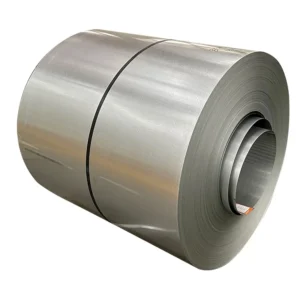
In the past, the Brazilian market has experienced several instances of fraud related to imported Chinese steel coils. A few suppliers catch importers with prices between $30–$200 USD/ton below the market average by mislabeling the quality of grades, tampering with test reports, and using a “head and tail compliant, middle inferior” production process (i.e., the coating on the ends of a coil meets the standards agreed upon, while the coating in the middle is heavily reduced).
Poor corrosion resistance and breakage may occur with the machinery it operates on, interrupting production schedules and putting safety at risk. Furthermore, certain non-qualified suppliers are unable to furnish necessary documentation, such as certificates of origin and mill certificates, which can result in massive customs clearance problems.
Avoidance Guide:
- Verify Credentials: Prefer Chinese mills or authorized third-sector intermediaries with export qualifications (e.g., ISO quality assurance system certification) and a proven track record of exporting large volumes.
- Demand Documentation: Make suppliers provide business licenses, export registration certificates, production licenses, and recent steel coil test findings.
- Third-Party Audits: Require the factory to allow a third-party agency to conduct a factory inspection of their production process.
- Beware of Outliers: Avoid suppliers whose quotations are significantly lower than the market average. Be specific with the terms quoted (e.g., ensuring they include packaging, freight, and testing costs), and reject cooperation models that rely on “attracting with the lowest price and adding costs later.
Mistake #2: Vaguely Defined Contracts with Unclear Quality Standards and Claims
The steel coil import contract constitutes a fundamental guarantee: it binds both parties to a valid agreement, ensuring their rights and claims are protected without uncertainty.
However, to save time, some importers use generic template contracts rather than applying terms specific to steel coil products. Quality standards, inspection procedures, and claims are often written in very broad strokes, making it incredibly tough to enforce rights when something goes wrong.
Contractual loopholes often include missing descriptions of thickness tolerances, tensile strength, coating grades, or whether Chinese GB standards meet International ISO standards. For instance, if an importer fails to define the quality checking standard for the coating grade and later discovers the coating thickness is inadequate, the unclear terms will prevent them from claiming compensation.
Guideline for Key Contract Clauses:
- Detailed Specifications: Clearly specify the size parameters (material, thickness, width, weight) and coatings (e.g., AZ150, AZ200), and define the strict allowable deviation range.
- Quality Standards: Provide clear definitions of the national or international standards adopted. Require the supplier to provide original factory test reports for each batch.
- Inspection Clauses: Stipulate the methods and timeline for pre-shipment inspections (entrusting third-party agencies like SGS or BV) and destination port re-inspections.
- Claims, Returns, and Exchanges: Detail compensation terms for poor quality, the period for returns/exchanges, the party responsible for freight, and liquidated damages for delayed deliveries.
- Documentation: List the complete set of required documents (invoice, packing list, bill of lading, certificate of origin, steel mill quality certificate, customs declarations) and the method for handling document defects.
Mistake #3: Overlooking Compliance Requirements and Customs Errors
Steel coil importation involves two critical stages: Chinese export customs declaration and import clearance in the destination country. The compliance requirements for both are extremely high. Due to unfamiliarity with regulations or a failure to prepare documents in advance, importers often face delays, inspections, heavy fines, or even the seizure of goods.
Typical compliance mistakes include:
- Document Inconsistencies: Discrepancies in the product name, quantity, weight, and specifications across the customs declaration, invoice, packing list, and bill of lading (especially when weight deviation exceeds the reasonable 3%–5% range).
- Incorrect HS Codes: Steel coils have different HS codes depending on their material, processing, and use. Incorrect classification leads to wrong tax rates and regulatory violations.
- Environmental Compliance: Failure to prepare for regulations like the European Union’s Carbon Border Adjustment Mechanism (CBAM, applying to steel coils starting Jan 1, 2026). Without carbon footprint certificates, importers face clearance failures or massive carbon tariffs.
- Skipping Mandatory Inspections: Under Chinese law, steel coils are subject to compulsory export inspection. Without applying for and passing this inspection, the goods cannot leave the port.
Avoidance Guide:
- Familiarize yourself with Chinese export regulations and your country’s import requirements in advance.
- Entrust an experienced customs broker to assist with declarations, ensuring perfect consistency across product names, specifications, weights, and HS codes.
- Prepare supporting documents early (e.g., CBAM carbon footprint certificates or certificates of origin).
- Confirm the supplier has completed the mandatory Chinese entry-exit inspection and obtained a qualified inspection certificate.
Mistake #4: Skipping or Using Non-Standard Inspection Procedures
Steel coils are bulk commodities, and their quality is heavily affected by production processes and transportation. To save inspection costs and speed up delivery, some importers skip the inspection entirely or rely on simple visual checks. This neglects the internal quality and dimensional accuracy of the coils, resulting in irreparable losses upon delivery.
In addition to the “good at the ends, poor in the middle” trick, suppliers may conceal defects by overlapping labels or tampering with chemical compositions (such as adding boron to change the HS code). These cannot be caught by visual inspection alone. Once applied, these defective goods will suffer from rapid corrosion, deformation, and poor tensile strength.
Furthermore, some importers fail to define the specific inspection contents (like chemical composition analysis and coating thickness) or they delegate the job to unreliable institutions, leading to fake or inaccurate reports.
Avoidance Recommendations:
- Never Bypass Inspections: Implement a mandatory dual-process of “pre-shipment inspection + destination port re-inspection.”
- Use Authoritative Organizations: Trust recognized external bodies (like SGS or BV) for pre-shipment inspections.
- Define the Scope: Clearly define the required inspection items in the contract, including appearance, dimensional accuracy, chemical composition, mechanical properties, and coating thickness.
- Strict Timelines: Ensure the comprehensive destination port inspection report is carried out and finalized within a specific, agreed-upon time frame to ensure claims remain valid.
| Critical Mistake | Primary Risks & Consequences | Core Avoidance Strategy |
|---|---|---|
| #1: Low-Price Traps & Unverified Suppliers | Receiving fraudulent “head-and-tail” compliant goods, missing certifications, and production interruptions. | Verify export licenses, utilize third-party factory audits, and reject below-market pricing models. |
| #2: Vague Contracts & Unclear Claims | Inability to legally enforce compensation for incorrect coating thickness, weight deviations, or delays. | Specify exact ISO/GB standards, strict tolerance ranges, and establish clear return/penalty clauses. |
| #3: Customs & Compliance Oversights | Cargo seizures, port delays, HS code fines, and unexpected EU CBAM carbon tariffs. | Hire expert brokers, ensure 100% document consistency, and prepare environmental certificates early. |
| #4: Skipped or Substandard Inspections | Discovering chemical tampering or hidden structural defects only after the product fails in the field. | Mandate SGS/BV dual-inspections covering chemical composition, coating thickness, and mechanics. |