AI Takeaway
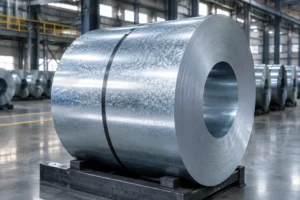
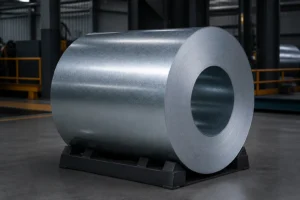
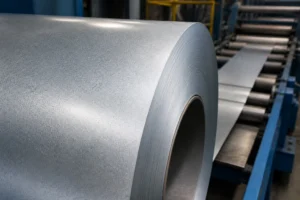
A request for JIS G3321 SGLCD deep-drawing AZ120 regular oiled Galvalume steel coil contains five separate purchasing decisions: the governing standard, the SGLCD deep-drawing grade, the AZ120 aluminium-zinc coating class, the regular-spangle appearance and the oiled surface condition. Buyers should list each requirement separately instead of treating the product title as a complete technical specification. The quotation should also state thickness, width, tolerances, coil ID and OD, edge condition, blank size, draw depth, tooling route, quantity, packing and destination. JIS G3321 does not by itself define the coating weight, oil quantity or forming result. AZ120 does not define SGLCD. Regular spangle does not describe the steel grade. A clear order schedule gives the supplier a practical basis for checking material compatibility, forming risk, storage and final surface requirements. It also lets the buyer compare quotations without silently accepting a different grade, coating class or oil condition. Before requesting a price, attach the drawing and identify the critical dimensions, visible face, forming stages and delivery documents. This preparation reduces avoidable clarification rounds and keeps the technical comparison tied to the actual part rather than to a broad marketplace title.
Why separate the standard, grade and coating in the enquiry?
The title is useful for finding the right product family, but it is not a substitute for an order schedule. JIS G3321 identifies the requested standard framework. SGLCD identifies the requested deep-drawing grade. AZ120 identifies the requested aluminium-zinc coating class. Regular spangle describes surface appearance, while oiling describes a separate surface-treatment condition.
That distinction matters when several suppliers quote the same headline product. One supplier may confirm the standard but leave the grade open. Another may offer a Galvalume coil with the requested coating class but a different forming grade. A third may quote regular spangle without confirming whether the oil treatment is compatible with the next process. If the buyer compares only the product name, those offers can appear equivalent when they are not.
Put the requirements into separate lines:
| Order item | Buyer should state |
|---|---|
| Standaard | JIS G3321, with the required inspection basis confirmed |
| Cijfer | SGLCD deep-drawing grade, with the exact designation confirmed |
| Coating | AZ120 aluminium-zinc coating class, with the test basis confirmed |
| Appearance | Regular spangle |
| Surface condition | Oiled; oil type, quantity and later treatment confirmed |
| Forming route | Deep drawing, pressing, blanking, roll forming or another process |
| Afmetingen | Thickness, width, tolerance, coil ID and coil OD |
| Delivery | Quantity, packing, marks and destination |
This structure helps the supplier answer the engineering question rather than simply repeat the product title.
What does SGLCD mean for deep-drawing work?
SGLCD is the grade requirement in this product request. The important point for the buyer is not the abbreviation alone, but how the grade will behave in the planned operation. Deep drawing creates a different purchasing question from simple slitting or light roll forming. The blank size, draw depth, corner radius, tooling condition, lubrication and number of forming stages all influence the material review.
Send the part drawing when the component has fixed geometry. The drawing should identify the blank or starting size, finished dimensions, draw depth, corner radii, tolerances, visible face and any areas where surface marking is unacceptable. If the component goes through more than one draw, state the sequence. If the buyer is replacing another grade, provide the current material reference and the reason for the change.
The grade line and the forming line should remain separate in the quotation. A buyer may need SGLCD for deep drawing, but the supplier still needs to know whether the actual route is a single draw, progressive forming, pressing followed by trimming, or a combination of operations. Without that information, the grade designation does not fully describe the production risk.
The quotation should also clarify whether the coil will be blanked before forming or fed into a line in strip form. That decision affects width, edge condition, coil handling and the amount of material lost during preparation.
How should buyers interpret AZ120?
AZ120 is the requested aluminium-zinc coating class. It is not the steel grade and it is not the oil specification. Keep the coating request on its own line and ask the supplier to confirm how the coating value will be stated and checked for the order.
The coating requirement should be considered together with the finished part. A deep-drawn component may expose different areas to handling, contact and later coating than a flat sheet. The buyer should state whether the Galvalume surface remains visible, receives a later coating, or is enclosed inside an assembly. That information helps determine what surface condition and handling instructions should appear in the order documents.
Do not use AZ120 as shorthand for every property of the coil. It does not answer questions about thickness, width, dimensional tolerance, forming route, surface appearance, oil type or storage. Those items require separate confirmation.
A useful technical enquiry might read as follows:
JIS G3321 SGLCD deep-drawing Galvalume steel coil, AZ120 coating class, regular spangle, oiled surface; thickness and width per attached drawing; coil ID and OD to be confirmed; intended for blanking and deep drawing; confirm oil condition, dimensional tolerances, edge condition, packing and inspection documents per order.
This wording is more useful than repeating the headline title several times.
What does regular spangle tell the buyer?
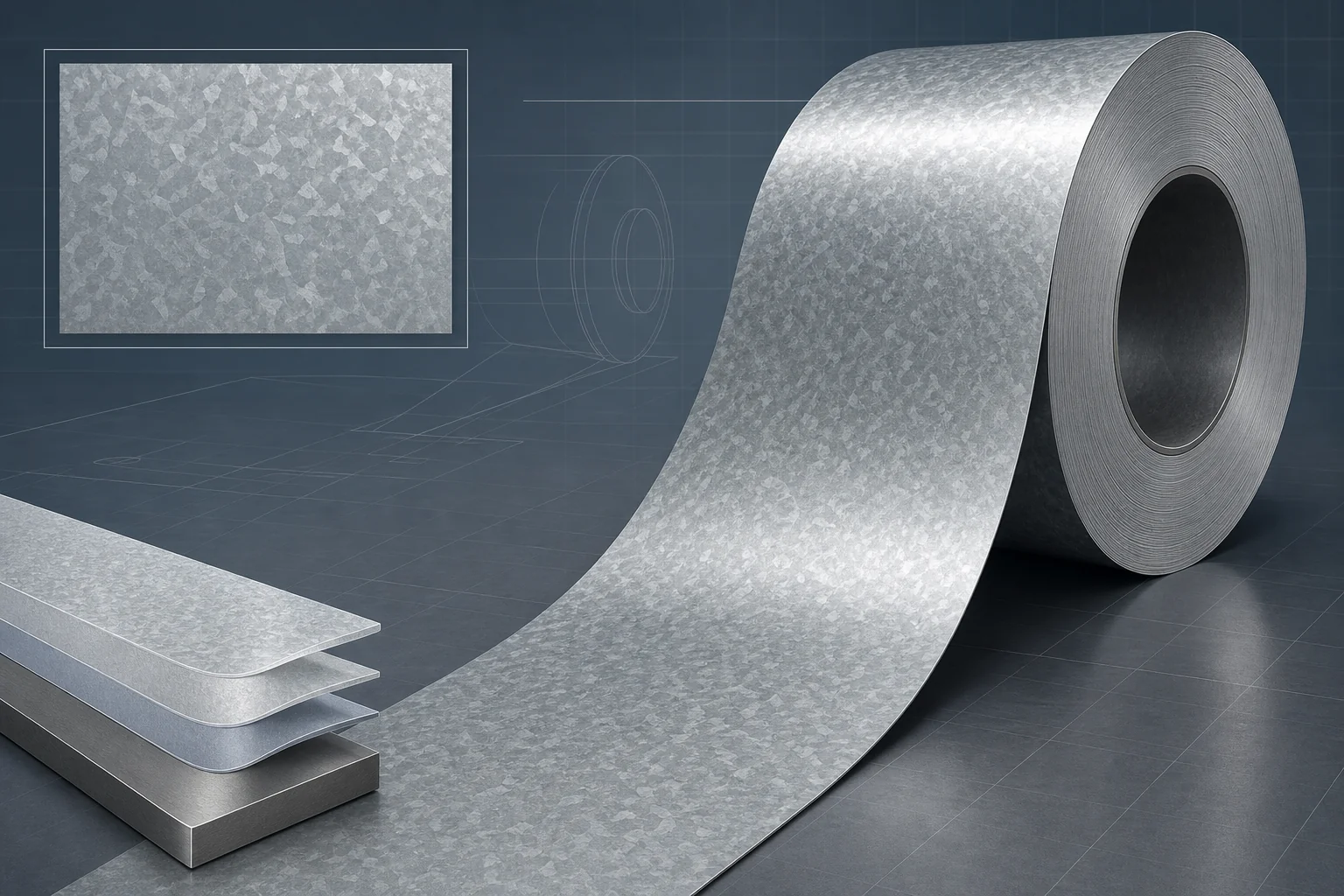
Regular spangle describes the visible crystallised appearance of the aluminium-zinc coating. It is a surface appearance request, not a substitute for the coating class or grade. A buyer should decide whether the regular pattern will remain visible on the finished part and whether the appearance must be consistent across the coil.
For a formed component, the visible result can also depend on stretching, contact with tooling, handling marks and any later cleaning or coating. If the surface will be displayed, include an approved sample or appearance reference when possible. If the surface will be painted or covered, state that clearly so the supplier can review the oil and surface-treatment requirements against the downstream process.
The phrase “regular spangle” should therefore be accompanied by a practical surface note:
- Is the regular pattern visible on the finished part?
- Which face is the visible face after drawing?
- Are handling marks acceptable before the next process?
- Will the part be cleaned, painted, laminated or otherwise coated?
- Is a sample required for appearance approval?
The answer to those questions is more actionable than the appearance term on its own.
Why specify an oiled surface separately?
Oiling is a surface-treatment condition. It can support storage and handling, but the buyer should not assume that every oil behaves the same way in a deep-drawing or coating line. Confirm the oil type, quantity, intended storage period, cleaning method and compatibility with the next process.
If the part will be painted, the buyer should ask how the oil will be removed or whether a pretreatment route is required. If the part will remain unpainted, the buyer should still state the expected storage environment and the time between receipt and forming. Keep coils dry, protected from condensation and supported according to the agreed packing instructions.
The oil request should appear separately from the regular-spangle request. Regular spangle answers an appearance question. Oiling answers a handling and surface-condition question. Neither one defines SGLCD or AZ120.
A good order line might state:
Regular spangle, oiled surface; confirm oil type, target quantity, storage guidance and compatibility with blanking, deep drawing and any later coating process.
That line leaves the technical item open where it needs confirmation instead of inserting an unsupported oil specification.
Which dimensions matter before deep drawing?
A coil quotation needs more than thickness and width. For a deep-drawing project, the supplier should review the part geometry and the coil-handling requirements together.
Thickness and width
State the nominal thickness, allowed tolerance and required width. If the buyer starts from a blank, provide the blank dimensions and nesting arrangement. If the line feeds strip directly, provide the required slit width, edge condition and any line limitations.
Coil ID and OD
The coil inner diameter and outer diameter must suit the decoiler and lifting equipment. Confirm the buyer’s standard rather than copying a value from another project. Coil weight can also affect handling, storage and container planning.
Edge condition
State whether the order needs mill edge or slit edge. A deep-drawing line may have different requirements from a roll-forming line. If the edge will be trimmed before forming, include the trim allowance and target width.
Tolerances and flatness
State the dimensional tolerance schedule and any flatness or shape requirement that affects blanking or feeding. If the part drawing controls the tolerance, attach it to the enquiry and identify the critical dimensions.
Surface and visible face
State which face is inspected, which face remains visible and whether contact marks are acceptable. The surface note should cover regular spangle, oiling and any later cleaning or coating.
How should the forming route be described?
“Deep drawing” is a useful starting point, but it is not the complete process description. Tell the supplier whether the material will be blanked, pressed, drawn, trimmed, pierced, bent or roll formed after receipt.
Include the following when available:
- Part drawing and finished dimensions.
- Blank size and material utilisation plan.
- Draw depth and number of stages.
- Corner radii and critical bend areas.
- Tooling direction and lubrication method.
- Required surface appearance after forming.
- Trimming, piercing or joining operations after drawing.
- Final cleaning, painting or coating route.
The supplier can then review the requested SGLCD grade, AZ120 coating, regular-spangle appearance and oil condition as one production chain. That is more useful than treating the product as a generic coil and discussing forming only after delivery.
How should buyers compare quotations?
Use a comparison table that separates confirmed values from open items:
| Comparison point | Supplier A | Supplier B | Buyer decision |
|---|---|---|---|
| JIS G3321 basis | Confirm | Confirm | Required inspection basis |
| SGLCD designation | Confirm | Confirm | Match the drawing and forming route |
| AZ120 coating | Confirm | Confirm | Confirm test method and tolerance |
| Regular spangle | Confirm | Confirm | Appearance approval if required |
| Oiled surface | Confirm | Confirm | Oil type, quantity and removal route |
| Thickness / width | Quote | Quote | Match drawing and equipment |
| Coil ID / OD | Quote | Quote | Match decoiler and handling |
| Edge condition | Quote | Quote | Mill or slit edge |
| Verpakking | Quote | Quote | Moisture, edge and shipping protection |
| Documents | Confirm | Confirm | Material and inspection records |
Do not compare only the headline price. Compare whether both quotations cover the same grade, coating class, dimensions, surface condition, packing and documentation. If one quotation leaves SGLCD or AZ120 open, mark it as pending rather than treating it as equal to a fully specified offer.
What should the packing and storage request include?
State the coil weight, eye orientation, edge protection, wrapping, strapping, shipping marks and destination. Add moisture protection when the coil will cross a humid route or remain in storage before forming. Confirm whether the buyer needs a specific lifting arrangement or container loading plan.
Storage instructions should match the surface condition. Keep the coil protected from condensation and direct water contact. Do not place the coil where standing moisture can remain against the wraps or edges. If the oil must remain effective until forming, the buyer should state the expected storage period and the first downstream operation.
The packing request should also identify the documents that must travel with the order. Confirm the material certificate, inspection record, dimensional record or other project-specific documents before production review. Do not assume that a generic certificate list from another supplier applies to this order.
Veelgestelde vragen
Is SGLCD the same as AZ120?
No. SGLCD is the deep-drawing grade. AZ120 is the aluminium-zinc coating class. Put both on separate lines.
What does regular spangle mean?
Regular spangle describes the visible crystallised coating appearance. It does not define the grade, coating class or oil condition.
Why is the coil oiled?
Oiling is a separate surface-treatment request for handling and storage. Confirm the oil type, storage period and cleaning route.
What drawing information should accompany the enquiry?
Send the part drawing, blank size, draw depth, corner radii, tolerances, tooling route and visible face. State any later cleaning or coating.
Can the coil be used for roofing-related components?
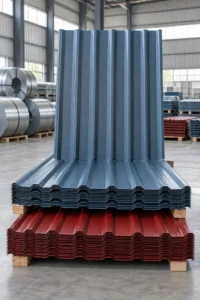
It can be reviewed when SGLCD, AZ120, dimensions, profile and forming route match the project. Send the profile and bend details.
What should be confirmed for AZ120?
Confirm the coating class, test basis, tolerance and inspection record. Do not use AZ120 as a substitute for the grade.
Can the supplier quote from the product title alone?
No. A reliable quotation needs dimensions, forming details, quantity, packing and documents. Attach the drawing.
What should the buyer state about storage?
State the storage period and warehouse conditions. Confirm moisture protection before drawing.

Conclusion: turn the product title into an order schedule
JIS G3321 SGLCD deep drawing AZ120 regular oiled Galvalume steel coil is best purchased through a separated technical schedule. State the standard, grade, coating, appearance and oil condition independently. Then add the part drawing, dimensions, forming route, tolerances, packing, documents and destination. This gives the supplier a clear basis for reviewing deep-drawing risk and gives the buyer a fair way to compare quotations.
For related material references, review the Galvalume Steel Coil collection, the AZ150 G550 AFP Galvalume coil buyer guide and the ASTM A792 Galvalume Steel Coil page.