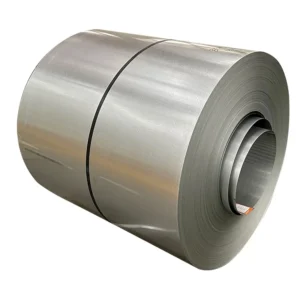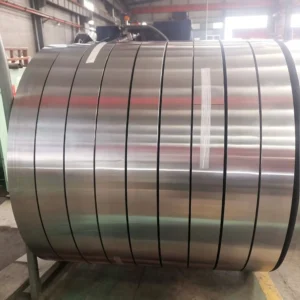
















The Bottom Line: Listen. When purchasing sandwich panels of PPGI, fire protection is not an afterthought. It is integrated into the substrate. When using low-grade steel grade and a thin zinc coat, the panels immediately deform when heated. Paint is your first line of defense. Standard polyester? The stuff burns at 200 °C. To have a Chance, you need to specify PVDF or SMP with fire-retardant additives that will form a char barrier and give you time. Next is the core. Rock wool is used in Class A non-combustible materials. PIR is used in B1 self-extinguishing materials. EPS? Keep it away from all fire hazard areas. You have to deal with EN 13501-1, ASTM E84 and GB 8624. You will also come across the labels CE, FM and UL. These are the documents that insurance appraisers actually request and check. There are also local codes, and if you’re not careful, all that can become obsolete. Get the documents first. Test the samples yourself. Because even if you save a few euros per ton, you can’t protect your job (your livelihood) if the appraiser objects to your building.
Table of Contents
- Why Fire Resistance Matters in PPGI Sandwich Panels
- The Real Risks of Cutting Corners on Fire Performance
- Regulations and Insurance — What’s Actually Enforcing Your Fire Spec
- Fire Safety Standards and Certifications You Need on Paper
- Coating Types — Your First Line of Defense Against Fire
- Steel Grade, Zinc Weight, and Thickness — the Substrate Side of Fire Protection
- Coil Width, Length, and Tolerance — Why Dimensions Affect Fire Performance
- Core Material — the Part That Decides Whether Your Panel Burns
- Balancing Budget and Fire Safety Without Getting Burned
- PPGI vs. PPGL — Which One Holds Up Better When It Gets Hot
- What to Check Before You Trust a Supplier
- Cutting, Bending, Rolling — How the Factory Floor Affects Fire Performance
- A Practical Step-by-Step Selection Process
- Mistakes That Show Up When It’s Too Late
- What to Spec for Different Building Types
- Ongoing Compliance — Because Fire Standards Change
- Soalan Lazim
Why Fire Resistance Matters in PPGI Sandwich Panels
When you’re writing the spec for a sandwich panel line, fire resistance better be the first thing on the page. Not an afterthought once you’ve argued over the RAL color and gauge. A panel that looks pretty in the yard but turns into a chimney on a building isn’t helping anyone.
Everyone knows the core does the heavy lifting. PIR is the workhorse for commercial jobs because it gets you a B1 classification — hardly flammable, slow to catch, and the kind of material that snuffs itself out the moment you pull the flame source. That self-extinguishing trait is the only thing standing between a contained incident and a total loss.
But don’t kid yourself into thinking the core is the whole story. The steel skin and the paint system dictate how that panel holds up in a real fire. Treat fire prep as a checklist item at the end of the line, and you’ve already lost.
Verify the whole assembly’s fire classification before you sign a PO for a thousand tons of coil. It’s a hell of a lot cheaper to change the spec on paper than to rip finished panels off a facade.
The Real Risks of Cutting Corners on Fire Performance
You cheap out on fire protection, you buy yourself three compounding nightmares. First, the obvious one — the panel itself becomes fuel, spreading the blaze faster than any sprinkler system can handle. Second, your steel facing loses its yield strength the minute the substrate hits critical temperature. Suddenly that wall isn’t a wall anymore. Third — and I’ve seen guys ignore this until the lawsuits hit — it’s the smoke. A low-grade burning core pumps a building full of toxic smoke faster than flames ever could. That’s what actually kills people in most commercial fires.
Structural failure isn’t just patching a hole. It’s weeks of downtime. It’s insurance adjusters with flashlights crawling through the ash. It’s a mountain of compliance paperwork you should have filed a year ago. Paying for the right PPGI and core combination upfront is peanuts compared to any one of those outcomes.

Regulations and Insurance — What’s Actually Enforcing Your Fire Spec
Look, building codes are just the baseline. The insurance guys are the ones who set the ceiling, and they don’t mess around. If you’re cladding a warehouse or cold storage facility, the local fire marshal tells you the minimum. But the insurer? They might demand a higher rating and third-party testing before they’ll write a policy that doesn’t bankrupt the operator.
Ignore the code or the insurer and you’re staring down fines, jacked-up premiums, or outright denied claims. Pull both specs — the local code and the insurer’s demands — before you even pick up the phone to a coil mill. Buy to a known standard. Don’t pray it passes inspection when it’s already bolted to the purlins.
These aren’t suggestions. They are your minimum viable spec. Build your purchasing around them, not the other way around.
Fire Safety Standards and Certifications You Need on Paper
I’ve dealt with this alphabet soup for 20 years. It’s not complicated once you know which ones apply to your market. Europe? EN 13501-1 is your bible. It classifies building products from A1 down to F based on reaction to fire, and for most building envelopes you need a B or better. In the States, it’s ASTM E84 all day long — flame spread index and smoke developed index. Lower numbers win.
ISO 1182 and ISO 1716 are the international baselines for non-combustibility and heat of combustion. If a mill hands you those test reports without you having to beg for them, they’re serious about fire performance.
But international standards are just the starting point. Local codes trump everything. China lives and dies by GB 8624 — most PPGI panel assemblies target B1. The US layers the International Building Code on top of ASTM. High-rises, schools, hospitals, critical infrastructure — extra rules apply. Skip this check and you’ll end up with a yard full of useless steel that local inspection won’t sign off on.
Then there are the certification labels that show up on the coil pembungkusan itself. The CE Mark covers EU fire and mechanical standards. FM Approved is the one global insurers actually care about — Factory Mutual tests to destruction, they don’t rubber-stamp anything. UL Listed is the US heavyweight. And if you’re shipping into China, you need the CCC mark.
- CE Mark — EU fire safety and mechanical resistance compliance
- FM Approved — Factory Mutual certification, recognized by insurers globally
- UL Listed — Underwriters Laboratories fire and safety testing, US gold standard
- CCC — China Compulsory Certification, mandatory for Chinese markets
Don’t write the PO until the supplier sends test reports matching your local standard. When the steel drops, check the coil tags against the paperwork. If they don’t match, reject the load. Simple as that.
Coating Types — Your First Line of Defense Against Fire
The paint on that PPGI isn’t just there to make it a pretty RAL color. It’s the first thing the fire touches, and the chemistry matters more than the gloss meter reading.
PVDF is top dog. Polyvinylidene fluoride gives you thermal stability that standard coatings can only dream about, plus UV resistance for outdoor exposure and chemical resistance for harsh environments. If you’re wrapping a coastal high-rise where a coating failure means someone gets sued, spec PVDF.
SMP — silicon-modified polyester — is the blue-collar workhorse. Holds together under heat, handles abrasion better than most. If your panels are going into a facility where they’ll take a beating from forklifts and heavy daily traffic, SMP earns its cost and then some.
HDP (highly durable polyester) sits in the middle. Decent thermal buffer, good weather resistance, fair price. Use it when standard PE won’t cut it but PVDF blows the budget.
Polyurethane flexes great and insulates well. Not a standalone fire performer, but pair it with a fire-retardant core and it does the job for energy-efficient buildings.
Standard PE is what you spec when the fire risk is practically zero and the budget is everything. Looks great on day one. Zero fire protection. Be honest with yourself about whether that actually describes your project.
Plastisol (PVC) is thick and handles abuse, but put sustained heat on it and it softens fast. Use it for mechanical durability, not fire safety.
Standard Coatings vs. Fire-Retardant Coatings
Here’s what you actually need to know: standard paint is engineered for color retention and gloss. Fire-retardant paint is loaded with intumescent or halogen-free additives that activate when the heat comes on. Flame hits it, those additives expand into a char barrier — a physical layer of insulation between the fire and the steel substrate.
That char layer slows heat transfer and keeps the steel below critical temperature just long enough to matter for evacuation and structural survival. Fire-retardant coatings also choke surface flame spread. Instead of the paint contributing to the fire load, it actively fights against it. If your building code requires a B classification or better under EN 13501-1, fire-retardant coating isn’t an upgrade — it’s the bare minimum.
Tell the mill to send the TDS for fire performance, not just the gloss meter readout. If it doesn’t explicitly state intumescent behavior or fire-retardant additives, it’s standard paint. Treat it as such.
Steel Grade, Zinc Weight, and Thickness — the Substrate Side of Fire Protection
Everyone obsesses over the paint, but the bare steel is what keeps the building standing when it gets hot. At 400 °C, standard structural steel holds about 70% of its yield strength. Micro-alloyed grades hold more. In a real fire, the difference between 70% and 80% retention is the difference between a panel that sags and a wall that stays up.
Don’t ignore the zinc weight. A Z275 coating isn’t just for rust — it’s a literal heat sink. When thermal energy hits the panel, that thicker zinc layer absorbs and dissipates some of it before it reaches the steel core. Stack it next to a Z120 and it buys you measurable extra time.

Paint film thickness works the same way. A 20–40 μm topcoat gives you a longer thermal lag than a cheap 10 μm spray. More mass between the flame and the steel. Yes, it costs more and adds weight. For fire-critical panels, spend the money.
Stack a thicker zinc layer, a heavier paint film, and fire-retardant chemistry together, and you’re building thermal barriers that choke the fire at every layer.
Coil Width, Length, and Tolerance — Why Dimensions Affect Fire Performance
I’ve seen guys order coil dimensions just to optimize the slitter, completely ignoring what it does to the panel’s fire rating. Coil dimensions directly affect how your finished panels behave under fire conditions.
Lebar has to match your panel design precisely. Standard widths mean less scrap, yes, but they also mean fewer seams — and every seam is a highway for flames. Berat matters because heavier coils usually mean thicker substrate, which circles straight back to fire performance. Just make sure your uncoiler can actually lift the damn thing before you order.
Panjang is the one nobody thinks about. Longer coils produce panels with fewer end joints. Fewer joints mean fewer gaps where fire can penetrate the assembly. Run the longest coils your line can handle — you’re directly improving the fire integrity of every panel that comes off it.
Tolerance matters because gaps kill fire ratings. Tight tolerances on thickness and width mean panels interlock the way the engineer designed them to. Loose tolerances leave gaps where heat concentrates faster than the calculations assumed.
Core Material — the Part That Decides Whether Your Panel Burns
The steel and paint are the wrapper. The core is what actually dictates if the panel burns to the ground.
Rock wool is king. Class A non-combustible. It does not burn, period, and won’t even melt until you push it past 1000 °C. Hospitals, schools, high-rises, fire escapes — spec rock wool. Mineral wool with FM Approval gives you the same Class A performance with the added weight of insurer-recognized testing behind it. Important for industrial facilities and data centers where the insurance policy matters as much as the building itself.
PIR — polyisocyanurate — hits B1. It chars on the surface when flame hits it and self-extinguishes the moment you pull the flame source. That char layer actually insulates the material underneath. For cold storage, standard warehouses, and commercial buildings where nobody is forcing you into Class A, PIR gives you solid fire performance at a better price point than rock wool.
Polyurethane falls in the B2–B1 range depending on the formulation. It burns slowly and can be treated with fire retardants to pass certain specs, but it’s not in the same league as PIR or rock wool. Fine for residential and low-risk commercial. Don’t pretend it’s PIR.
EPS is a joke for fire ratings. It’s combustible, it melts, and it drips liquid fire onto whatever is below it. Keep it off any project that has fire performance requirements. Period.
| Bahan Teras | Fire Class | Behavior | Where to Use |
|---|---|---|---|
| Rock Wool | Class A | Non-combustible, melts above 1000 °C | Hospitals, schools, high-rise, fire escapes |
| Mineral Wool (FM) | Class A | Non-combustible, insurer-verified | Industrial, data centers |
| PIR | B1 | Self-extinguishing, surface chars | Cold storage, warehouses, commercial |
| Polyurethane | B2–B1 | Slow-burning, needs FR treatment | Residential, low-risk commercial |
| EPS | E–F | Combustible, melts and drips | Not for fire-critical use |
Smoke Toxicity — the Part Nobody Talks About Until It’s Too Late
Rock wool gives off zero toxic smoke. It’s inorganic — it simply doesn’t produce fumes. PIR smokes a bit but stops the moment it self-extinguishes. Standard polyurethane without fire-retardant treatment is the one to watch out for: it can off-gas hydrogen cyanide and carbon monoxide. In an occupied building, smoke inhalation kills far more people than structural collapse ever does. Don’t spec PU-cored panels in buildings where people sleep or work unless you’ve scrutinized the smoke toxicity data for that specific formulation.
Balancing Budget and Fire Safety Without Getting Burned
Amateurs stare at the price-per-ton. It tells you exactly nothing about what a coil actually costs over the life of the building it goes into. PPGI gives you a strong combination of fire resistance and value — it doesn’t catch or spread flame easily, it carries a Class A fire classification, and its thermal conductivity sits around 0.020–0.025 W/m·K. That means it contributes to the panel’s insulation performance rather than working against it.
Thicker coatings and higher-grade steel cost more upfront. They also mean fewer repairs over the building’s life, lower insurance premiums, and a panel assembly that still hits its fire rating a decade after installation. Compare that against the cost of a failed inspection, an insurance denial, or an actual fire where the panels didn’t hold up. The math isn’t complicated.
Never let a low coil price convince you to drop below the fire spec your project requires. The upfront savings disappear the first time something goes wrong.
PPGI vs. PPGL — Which One Holds Up Better When It Gets Hot
This question comes up on every procurement call, and the answer depends on what kind of heat you’re actually dealing with. PPGI uses a pure zinc coating on the steel substrate. PPGL swaps that for a zinc-aluminum-silicon alloy — roughly 43.5% zinc, 55% aluminum, and 1.5% silicon.
The difference shows up in the service temperature. Pure zinc on PPGI starts degrading around 200 °C. The aluminum in PPGL pushes that tolerance up to about 315 °C, and the aluminum-zinc alloy reflects roughly 75% of radiant heat. That matters in unventilated roof cavities, desert installations, and facilities like foundries or glass plants where ambient heat is constantly high.
For the vast majority of fire-rated commercial and industrial buildings, PPGI paired with rock wool or high-density PIR cores is the practical choice. It hits the fire performance targets and keeps the budget under control. PPGL costs more and the fire performance isn’t categorically better — it’s specifically for high-heat environments where the extra thermal headroom justifies the premium. High-density cores at 40–60 kg/m³ add structural integrity regardless of which facing you choose.
What to Check Before You Trust a Supplier
A supplier’s website and their test reports are two completely different documents. Certified suppliers run their products through independent labs and can produce the paperwork to prove it. Look for CE Mark, FM Approved, or UL Listed certifications on the coils themselves — not just the brochure. Ask for factory audit reports. A serious supplier has documented production processes and quality control records they’re willing to share.
If you’re buying for a fire-rated project, you need three things from every supplier before you sign anything: fire resistance test reports, durability and corrosion resistance data for the coating system, and mill test certificates that confirm the zinc weight and paint thickness for the actual batch you’re buying — not a representative sample from six months ago. If a supplier hesitates on any of these, move on. There are too many mills that can produce the paperwork. The ones that can’t are hiding something.
Working with certified suppliers isn’t about checking a box. It’s the difference between panels that pass inspection and panels that get your project red-tagged.
Cutting, Bending, Rolling — How the Factory Floor Affects Fire Performance
You can spec the perfect fire-rated coil and still destroy its performance on the production line. Cutting, bending, and rolling each put stress on the coating system, and a damaged coating is an open door in your fire barrier.
When you’re cutting PPGI, sharp tooling is non-negotiable. Dull blades tear the coating instead of slicing through it, leaving ragged edges where moisture, corrosion, and — in a fire — heat can get under the paint film. Any exposed steel at the cut edge needs touch-up paint before the panel leaves the factory. It’s a small step that directly preserves the fire rating.
Bending and rolling need controlled force. Too aggressive an angle or too much pressure, and the coating microfractures. You won’t see those hairline cracks with the naked eye, but they’re exactly where flame finds its way through. After processing, walk the line and check the edges. Smooth and intact means the fire protection is still there.
Matching coil specs to your panel design upfront prevents most of these problems. The right width means fewer cuts. The right thickness means less force in forming. Longer coils mean fewer joints in the finished assembly. Match your coating selection to the processing the coil will actually go through — some coatings handle tight bend radii better than others.
A Practical Step-by-Step Selection Process
When you’re actually sitting down to spec PPGI coils for a fire-rated project, here’s the order of operations that keeps you out of trouble:
1. Pin down the fire standards your project has to meet. EN 13501-1 for Europe, ASTM E84 for the US, GB 8624 for China, or your local building code. Don’t guess — pull the actual document.
2. Figure out the classification the inspector and the insurer both require. These aren’t always the same number, and the stricter one wins.
3. Pick your core material first. This decision gates everything else. Class A needs rock wool or FM-approved mineral wool. B1 needs PIR. Get this wrong and nothing else you spec matters.
4. Specify the coating. Match it to both the fire requirement and the environment. PVDF or SMP with fire-retardant additives for demanding applications. HDP for corrosive atmospheres. Standard PE only if fire risk is genuinely low.
5. Set the steel grade and zinc weight. Higher grade for better hot strength. Z275 minimum for fire-critical panels. These numbers go in the purchase order, not just the wish list.
6. Lock in coil width, thickness, and tolerances. Tighter tolerances mean fewer flame-path gaps in the finished assembly. This is an engineering decision, not just a cost decision.
7. Demand pre-production samples. Test the gauge yourself. Measure the zinc weight. Check the paint adhesion. Supplier data sheets describe what they intend to ship. Samples tell you what they actually ship.
8. Verify the certifications. CE, FM, UL, or CCC — whichever applies — must be current and must match the batch numbers on the coils you receive.
Work with suppliers who provide full documentation at every step. If they push back on samples or test reports, find another supplier.
Mistakes That Show Up When It’s Too Late
Most of the fire-safety failures I’ve seen in sandwich panel projects trace back to the same handful of decisions. None of them look like a mistake on the day the order is placed. All of them look like one after the fact.
Cheap or thin steel. Low-grade substrate loses strength fast under heat. It might pass visual inspection on day one, but it won’t hold up when it actually matters.
Low-density foam cores. A lightweight EPS or low-density PU core saves money per panel, but delivers neither the fire resistance nor the structural durability that a fire-rated assembly needs.
Weak lamination and poor joint design. Delamination under heat is a common failure mode. If the bond between facing and core breaks down, the panel loses integrity even if the individual materials are fire-rated.
Skipping the pre-production sample. A data sheet is not a physical sample. Measure steel thickness, core density, and joint quality on actual panels before the bulk order runs.
Trusting supplier claims without independent testing. Every mill will tell you their coils meet the standard. The ones that actually do can prove it with third-party lab reports. If the only fire rating evidence you have is the supplier’s word, you don’t have evidence.
What to Spec for Different Building Types
Different buildings, different risks, different specs. Here’s what works in practice:
| Building Type | Coating Recommendation | Bahan Teras |
|---|---|---|
| Commercial Kitchen | Fire-retardant coating, heavier steel gauge | Rock wool or PIR |
| Warehouse | Durable coating, quality surface finish | Mineral wool or PIR |
| School / Hospital | Certified fire-rated coating, smooth surface | Rock wool |
| Industrial Facility | High-grade steel, reinforced joints | PIR or mineral wool |
| Residential | Attractive finish, easy formability | PU or PIR |
Match the coil’s coating and the core material to the fire risk level of the building. High-occupancy and high-risk — hospitals, schools, commercial kitchens — get rock wool and fire-retardant PVDF or SMP. General commercial and industrial can work with PIR and durable coatings. Residential can use PU or PIR with standard finishes as long as the local code allows it. The principle is the same across all of them: know the risk level, then spec to it.
Work with suppliers who can produce clear test reports and quality documentation for every batch. If the paperwork trail isn’t there, the fire rating isn’t either.
Ongoing Compliance — Because Fire Standards Change
Fire safety isn’t a one-time certification you frame and forget about. Standards evolve. Panel assemblies age. The testing schedule is what keeps you on the right side of both.
Fire resistance testing should happen yearly — flame spread and heat release rate are the numbers to track. Insulation quality checks, including R-value, should run quarterly because thermal performance drift over time changes how the panel behaves in a fire. Panel integrity checks — walking the line and inspecting joints, surface defects, and coating condition — need to happen monthly.
| What to Test | How Often | What to Record |
|---|---|---|
| Fire resistance | Yearly | Flame spread index, heat release rate |
| Insulation quality | Quarterly | R-value, thermal performance |
| Panel integrity | Monthly | Joint condition, surface defects, coating cracks |
Keep those records organized. When an inspector shows up, the difference between a smooth audit and a compliance headache is whether you can put your hands on the documentation in five minutes flat.
Fire safety standards also change over time — what passed five years ago might not pass next year. Stay connected to industry groups, watch for updates to EN 13501-1 and ASTM E84, and be ready to adapt your panel designs when the requirements shift. A supplier who’s on top of evolving standards is worth more than a slightly lower price per ton from one who isn’t.
When you’re down to the final details — checking paint layer thickness and zinc coating weight on RAL 9003 coils, requesting material certificates and ISO documentation, pulling samples to test zinc weight and coating thickness yourself, reviewing salt spray resistance and adhesion data, bringing in a third-party inspector, and collecting feedback from customers who’ve run the same coils — that’s when you know you’re doing it right. Choose suppliers who deliver quality coils backed by real fire safety documentation. Align your budget, certifications, and coil properties with what the project actually needs, and you’ll get panels that perform.
Soalan Lazim
What actually makes a sandwich panel fire-resistant?
It’s the core and the coating working together, not either one alone. A mineral wool or PIR core does the heavy lifting by slowing or stopping flame spread. The PPGI facing and its coating contribute to the overall assembly rating. Always check the panel’s fire classification against the standard that applies to your specific project — don’t assume individual material ratings add up the way you think they do.
How do I choose between rock wool and PIR for the core?
Rock wool gives you Class A non-combustible. Full stop. It’s more expensive, it’s heavier, and it’s the right call for high-occupancy, high-risk buildings. PIR gives you B1 flame-retardant performance with self-extinguishing behavior at a lower cost. For most commercial and industrial applications, PIR is the practical balance point. Match the core to your fire safety requirements, not just your budget.
Does the RAL color affect fire performance?
The pigment itself doesn’t change the fire rating. But dark colors absorb more solar radiation, which raises the panel’s ambient operating temperature over time. In high-sun environments, stick to lighter RAL codes like RAL 9003 or RAL 9010, especially with PVDF or HDP coatings. It’s not about fire resistance directly — it’s about not stressing the coating system with constant thermal cycling.
How does thermal insulation tie into fire safety?
They’re connected through the core material. A high-density core — 40 to 60 kg/m³ for structural PIR — improves both thermal performance and fire resistance simultaneously. The panel’s thermal rating should be verified alongside its fire rating, not treated as a separate conversation.
What should I check before signing off on a PPGI coil order?
Fire rating of the finished panel assembly, not just the coil. Core type and density. RAL color confirmation. Supplier certifications — CE, FM, UL, or CCC as applicable. Test reports for both thermal and fire performance. Surface quality of a physical sample. If any of these are missing or the supplier can’t produce them, don’t sign.
Can sandwich panels actually be a sustainable option?
Yes — panels with high thermal insulation ratings and durable core materials reduce energy consumption over the building’s life, and many use recyclable materials in the steel facing. The sustainability case gets stronger when the panels last longer, which is another reason not to cheap out on the coating and core. Check whether your panel selection meets green building standards like LEED or BREEAM if that’s relevant to your project.
Why does regular testing matter after the panels are installed?
Because panels degrade. Coatings weather. Cores can settle or absorb moisture. Joints can open up. A panel assembly that met its fire rating on installation day might not meet it five years later. Regular testing — fire resistance, insulation quality, panel integrity — catches those changes before they become problems. And the documentation from those tests is what keeps you compliant when regulations change.