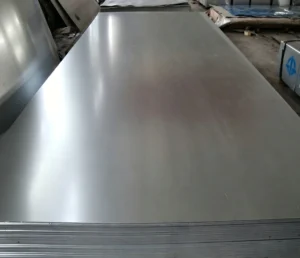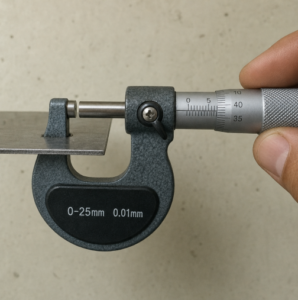

















Steel coils are long strips of steel wound into rolls, then processed into products such as roofing, vehicle body components, equipment housings, and welded tubing. The common uses of steel coils in construction, automotive, and industrial sectors depend on the material’s grade, thickness, surface finish, and coating. Understanding those differences helps buyers discuss requirements with steel coil suppliers and choose material suited to the finished part.
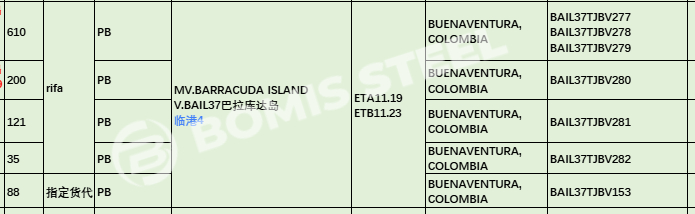
Earlier this week (November 23), our team completed loading 1,054 metric tons of steel coils across five distinct customer lots aboard the M/V Barracuda Island (V.BAIL37) bound for Buenaventura, Colombia. Looking at the order breakdown—ranging from a 610-ton bulk allocation down to specialized 35- and 88-ton lots—reflects how diverse downstream demand has become. While large-volume coil runs typically feed commercial roofing and structural framing, smaller precision-grade lots go straight into automotive stamping lines and industrial machinery fabrication.
Below is a practical look at how steel coils are used across the construction, automotive, and industrial sectors—and which coil specifications drive each industry.
What are steel coils used for?
Steel coils serve as feedstock for manufacturing flat, shaped, stamped, and tubular products. Processors unwind the strip and cut, bend, press, or roll-form it into components. This continuous format suits repeated production, whether the output is building cladding, automotive reinforcements, or industrial cabinets.
The main product categories describe different aspects of the material:
- Hot-rolled coil: Steel rolled at elevated temperatures, used in applications including construction products, truck frames, shelving, and further processing.
- Cold-rolled coil: Steel reduced further at low temperature, providing the dimensional control and surface characteristics needed for many formed products.
- Galvanized coil: Steel coated with zinc to improve corrosion resistance, with applications in building panels and vehicle components.
- Prepainted coil: Steel supplied with an organic coating, such as paint, for products including cladding, appliances, and HVAC equipment.
These categories are not mutually exclusive. A coil can be cold-rolled, galvanized, and then painted; the processing route, grade, and finish together determine its suitability. Ask for the complete material specification rather than treating “coated steel” as a sufficient description.
Construction applications: from exterior panels to formed sections
Construction uses coil-derived steel for both visible surfaces and functional building components. Roofing and cladding are familiar examples, while channels, purlins, and ceiling systems demonstrate how strip becomes shaped products. The important distinction is between the coil supplied to a fabricator and the finished component installed on site.
Roofing, cladding, and architectural details
Metal-coated and color-coated coils are processed into roof sheets and wall panels. Coil also supports continuous forming of architectural details such as gutters, flashing, and façade elements. For these applications, material selection must account for the desired appearance as well as forming and exposure requirements.
For a roof-panel order, discuss the substrate, metallic coating, paint system, and surface condition separately. Request confirmation that the proposed combination suits the intended forming operation and service environment. This keeps a color match from becoming the only basis for choosing the material.
Purlins, channels, and building fit-out
Slit steel strip supplies manufacturers producing purlins, channels, ceiling systems, and related construction products. Instead of remaining flat, the strip is formed into the cross-section needed for the application. Coil-fed processing gives manufacturers a practical route to making repeated profiles from continuous material.
Do not assume that every steel construction product begins as flat-rolled coil. Hot-rolled I-beams, H-beams, and reinforcing bars are separate product forms. Identifying the finished component first helps avoid requesting the wrong material family. (worldsteel.org)
Automotive applications: body panels, reinforcements, and chassis parts
Automotive manufacturers use coil-derived sheet and strip for body structures, structural parts, and wheels. Different components demand different combinations of surface quality, strength, and formability; a visible body panel does not have the same priorities as a hidden reinforcement. Coated and finished cold-rolled products therefore sit alongside hot-rolled materials in automotive production.
Common applications include:
- Body structures and panels: Formed sheet components that contribute to the vehicle body and its exterior surfaces.
- Crash-management components: Bumper reinforcements, door-impact beams, and selected structural reinforcements made with appropriate high-strength grades.
- Seat systems: Frames, tracks, and mechanisms produced through forming operations.
- Chassis components: Selected suspension arms and other parts requiring a suitable balance of strength and manufacturing performance.
Advanced high-strength steel can allow engineers to reduce component thickness while meeting design requirements. However, a higher strength rating alone does not establish that a replacement material will work. The component geometry, forming behavior, and performance requirements must be considered together.
Manufacturing compatibility matters particularly when changing grades. Higher-strength steels can introduce challenges such as springback—the tendency of a formed part to move after the forming load is removed. Before approving a substitution, ask the engineering and production teams to review forming simulations, tooling requirements, and trial-part results rather than relying only on a material datasheet.
Industrial applications: equipment, storage, and electrical products
Industrial uses range from straightforward formed panels to specialized components. Shelving, office furniture, heating and ventilation equipment, and appliance casings all illustrate the breadth of coil-based manufacturing. The right starting material depends on what the part must do, how it will be manufactured, and whether its surface remains visible.
Storage and workplace products include shelving, racking, and office furniture. These applications use slit strip or sheet that manufacturers form into repeated components. When requesting material, identify which surfaces require a cosmetic finish and which dimensions are critical to assembly.
HVAC and heat-transfer equipment use steel coil in applications ranging from coated equipment panels to specialized stainless components. Stainless and specialty strip can be formed into heat-exchanger plates and connectors where thickness, hardness, and corrosion resistance matter. Confirm the actual component requirements rather than assuming all HVAC material needs are alike.
Welded tubing and pipe can begin as flat strip that is formed and welded into a tubular shape. Coil selection must therefore suit the downstream forming and welding route, not simply the final outside dimensions.
Electrical equipment requires a different material discussion. Electrical steels are developed for magnetic applications in transformers, generators, and motors, including electric-vehicle motors. Ordinary sheet steel should not be treated as interchangeable with a specified electrical-steel product.
Processing turns a coil into a usable component
A coil is a delivery format, not a finished part. Depending on the production route, material may undergo slitting, cutting to length, stamping, or roll forming before assembly. Steel producers and service centers offer different combinations of these processing services.
Use these distinctions when discussing an order:
- Slitting prepares narrower strips from a wider coil for the next operation.
- Cutting to length supplies flat pieces instead of a continuous roll.
- Stamping or pressing transforms material into individual shaped components.
- Roll forming progressively shapes strip into a profile, such as a building section or automotive component.
Ask suppliers where their processing responsibility ends. Specify whether you need a full-width coil, slit strip, cut sheets, or prepared blanks. That distinction makes quotations easier to compare and clarifies which operations your own production team must arrange.
How should buyers compare steel coil suppliers?
Compare steel coil suppliers against a written application specification, not just a broad product name or quoted price. Relevant order details include grade, dimensions, coating, surface condition, coil weight, inside diameter, packaging, and inspection documentation. Manufacturer ordering guidance also identifies the end-use application as useful information.
Prepare a checklist before requesting quotations:
- Application and grade: State the finished product, required material designation, and any customer-approved specification.
- Dimensions and tolerances: Provide thickness, width, and the dimensional requirements your process needs.
- Surface and coating: Identify finish, coating designation, and any appearance-sensitive surfaces.
- Coil configuration: Confirm acceptable coil weights and inside diameter against your equipment requirements.
- Processing scope: Request full coils, slit strip, or cut sheets explicitly.
- Documentation and packaging: Specify required inspection records and packing arrangements.
For repeat orders, ask how the supplier will communicate substitutions or changes to the agreed specification. For a new grade or finish, discuss sample material and production trials before committing to a larger order. Keep technical approval separate from purchasing approval so that a commercially attractive quotation does not bypass an unresolved manufacturing question.
Match the material to the finished product
Start with the part, its working environment, and the intended manufacturing route. Then define the grade, dimensions, coating, and delivery condition with your technical team and supplier. A clear specification is more useful than asking for a universally “best” steel coil.